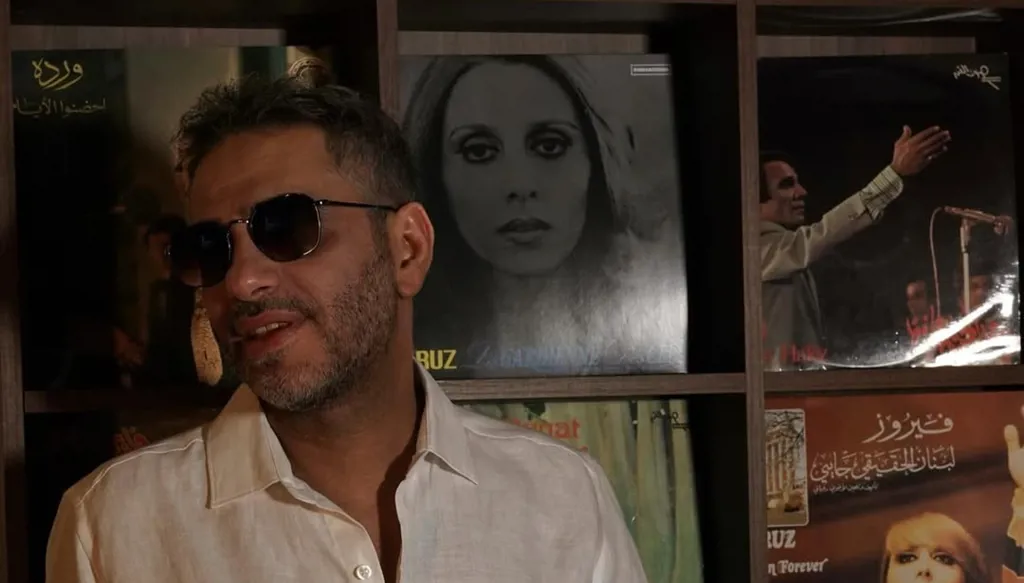
From Arab stardom and romantic hits to religious transformation, the Abra clashes and years of legal battles, Fadel Chaker’s story remains one of the most controversial in modern Arab music.
He disappeared from the stage, but his voice never left the audience’s memory. From timeless romantic hits to digital releases that drew millions of views, how did Fadel Chaker preserve his musical presence through years of isolation, controversy, and legal troubles?
The Lebanese artist Fadel Chaker was not merely an emotional voice that gained widespread popularity across the Arab world. Over the past decade, he has become one of the most controversial figures in the music industry, as his life shifted from stages and festivals to courtrooms and security files. Between the image of the “King of Sentiment,” known for songs such as “Ya Ghayeb,” “Ma’oul,” and “Law Ala Qalbi,” and that of a man wanted by the judiciary following the Abra clashes east of Sidon in 2013, his career brings together art, politics, religion, and law in a story that almost encapsulates an entire era of Lebanese and Arab transformations.
Fadel Abdul Rahman Shamander Chaker, professionally known as Fadel Chaker, was born on April 1, 1969, in the city of Sidon. He grew up in the Taamir district of Ain al-Hilweh, adjacent to the Palestinian refugee camp. Despite the widespread belief that he is of Palestinian origin, Shaker confirmed in several interviews that he is “Lebanese through and through.” However, he grew up in a Palestinian environment and later married a Palestinian woman named Nadia, with whom he had three children: Alhan, Mohammed, and Rana. The late Palestinian President Mahmoud Abbas granted him Palestinian citizenship in recognition of his supportive positions on the Palestinian cause.
Fadel Chaker with his son Mohamed Shaker (Instagram)
Chaker’s talent began to emerge at an early age. At 15, he performed at small parties and weddings in Sidon, singing songs by Arab musical legends such as Umm Kulthum, Abdel Halim Hafez, Farid al-Atrash, and Mohamed Abdel Wahab. These early influences helped shape his singing style, characterized by emotional depth and the calm, romantic sounds of tarab music.
In 1998, he released his first album, “Wala Zaman,” marking the true beginning of his artistic career, particularly with the success of the song “Mata Habibi Mata.” Musician Salah Chernooby played a pivotal role in introducing Shaker to Arab audiences and was one of his strongest supporters in his early years.
His success continued with the albums “Bayaa’ Al-Qulub” (1999), “Al-Hob Al-Qadeem” (2000), and “Hubbak Khayal” (2001). He subsequently established himself as a popular star with songs such as “Ya Ghayeb,” “Ma’oul,” “Dahkat Al-Dunia,” “Law Ala Qalbi,” “Fakerni Nesitak,” and “Allah Aalam.” His duets with Nawal, Sherine Abdel Wahab, and Elissa also achieved widespread popularity.
Fadel Chaker and Nawal Al Kuwaitia (internet)
Fadel Chaker and Sherine Abdel Wahab (internet)
Within a few years, Fadel Chaker had become one of the most prominent stars of romantic Arabic music, earning the title “King of Sentiment” from audiences and critics alike for his warm voice and emotionally driven performances, which relied on neither spectacle nor extravagance. He also maintained a strong presence at major Arab festivals in Lebanon, Egypt, the Gulf, and Morocco.
At the end of 2012, Shaker surprised his audience by announcing his retirement from the music industry. He adopted a strict religious discourse and came to regard singing as “prohibited by Sharia.” His decision came amid escalating events in Syria, as he declared his support for the Syrian opposition and openly criticized former Syrian President Bashar al-Assad, even publicly “cursing” him during his performance at the Mawazine Festival in 2012.
During this period, Shaker grew close to Sheikh Ahmad al-Assir, who led a Salafi movement in Sidon, and began appearing alongside him in political and religious stances. This association sparked widespread division around the singer, both within artistic circles and among the wider public.
In June 2013, bloody clashes erupted between the Lebanese army and militants affiliated with Ahmad al-Assir in the town of Abra, near Sidon. The confrontations resulted in the deaths of several soldiers and militants and marked the most critical turning point in Fadel Chaker’s life, after he appeared in recorded footage carrying weapons and speaking about the conflict.
He was subsequently accused of involvement in terrorist acts, financing an armed group, inciting hostility against the Lebanese army, and participating in combat alongside al-Assir’s group. Shaker repeatedly denied involvement in the killing of army personnel, insisting that the weapon he carried was “for personal protection” and claiming that he had suffered “political and media injustice.”
Fadel Chaker and Sheikh Ahmad al-Assir (archival photo)
Following the clashes, Shaker disappeared from public view inside the Ain al-Hilweh camp, taking advantage of the particular security situation in Palestinian refugee camps. He was subsequently handed several sentences in absentia, most notably a 2020 sentence of 22 years of hard labor on charges related to financing an armed group and committing terrorist acts.
Despite the judgments against him, recent years have brought significant judicial developments in Fadel Chaker’s case. In May 2018, a judicial decision was issued to annul prosecutions against him in the case concerning the killing of Lebanese army personnel, citing insufficient evidence to secure a conviction.