From France to Albania, protests expose Europe’s growing service-sector pressures, deepening right-left divide and fears of external interference.
Europe is ablaze, with its streets turning into war-like arenas. The events unfolding in France, Italy, Belgium, Albania and other European countries are the natural outcome of two confirmed factors and a possible third. The first is the reduction in spending on public services as huge budgets are allocated to military development and energy prices rise. The second is the tug-of-war between the right and the left. The third possible factor is intelligence interference or external investment.
Following the outbreak of the war in Ukraine, Europe once again shifted towards militarization. European countries allocated enormous budgets to defense spending, some of which went directly to Ukraine, while others were earmarked for developing military arsenals, as in Germany, which allocated $100 billion. Countries also increased their contributions to NATO. Meanwhile, energy prices across Europe rose following the suspension of interactions with Russia, followed by the Strait of Hormuz crisis.
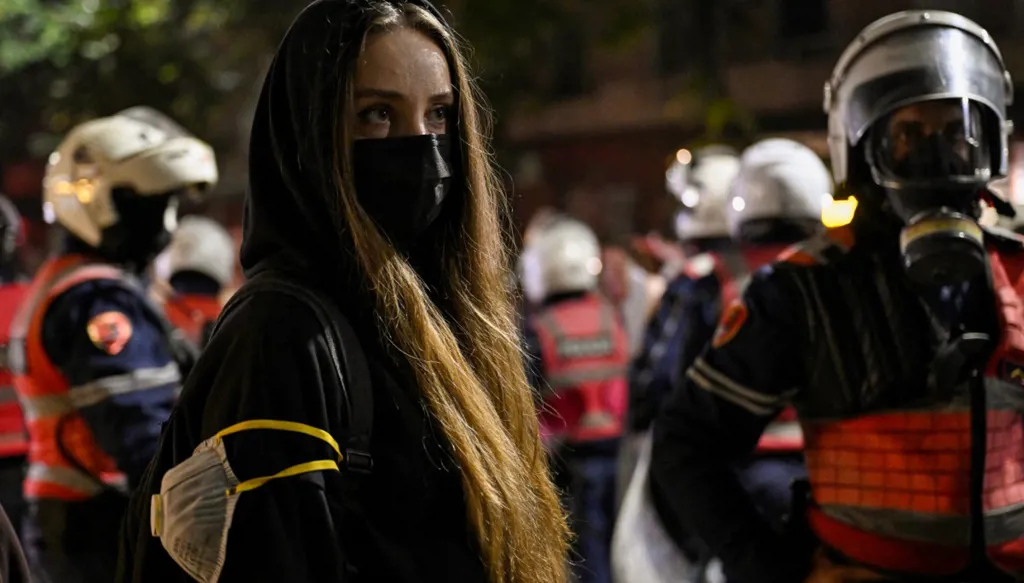
Trash being burnt and riots in European streets amid widespread protests. (AFP)
Conversely, this increased spending came at the expense of public services, including schools, from which student uprisings emerged. Foreign affairs analyst Ulrich Bouman links military spending to the decline in public services, acknowledging that military budgets sometimes come at the expense of other priorities. He notes that service budgets were cut without alternatives, adding that some protesters called for an end to war funding.
According to Bouman, speaking to Annahar, the spread of protests from one country to another can be attributed to two factors. The first is structural, relating to inflation, rising energy costs, the absence of necessary reforms, economic and spending-related complexities, and political instability. These are all factors that drive protests. The second is the contagion effect of protests, a common political phenomenon witnessed in many instances, including the Arab Spring.
The substance of the protests reflects Europe's deep political divide. The continent's political balance has shifted in recent years, with the right making significant gains. It has returned to power in Italy through Giorgia Meloni and is nearing power in France with Marine Le Pen, while the Alternative for Germany party has achieved strong electoral results. Meanwhile, the left is retreating amid issues that do not serve its narrative, such as migration and the costs of wars beyond Europe's borders.
The conflict between the right and the left is intensifying, with migration and military spending on wars in Ukraine and the Middle East taking center stage. Political, demographic and economic factors favor the right, which has made notable advances across Europe, while left-wing coalitions appear unable to contain its rise at the ballot box. Student protests have become a major arena of confrontation, with the left seeking to minimize its losses and the right accusing the left and migrants of ruining Europe.
In this context, Bouman points to the intense competition between the right and the left across the continent. In his assessment, the right is showcasing and exploiting events on the streets, using them in political and electoral contests by accusing migrants of causing chaos and alleging that the left is behind them and their arrival in Europe. Bouman also highlights the absence of a moderate centrist movement in Europe.
The current events in Europe cannot be separated from the continent's relations with Russia and the United States. External actors may or may not be driving the protests. What is certain, however, is that foreign powers and their intelligence services will exploit the events unfolding on Europe's streets to pressure European leaders into focusing on domestic and public service issues, diverting attention from the war in Ukraine and defense spending.
Bouman does not rule out the possibility of external links to the current events, stating that Europe's adversaries "invest" in such situations by exploiting every possible opening. He points to online accounts and news networks from Russia, Israel and the United States that are working to amplify the unrest in Europe and circulate AI-generated videos to deepen divisions and weaken the continent.
Ultimately, Europe's current situation is perilous and reflects a structural crisis. The continent has entered a new phase, one that differs from its post-World War II state. The right is forcefully regaining power and popularity, while wars pose a threat as several countries intensify their efforts to strengthen their military capabilities and preparedness, particularly Germany, which allocated $100 billion to develop its military arsenal. All eyes are now on changes that will affect not only Europe.
Thank you for subscribing to our newsletter