The ministerial meeting held in Brussels on Monday has brought the Middle Corridor project back to the forefront of European attention, as the European Union and its partners renewed their commitment to developing the trade route linking Central Asia to Europe via the Caspian Sea and the South Caucasus. The goal is to triple trade flows and reduce shipping times by 2030.
According to a statement by the European Commission, the meeting focused on upgrading railways and ports, facilitating border and customs procedures, and attracting public and private investment. European Commissioner for Enlargement Marta Kos said the meeting had given new momentum to cooperation, with preparations underway for a regional summit in Sofia next year.
However, exclusive testimonies to Annahar from the World Bank and two economists highlight the challenges facing these ambitions. These include delays in project implementation, lengthy waiting times for shipments at ports and border crossings, and high transportation costs, alongside questions over the volume of trade demand the corridor will be able to accommodate in the coming years.
The Middle Corridor stretches from China through Central Asia, the Caspian Sea, Azerbaijan and Georgia, before reaching Turkey and Europe. Its strategic importance has grown since the outbreak of the Russian-Ukrainian war in February 2022, as countries and companies seek to diversify trade routes and reduce their reliance on Russian territory.
A recent World Bank report estimates that around $25 billion in investment will be needed by 2040 to address infrastructure bottlenecks, in addition to approximately $30 billion to connect the corridor with local economies and develop logistics services.
In exclusive statements to Annahar, Roland Price, the World Bank Group's Regional Director for the South Caucasus, explained that 16 major projects, with a combined value of approximately $25.1 billion, are among the top priorities for developing the Middle Corridor. He indicated that 75% of these investments are either already underway or expected to begin soon, accounting for 85% of their estimated total value.
Price highlighted Georgia's strategic position as the corridor's gateway to the Black Sea, noting that the World Bank approved a $372 million loan last June to finance the purchase of freight locomotives and improve roads and operational performance. He confirmed that the project has entered the implementation phase, while procurement procedures related to railways and roads are still ongoing.
Price stressed that "commitments are not the same as completed works," explaining that Georgian authorities are best placed to assess the stages of contract awards and progress in construction.
Hungarian transport researcher Dr. Peter Botchki questioned, in his conversation with Annahar, the nature of the announced European investments and whether they represent new funding or loans from development banks that had already been available. He pointed out that railway projects can take up to ten years from planning to completion, ruling out any rapid improvement in shipping flows through the corridor.
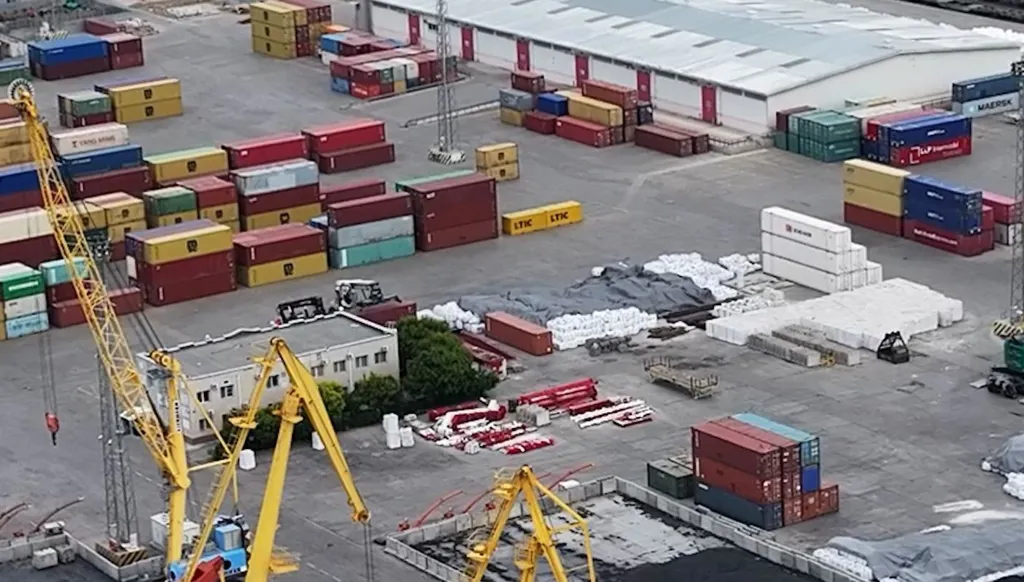
According to Botchki, the corridor's main challenges lie less in railway capacity than in delays when transferring containers between ships and trains, customs procedures, and the involvement of multiple operating entities.
He estimates that shipments spend around ten days waiting to pass through Caspian and Black Sea ports, in addition to delays of between one and four days at border crossings. He also estimates that shipping a container by rail between China and Europe can cost between $6,000 and $10,000, compared with approximately $3,000 by sea.
He believes that harmonizing customs procedures and connecting ports and railways through shared electronic systems could deliver faster improvements than infrastructure expansion projects. Botchki cites World Bank estimates suggesting that reducing waiting times at ports from ten days to three could bring transportation time to Istanbul or Constanta down to around 15 or 16 days.
Richard Pomfret, emeritus professor of economics at the University of Adelaide, told Annahar that the corridor's economic viability extends beyond trade between China and Europe. It could become equally important for transporting exports from Central Asian countries and facilitating their access to external markets as regional economies grow.
Pomfret noted the difficulty of accurately forecasting future demand, arguing that an end to the war in Ukraine could revive competition between the Middle Corridor and Russian routes, giving shipping companies different options depending on the destination of their goods.
Against this backdrop, the Middle Corridor may find its greatest opportunity in serving trade from Central Asian countries and opening additional routes for their exports, rather than competing directly with Russian and maritime routes.
Attracting more shipments between China and Europe will depend on whether the countries along the corridor can reduce waiting times at ports and border crossings and bring down transportation costs.