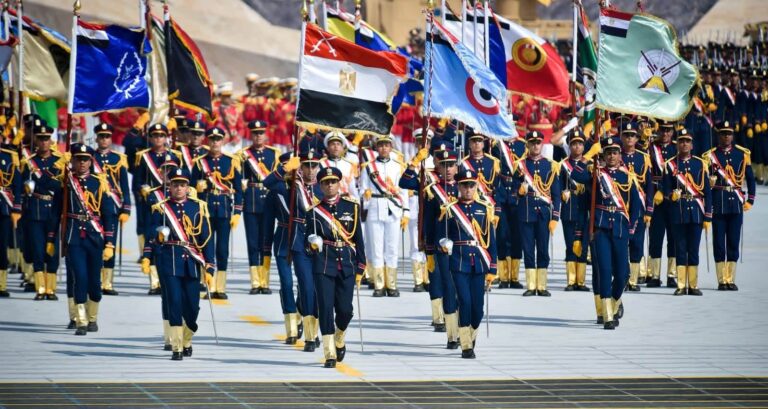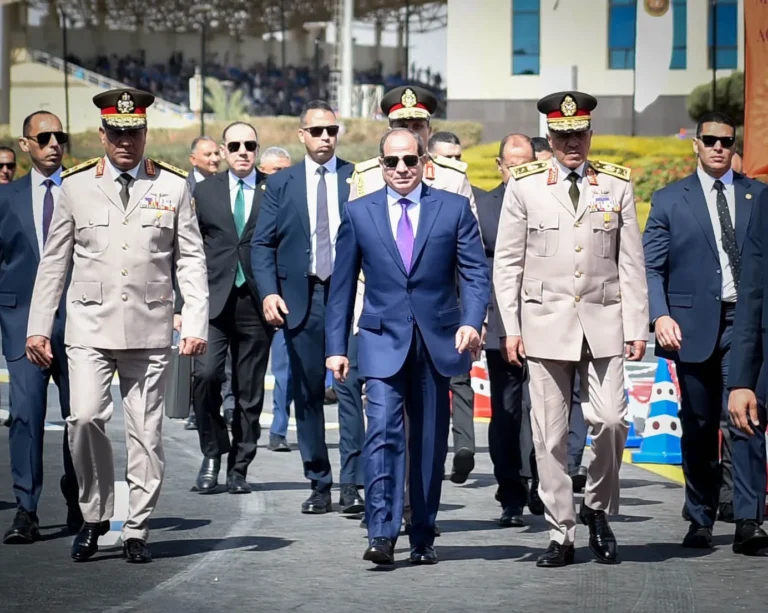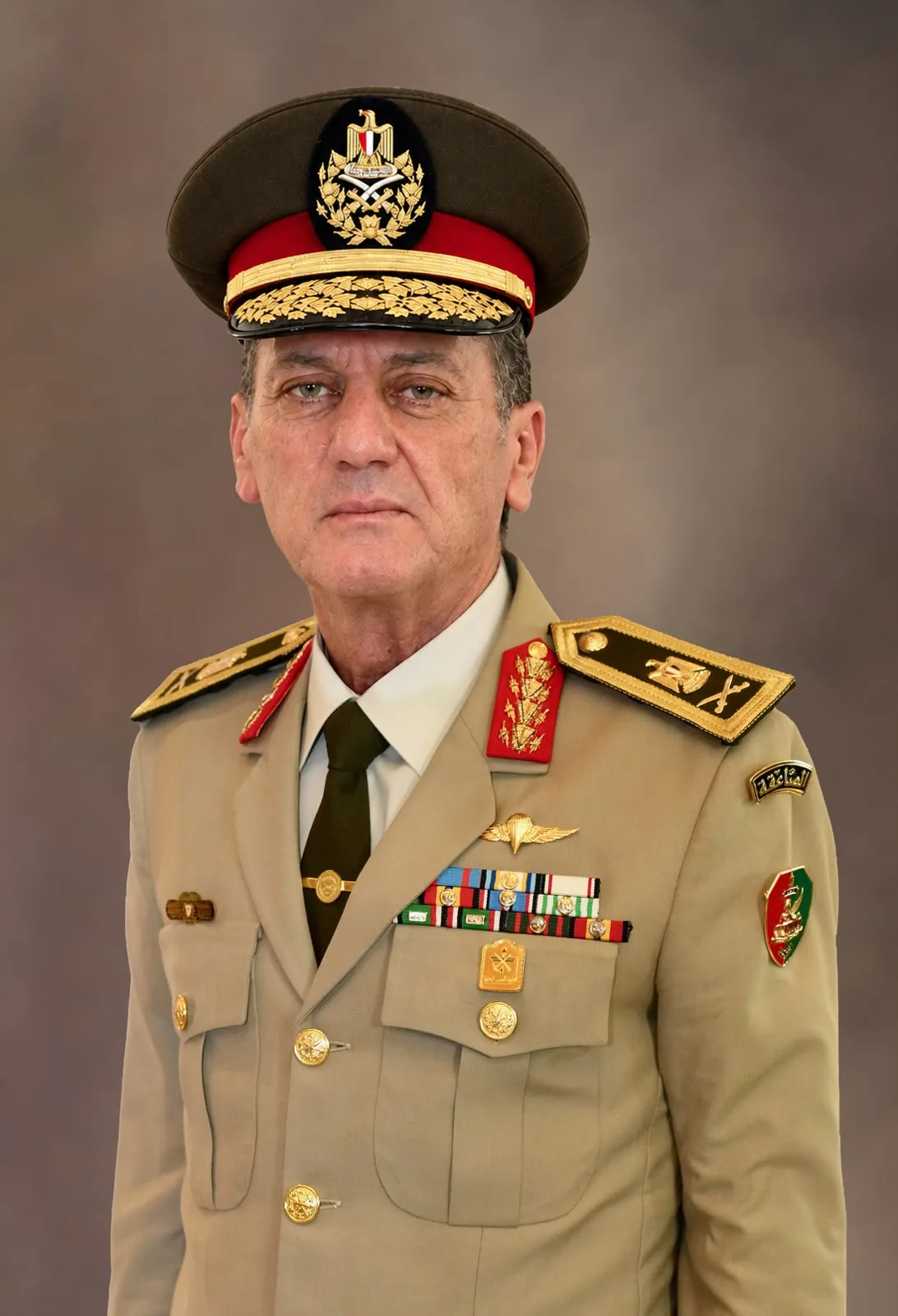
The Armed Forces play a central and constant role in defending Egypt’s borders and protecting the people’s resources, which is their top priority, according to Major General (Staff) Mohamed Salah El-Torky, director of the Egyptian Military Academy. He spoke on the sidelines of the graduation ceremony for the academy’s first cohort. In exclusive remarks to The Egyptian Gazette, he said the Armed Forces’ constitutional duties also include defending national security and internal stability when required, and supporting all state bodies in the development of the various sectors. Victory in modern military battles, he said, no longer depends on numbers alone. It is closely linked to a ‘high-calibre educational institution’ that provides exceptionally well-prepared personnel. The academy has five main colleges serving this strategic goal: the Military College, the Naval College, the Air Defence College, the Air College and the Military Technological College. On academic performance, Major General ElTorky revealed that the Military College’s pass rate for the current cohort was 88 per cent. In his view, the figure reflects the transparency and absolute rigour with which the academy runs its system, in line with the strict rules and standards of discipline and conduct. He concluded by stressing that building the officer of the future cannot be separated from instilling a strict system of values and ethics, alongside continuous technological and intellectual development. Honour, duty and country, he said, remain the governing principles, and they allow no leniency or violation. Military College Major General (Staff) Sherif Abdel Karim El-Alem, Deputy Director of the Academy for the Military College, spoke openly about the exceptional features of the new cohort of graduates, the modern curricula and admission standards that recognise only merit and personal effort. Speaking to The Egyptian Gazette, he said the current cohort is the first to combine fully a bachelor’s degree in military sciences with a civilian academic qualification, through a carefully drafted co-operation protocol with Cairo University. ‘Our student is qualified academically in vital civilian fields that suit the nature of his branch, whether economics, political science, information systems and computing, or cybersecurity,’ he said. ‘The field is chosen first according to the student’s wishes, then his abilities, inclinations and individual capabilities.’ He also had a message for applicants. ‘The first thing seen by anyone who handles an application file is: no mediation and no favouritism,’ he said. ‘The main criterion for selection is the student’s own strength and effort. He must prepare himself physically, medically and intellectually, and beyond that there are no other human considerations.’ Preference, he added, is based on a combination of factors: medical and physical fitness, mental readiness, exceptional patience, endurance, determination and perseverance in coping with military life and keeping to time. Military Technical College Major General El-Hussein Mostafa Abdel Hamid Sharaf, Director of the Military Technical College, said it is one of the armed forces’ most important centres for postgraduate studies and research. It specialises in military and engineering sciences and was founded in 1958 by Czech experts at the Brno academy in the Czech Republic. Outlining the college’s duties, he said it has four main tasks: preparing and qualifying engineer officers to serve efficiently according to the latest quality standards for educational systems; running postgraduate programmes to meet the needs of the armed forces and civil society; carrying out applied technical research to develop equipment and weapons; and supervising the state’s national and development projects through the college’s engineering consultancy office. The college currently has seven study programmes covering 32 engineering specialisations, which meet the needs of the armed forces’ branches and authorities. In line with the state’s drive to localise defence industries, a department of design and manufacturing engineering has been established to raise the share of local components and reduce imports. A department of cybersecurity engineering has also been created to train specialists in protecting digital systems against cyber threats. He also pointed to the college’s achievements in institutional and programme accreditation. It is the first engineering college in Egypt to obtain such accreditation from the National Authority for Quality Assurance and Accreditation of Education, and its programmes have also received programme accreditation. On international and local co-operation, Major General El-Hussein said the college is open to signing protocols with leading universities in Europe, Canada and China. It also has lasting partnerships with major industrial and research bodies in Egypt, such as the Ministry of Military Production and the Arab Organisation for Industrialisation, which help to exchange expertise and enrich teaching and research. Naval College Rear Admiral (Staff) Mahmoud Abdel Sattar Amin, Deputy Director of the Academy for the Naval College, spoke to The Egyptian Gazette in remarks that reflected a long-standing military tradition and a philosophy of leadership. He began by stressing that taking up the post is not an ordinary job but a ‘noble mission’: to continue preparing and qualifying new generations of naval officers. He said students at the Naval College benefit from a unique blend of military, naval and political sciences. Graduates receive a bachelor’s degree in military and naval sciences as well as a bachelor’s degree in economics and political science. This is because the modern commander must be a ‘strategic commander’, well versed in regional and international political conditions and in national security, so that he fully understands the dimensions of his missions and carries them out with complete conviction. Air College Air Vice Marshal (Staff) Walid Mohamed Abdel Salam Abdel Aty, Deputy Director of the Academy for the Air College, said the college’s long history goes back to its founding in 1936 under the first air force commander, Major General Ali Islam Pasha. The flying school was set up at Almaza Air Base in 1936 and contracted with the British side for Tiger Moth and Avro aircraft. It was moved to Bilbeis Air Base in 1951 and formally re-established after the Tripartite Aggression of 1956, under the patronage of the late President Gamal Abdel Nasser. Throughout, the college has kept its leading regional and international standing. This distinction has led friendly and fraternal countries to rush to send their students to train at the college and obtain its accredited certificate. The college’s training system relies on the latest 360-degree realistic simulators, including control towers, radar approach simulators and aircraft guidance simulators. This ensures that students are qualified step by step before flying solo. Admissions are subject to precise, standardised medical, physical and psychological tests that meet international standards, to ensure the pilot is ready for the demands of air combat. Air Defence College Major General (Staff) Mohamed Ahmed Mohamed Ibrahim El-Refaey, Deputy Director of the Academy for the Air Defence College, said the college plays a central role in preparing and graduating specialised, professional air defence officers who can deal with the latest aerial threats, by combining academic engineering education with practical field training. He spoke on the sidelines of the graduation ceremony for the academy’s first cohort, which included air defence batches 53 and 54. The curricula, he said, have developed beyond theory to full practical application, with students receiving a bachelor’s degree in engineering to enable them to innovate and think unconventionally, in line with the demands of future wars. On confronting modern threats such as drones and integrating artificial intelligence technologies, he said the college applies a ‘quality of education’ system and involves students in scientific conferences and advanced research projects, such as the International Scientific Conference (ITC), where many innovative student graduation projects on countering drones were presented. Military Technological College Major General Sherif Abdel Halim Radwan El-Gamal, Deputy Director of the Academy for the Military Technological College, reviewed the college’s key milestones as it celebrates the graduation of its first cohort. He noted that the achievement coincides with the October celebrations and the 53rd anniversary of the glorious October victories. The transformation of the Armed Forces Technical Institute into the Military Technological College came on the directives of President Abdel Fattah El-Sisi, president of the republic and supreme commander of the armed forces, under Law No 150 of 2022, he explained. The college then joined the Egyptian Military Academy in April 2026. The college has eight specialised technology programmes. Its graduates receive a professional bachelor’s degree in the technology of their specialisation, a certificate accredited by the Supreme Council of Universities. The post Egypt’s Military Academy marks 1st graduation with eye on strategic leaders appeared first on Egyptian Gazette.