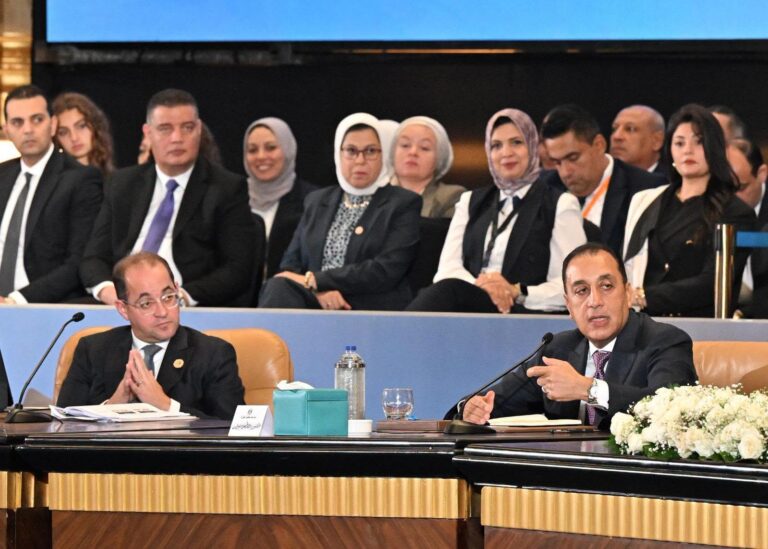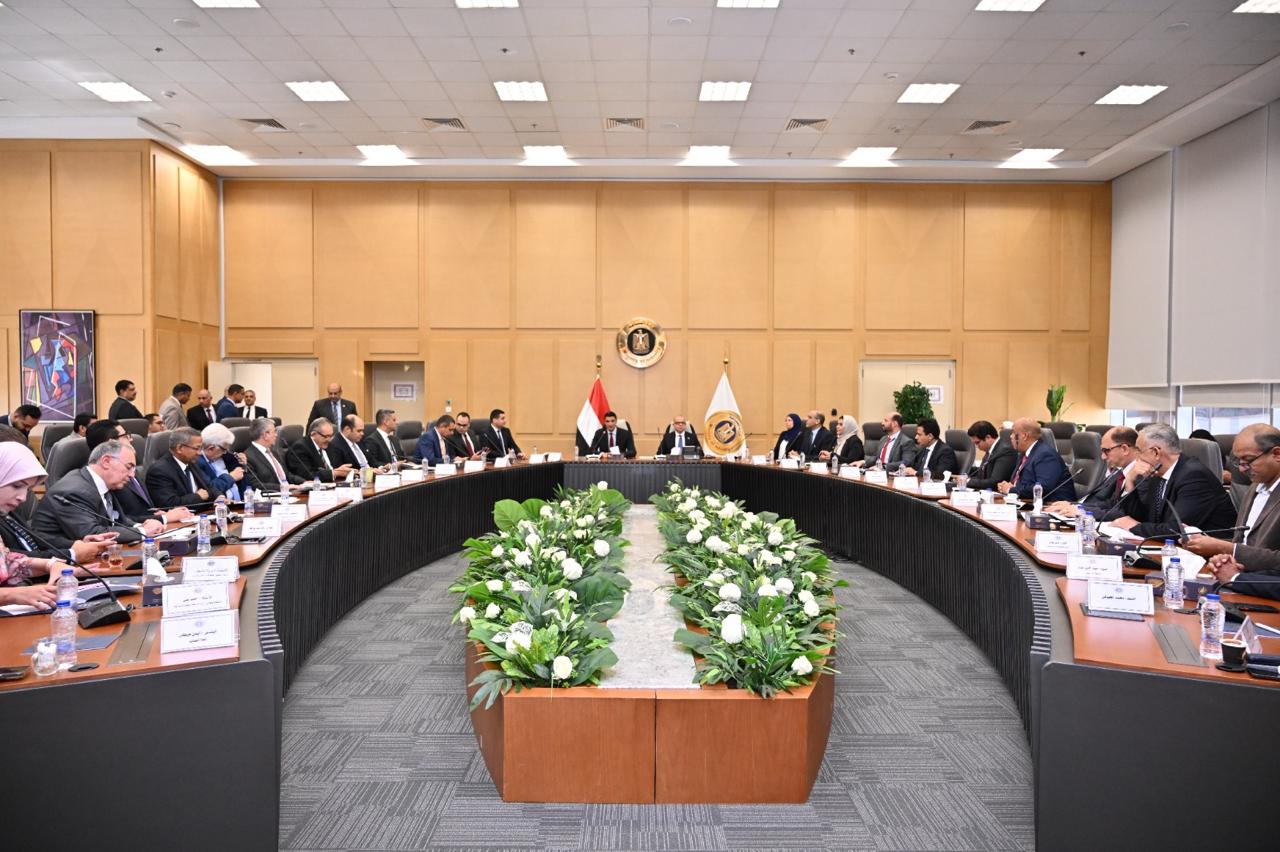
The Minister of Industry Khaled Hashem and Investment and Foreign Trade Minister Mohamed Farid held two expanded meetings with representatives of integrated and semi-integrated steel plants and rolling mills to discuss challenges facing companies amid global market conditions. The meetings reflect the government’s commitment to supporting the steel industry across all stages of production, ensuring stability in the domestic market and maintaining the availability of production inputs. The meetings were attended by Ahmed El Wakeel, Chairperson of the Federation of Egyptian Chambers of Commerce; Mahmoud Momtaz, Chairperson of the Egyptian Competition Authority (ECA); Mohamed Zada, Assistant Minister of Industry for Strategic Industries; Nahed Youssef, Chairperson of the Industrial Development Authority (IDA); Ahmed Amawy, Head of the Egyptian Customs Authority; Ali Azab and Mohamed Ayad, Assistant Ministers of Investment and Foreign Trade; and Yomna El Shabrawy, Head of the Trade Remedies Sector at the Ministry of Investment and Foreign Trade, alongside representatives of the relevant ministries and authorities. The first meeting was attended by representatives of rolling mills, including El Ashry Steel, El Garhy Steel Group, Al Madina Steel, Metad Helwan, Al Ola and Medi Steel. The second meeting brought together representatives of integrated and semi-integrated steel plants, including Suez Steel Group, Egyptian Steel, Ezz Steel Group, Beshay Steel Group and El Marakby Group. Both meetings addressed the challenges facing rolling mills in securing their billet requirements, including the availability of the necessary quantities, grades and technical specifications. They also reviewed production and sales conditions at billet-producing plants and explored ways to strengthen integration across the different stages of the steel industry. At the start of the meetings, Minister Khaled Hashem stressed that his ministry’s primary objective is to ensure the success of all factories operating in Egypt, protect their interests and promote industrial growth, while also achieving the state’s objectives and the ministry’s vision of deepening local manufacturing. This includes supporting industries and securing production inputs. He noted that the steel industry is one of the key target sectors under the Ministry of Industry’s 2030 strategy, given its strategic importance and the many essential industries that depend on it. Hashem explained that the ministry had offered new licences for billet production with more flexible pricing and payment terms to encourage rolling mills to expand into melting and manufacturing activities, deepen local manufacturing and increase added value. These measures are intended to strengthen production capacity and reduce reliance on imports. He stressed that companies granted new billet production licences must take swift steps towards production and commencing operations to deepen local manufacturing and reduce billet imports. Furthermore, he explained that monitoring market conditions and the availability of billet at competitive prices falls within the remit of the permanent committee, which comprises representatives of the ministries of Industry, Investment and Foreign Trade, and Supply and Internal Trade, as well as the Egyptian Competition Authority. The committee is tasked with ensuring the stability and continuity of supply chains. Hashem also emphasised that all companies must submit the necessary data and documents to enable the committee to assess the impact of the measures in place and evaluate market conditions in light of ongoing developments. For his part, Investment and Foreign Trade Minister Mohamed Farid said that the ministry continuously monitors the billet market to ensure stability, balance and availability, enabling domestic supply chains to operate smoothly for all stakeholders. This includes ensuring access to appropriate quantities and technical specifications at competitive prices. He added that the ministry continues to examine complaints and observations submitted by companies based on actual data and documentation, as well as the findings of on-site verification visits. This is intended to establish actual market conditions and address any obstacles that could disrupt production. Moreover, Farid stressed the need to ensure the availability of billet required for production and operations within the production capacities stipulated in industrial licences, and in the quantities, grades and technical specifications required. This would help maintain the smooth operation of supply chains and keep factories running. He also highlighted the importance of strengthening cooperation among all industry stakeholders to maintain stability in the domestic market. The meetings form part of efforts to monitor the implementation of Decision No. 121 of 2026, which imposes definitive safeguard measures on steel products. The decision was issued under the provisions of Law No. 161 of 1998 on protecting the national economy from the effects of harmful practices in international trade, its executive regulations and subsequent amendments, following complaints submitted by the industry. The two ministers stressed that the government gives equal attention to all stages of the steel industry, recognising their essential role in national manufacturing. They stressed the importance of achieving integration and balance among integrated and semi-integrated plants and rolling mills to protect existing investments, strengthen domestic production capacity and ensure that factories receive the required quantities of billet in the appropriate grades and technical specifications. These efforts aim to sustain production, stabilise the domestic market and enhance the competitiveness of Egypt’s steel industry. The ministers also reaffirmed the government’s coordinated efforts to overcome global challenges facing the sector, including the European Union’s consideration of restrictions on scrap metal exports.