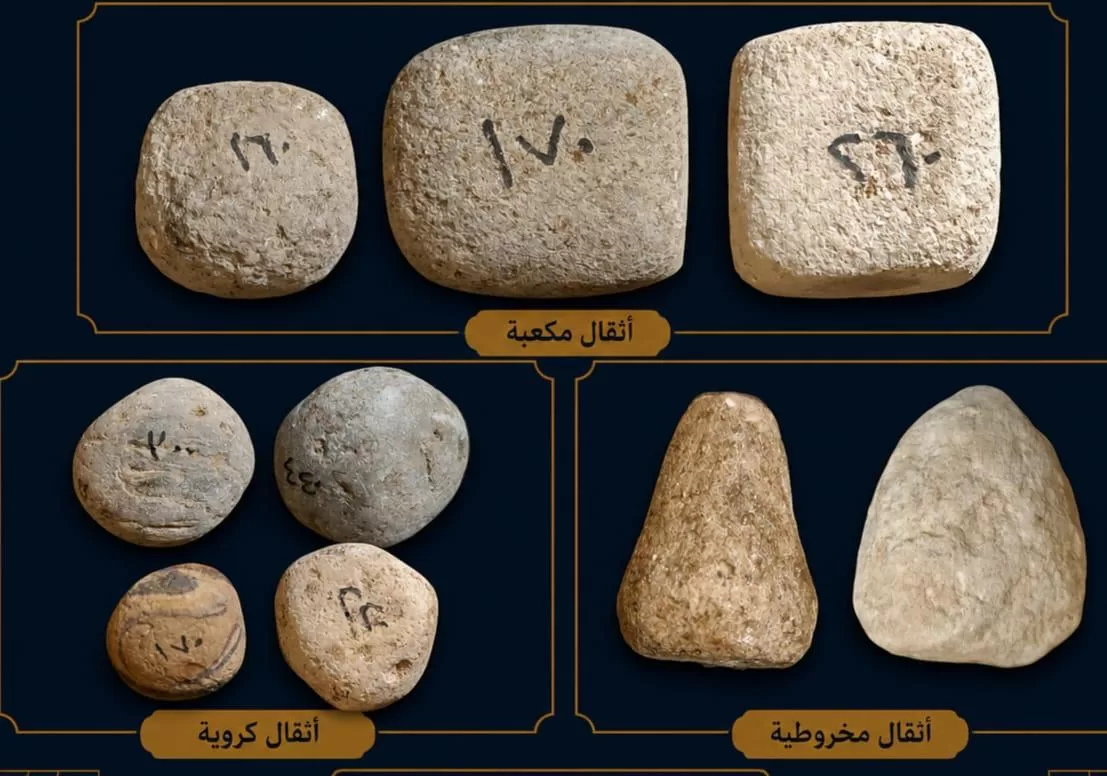
An Egyptian archaeological mission has uncovered residential buildings, grain stores, ovens and a ceremonial horse burial at Tell Al-Abqain in Beheira province, offering new insights into military and daily life inside an ancient fortress. The site, located on the western edge of the Nile Delta, was among the fortifications built during Egypt’s New Kingdom to protect the country from attacks by Libyan tribes. The excavation revealed a large mud-brick residential complex laid out along two intersecting streets. The main road, about four metres wide, ran east to west and connected to the southern entrance of the fortress, which was built of limestone. Rooms in the complex contained grain silos and cylindrical pottery ovens used for cooking and baking, indicating an organised system for feeding residents and managing supplies. Large pottery jars containing charred wheat were also found in rooms believed to have served as storage facilities, providing direct evidence of food preservation and economic activity inside the fortress. Near a group of wells in the southeastern corner of the site, archaeologists uncovered additional residential rooms. Three stone wells previously found there bear inscriptions with the titles of King Ramses II. One of the most notable discoveries was the complete burial of a young male horse. Preliminary studies suggest it belonged to a medium-sized, agile breed that may have been used for military training, pulling chariots or other military activities during the New Kingdom. The horse’s carefully arranged body and burial position suggest it was intentionally and respectfully interred. Nearby, archaeologists found cylindrical pieces of alabaster and limestone that may have formed part of a chariot harness decoration, further underscoring the site’s military role. The mission also discovered, for the first time in the Beheira archaeological region, part of a limestone stela bearing a hieratic inscription attributed to King Merneptah. The text describes the king’s strength by comparing it to that of the god Seth and refers to Ptah, the creator deity. Other finds included fragments of a hieroglyphic limestone stela bearing Ramses II’s birth name, throne name and Horus name, as well as a depiction of a bound prisoner believed to be a Libyan from the Meshwesh tribes. A collection of scarabs bearing the names of Ramses II and Seti I, along with references to deities including Amun, Sekhmet, Ptah and Seth, shed light on the religious beliefs of the fortress’s inhabitants. Archaeologists also found amulets associated with protection, fertility, renewal and strength, including representations of fish, lotus flowers, cobras, the “nefer” sign and baboons. The discoveries further included pottery vessels and sherds used for storage, cooking, serving food and preserving perfumes and oils. Among them was a flask associated with pilgrimage to Abydos, as well as loom weights, parts of stone grinding mills and balance weights. Personal ornaments and jewellery were also recovered, highlighting the social life and artistic tastes of the community living inside the fortress. The post Egyptian excavation sheds light on daily life at New Kingdom military fortress appeared first on Egyptian Gazette.