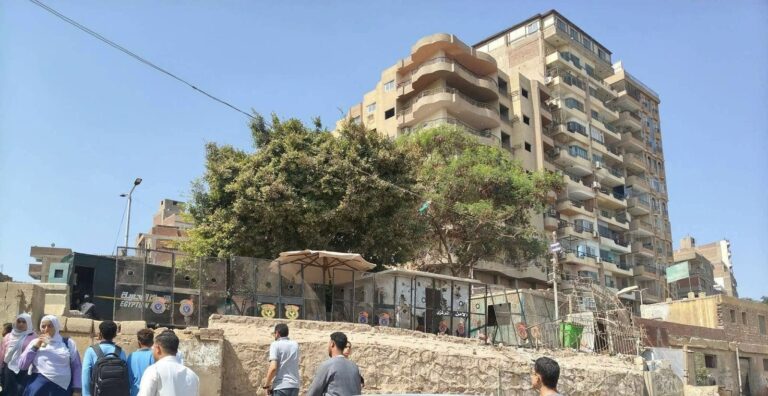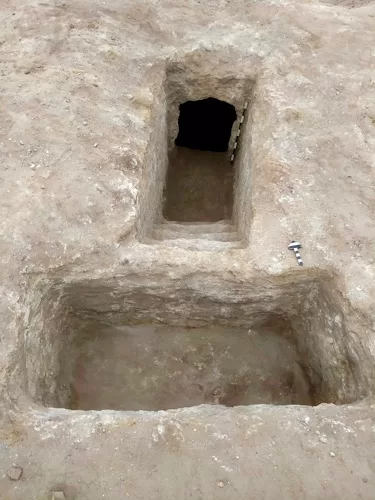
Egyptian archaeologists have discovered several rock-cut tombs and remains of a Roman camp at the Tell el-Yahudiya archaeological site in Qalyubia province, north of Cairo. The tombs feature several architectural designs and are believed to date from the late New Kingdom, around the first millennium BC, through the Late Period, according to the Supreme Council of Antiquities. The discovery sheds light on burial practices in the eastern Nile Delta, where rock-cut tombs are uncommon because of the region’s predominantly clay soil, the council’s secretary general Hisham el-Leithy said. The tombs include two main designs. The first has a staircase leading to a hall with burial niches, while the second consists of a rectangular shaft leading to two burial chambers. Archaeologists also found portable artefacts associated with the tombs, which helped establish their dates and the periods during which they were used, the ministry said. The team continued excavating the remains of a Roman military camp located in the upper layers of the site, above the rock-cut tombs. The findings indicate that Tell el-Yahudiya was used over successive historical periods and underline its strategic importance, officials said. The site is particularly associated with the Hyksos period, when it housed a large camp, before continuing to be used during the Greek and Roman eras, according to Anwar Abdel-Samad, head of the excavation mission and director general of antiquities in Qalyubia. Rock-cut tombs are rare in the Delta, with other known examples including those at Kom el Shoqafa in Alexandria and sites along Egypt’s northern coast, officials said. The post Egypt uncovers rock-cut tombs, Roman camp in Nile Delta appeared first on Egyptian Gazette.