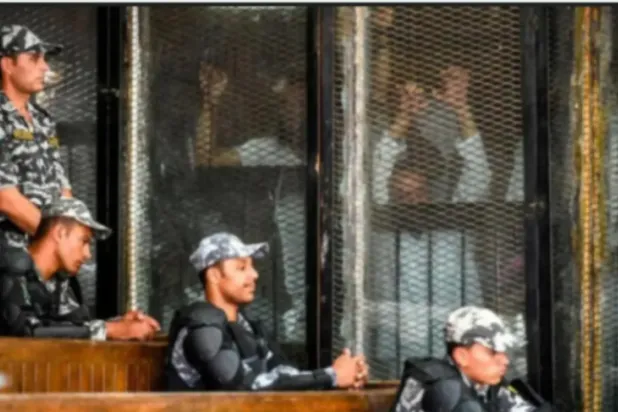
Egyptian authorities have permanently placed the Muslim Brotherhood on the country’s list of terrorist entities, according to decisions by the Public Prosecution published in the Official Gazette on Monday. The Brotherhood has been designated a terrorist organization in Egypt since 2013 and has been placed on the country’s terrorist entities list several times. Most of its senior leaders, including Supreme Guide Mohamed Badie, remain in Egyptian prisons in cases involving violence and murder following the group’s removal from power that year. Other Brotherhood members wanted by Egyptian authorities remain abroad, where they continue to lead the organization amid deep internal divisions, according to observers. Under the latest decisions, the Public Prosecution terminated the effects of two temporary listings issued in 2022: Decision No. 6 concerning terrorist entities and Decision No. 13 concerning individuals designated as terrorists. Both were published in Egypt’s official legal gazette, Al-Waqa’i Al-Masriyya, on January 3, 2023. Prosecutors also ordered the Brotherhood’s permanent inclusion on the list of terrorist entities. The decision permanently added three Brotherhood figures convicted under final, binding court rulings to the list of designated terrorists. They were identified as Abdel Rahman Hassan Mohamed Meligy, Jamal Abdel Hamid Jomaa and Osama Ibrahim Mohamed Mostafa. The Public Prosecution cited Law No. 8 of 2015, governing lists of terrorist entities and individuals, and its subsequent amendments as the legal basis for the decisions. A judicial source familiar with the procedures explained that listing an individual as a terrorist automatically triggers measures including asset freezes, travel bans, placement on arrival watchlists and the withdrawal or cancellation of passports. According to observers, publication of the decision in the Official Gazette also activates a range of restrictions against the Brotherhood, including a ban on the organization, suspension of all its activities and closure of its premises. The measures prohibit direct or indirect financing, fundraising and the collection of material donations on its behalf, as well as civic or religious outreach activities conducted under any name. Local media reports on Monday explained that the main distinction between temporary and permanent designation lies in their legal basis. Temporary listing follows a judicial decision issued at the request of the prosecutor general, while permanent designation is based on a final criminal conviction against an organization or individual. International Campaign Against Brotherhood Expands The campaign against the Muslim Brotherhood has expanded across the Arab world and internationally in recent months. In May, US President Donald Trump’s administration discussed a national counterterrorism strategy that focused primarily on the Brotherhood, portraying it as the ideological source of modern extremist terrorism. The move followed Washington’s designation in January of the Muslim Brotherhood in Egypt and its branches in Jordan and Lebanon as terrorist organizations. In March, the United States added the Brotherhood’s Sudanese branch to the same list. Argentina also moved earlier this year to designate the Brotherhood’s branches in Egypt, Jordan and Lebanon as terrorist organizations.