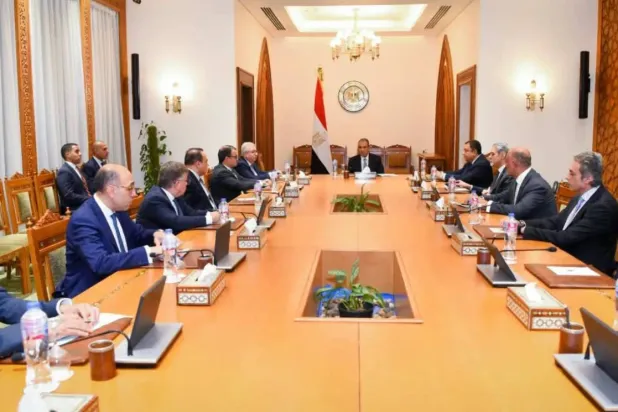
Egyptian-Gulf consultations are ongoing to ease tensions across the region, with Cairo stressing the importance of coordinated efforts and unified action to prevent the conflict from widening. Egyptian Foreign Minister Badr Abdelatty held a phone call with his Saudi counterpart, Prince Faisal bin Farhan, as part of ongoing communication between the two nations to consult and coordinate on issues of mutual concern. According to a statement issued by Egypt's Foreign Ministry on Wednesday, the two ministers discussed the fraternal and strategic relationship between Egypt and Saudi Arabia and reaffirmed their commitment to advancing joint cooperation mechanisms across various sectors. Foreign Ministry spokesman Nader Zaki said the ministers reviewed regional developments, including the situations in Yemen, Iran, and the Red Sea region, and agreed on the need to preserve freedom of navigation in the Red Sea and the Bab al-Mandab Strait. Abdelatty stressed Egypt's full support for Saudi Arabia's security and stability, reiterating Cairo's firm rejection of any attacks on Saudi territory or attempts to undermine its safety. He also affirmed Egypt's solidarity with all measures taken by the Kingdom to safeguard its sovereignty and security. In a separate call with Qatari Prime Minister and Foreign Minister Sheikh Mohammed bin Abdulrahman Al Thani, Abdelatty discussed developments related to the crisis with Iran and the recent escalation in the region. He underscored the importance of supporting political and diplomatic pathways to resolve the current crisis in a manner that enhances regional security and stability. The Egyptian minister also outlined Cairo's position on the regional crises under discussion, including developments in Yemen, Iran, and the Red Sea region. He stressed the need to maintain freedom of navigation in the Red Sea and the Bab al-Mandab Strait and rejected the use of strategic waterways and maritime passages as tools of pressure or bargaining in regional disputes. Abdelatty also held a phone conversation with UAE Deputy Prime Minister and Foreign Minister Sheikh Abdullah bin Zayed Al Nahyan. According to the Foreign Ministry spokesman, the call focused on ways to further strengthen the fraternal and strategic ties between Egypt and the United Arab Emirates across various fields. The discussion also addressed the latest regional developments, with Abdelatty emphasizing the importance of intensifying efforts to de-escalate tensions, contain crises, and support political and diplomatic solutions to ongoing conflicts. On Wednesday, Abdelatty also spoke with Massad Boulos, Senior Adviser to the US President for Arab and African Affairs, to discuss a number of regional and international issues of mutual interest. Egypt's Foreign Ministry said the conversation addressed the strategic partnership between Cairo and Washington as well as developments across the region, particularly in Sudan. Abdelatty reiterated Cairo's position on the importance of preserving the unity and sovereignty of states and protecting their legitimate national institutions in order to safeguard the interests of the Sudanese people. On Tuesday evening, Abdelatty convened a meeting with Foreign Ministry officials responsible for regional portfolios as part of efforts to implement President Abdel Fattah al-Sisi's directives to strengthen Egypt's diplomatic engagement with regional issues, continue de-escalation efforts, support security and stability, and enhance coordination with regional and international partners. Zaki said the meeting included a comprehensive review of the latest developments and of Egypt's efforts to resolve conflicts through peaceful means and create conditions conducive to restoring stability. Abdelatty stressed the importance of maintaining active diplomatic engagement in line with presidential directives and building on ongoing contacts with the various parties concerned in order to contain crises and prevent their expansion. He also reaffirmed Egypt's longstanding position in support of the unity, sovereignty, and territorial integrity of states.