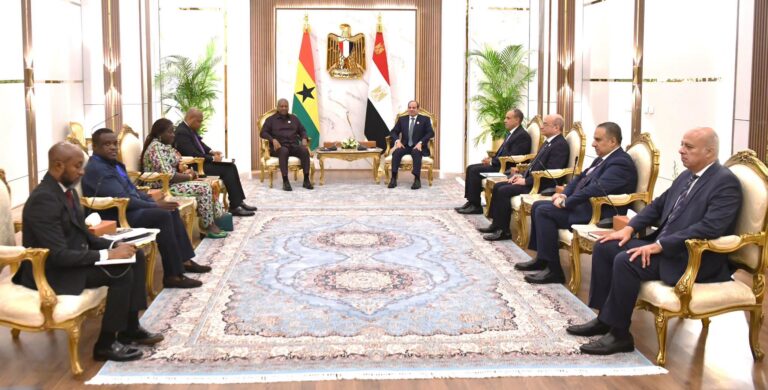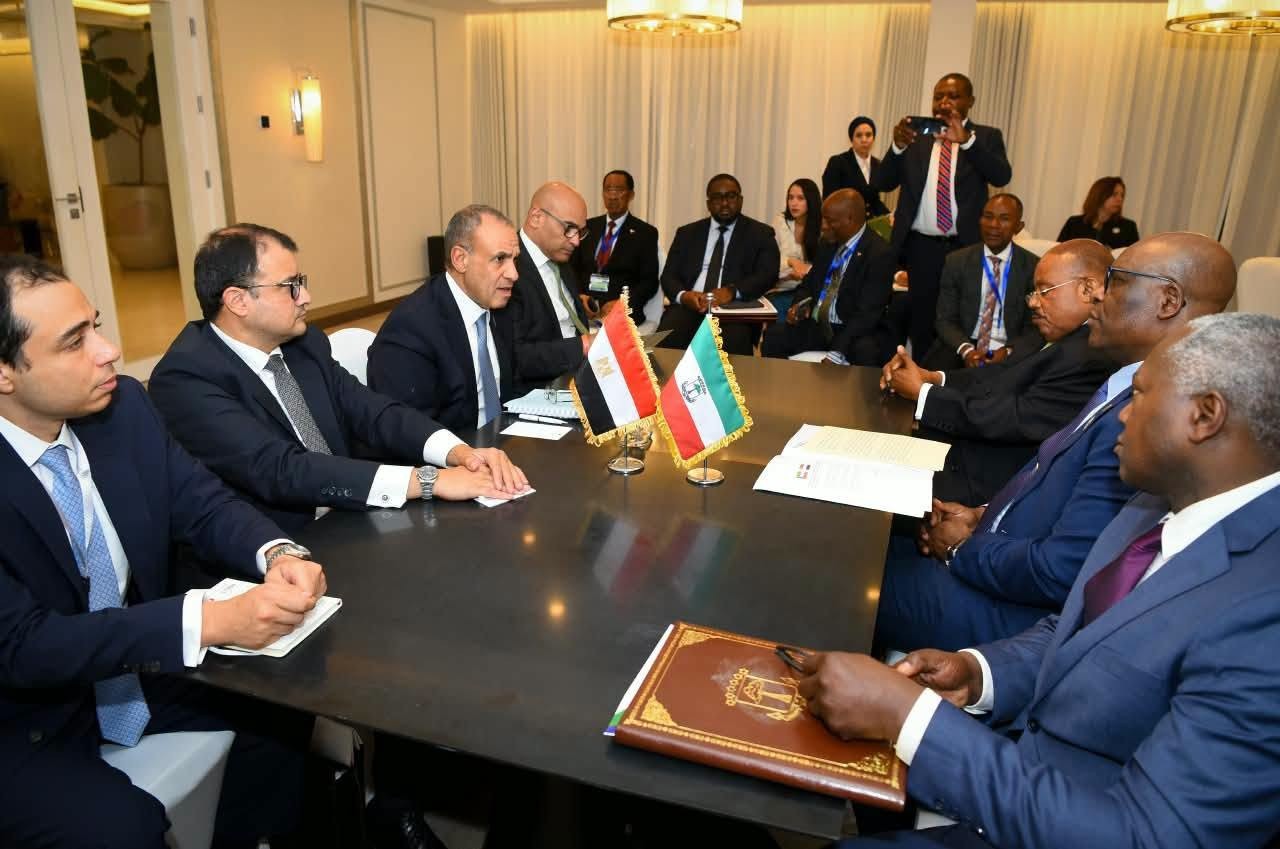
Egypt’s Minister of Foreign Affairs, International Cooperation and Egyptian Expatriates Badr Abdelatty met with South Africa’s Minister of International Relations and Cooperation Ronald Lamola on Saturday on the sidelines of the Alamein Africa Forum to discuss strengthening bilateral relations and regional and international issues of mutual interest. The meeting focused on expanding economic, trade, and investment cooperation between Egypt and South Africa, in line with the two countries’ efforts to upgrade bilateral relations. Abdelatty highlighted the longstanding ties between Egypt and South Africa and stressed the importance of increasing cooperation between companies from both countries, particularly in infrastructure, energy, transport, and industry. He also welcomed the establishment of the Egyptian-South African Business Council, describing it as a mechanism for strengthening communication between the two business communities and supporting joint projects. The two sides discussed ways to increase bilateral trade and investment and make better use of opportunities available to companies in both markets. Abdelatty said closer private-sector cooperation could contribute to broader economic integration across Africa. The ministers also exchanged views on regional issues, including developments in Sudan, the Horn of Africa, the Palestinian issue, Libya, and the Sahel region. They stressed the importance of continued coordination and consultation between Egypt and South Africa at regional and international forums, particularly on issues related to peace, security, and development in Africa. The two sides also discussed mutual support for candidacies and continued coordination within the BRICS group to advance cooperation in economic and development-related areas. Following the meeting, Abdelatty and Lamola signed an agreement establishing the Egypt-South Africa Joint High Commission. The mechanism is intended to strengthen bilateral cooperation and follow up on agreements reached across political, economic, trade, investment, and development fields. The ministers also agreed to hold the first session of the Egyptian-South African Business Council during Abdelatty’s upcoming visit to South Africa, in line with the agreement previously signed to upgrade relations between the two countries. Egypt, Equatorial Guinea seek stronger economic ties Separately, the first session of the Egypt-Equatorial Guinea Joint Commission was held on the sidelines of the El Alamein Africa Forum, chaired by Abdelatty and Equatorial Guinea’s Foreign Minister Simeón Oyono Esono Angue. The meeting addressed opportunities to expand economic and investment cooperation and increase trade between the two countries. Abdelatty stressed Egypt’s interest in strengthening bilateral relations and creating greater opportunities for Egyptian companies to participate in development projects in Equatorial Guinea. Priority areas identified during the meeting included infrastructure, construction, housing, energy, pharmaceuticals, and fisheries. Abdelatty also reaffirmed Egypt’s readiness to continue cooperation in capacity building and the transfer of expertise. This includes training for Equatorial Guinea’s security, police, and military personnel, as well as diplomatic training, building on Egypt’s experience in these fields. The two ministers also exchanged views on African issues of mutual interest and discussed ways to support peace, security, stability, and development across the continent. They agreed to continue coordination and consultations on regional and international issues. At the conclusion of the Egypt-Equatorial Guinea Joint Commission, the two sides signed several memoranda of understanding covering agriculture, culture, tourism, and aquaculture. They also signed the final statement of the joint commission. The agreements with South Africa and Equatorial Guinea come as Egypt seeks to deepen economic and commercial engagement with African countries and expand opportunities for Egyptian companies in infrastructure, energy, industry, agriculture, and other development-related sectors. The government has increasingly emphasised stronger economic integration with African markets, including through bilateral mechanisms, business councils, and joint commissions designed to facilitate trade, investment, and cooperation between companies.