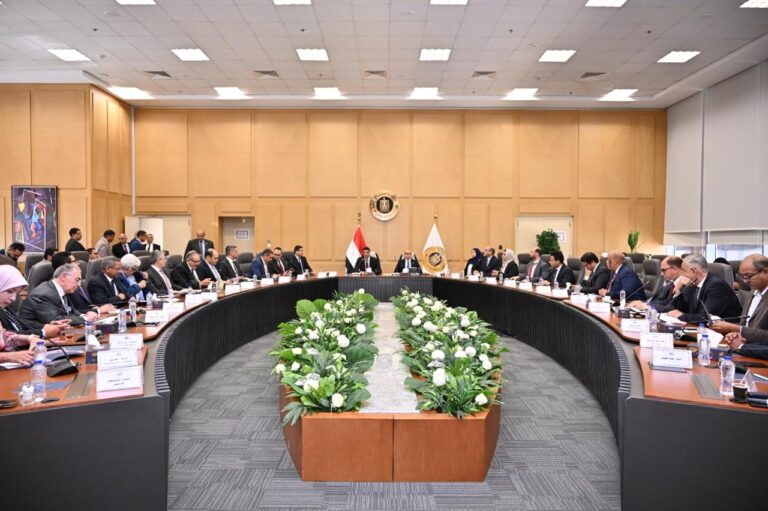
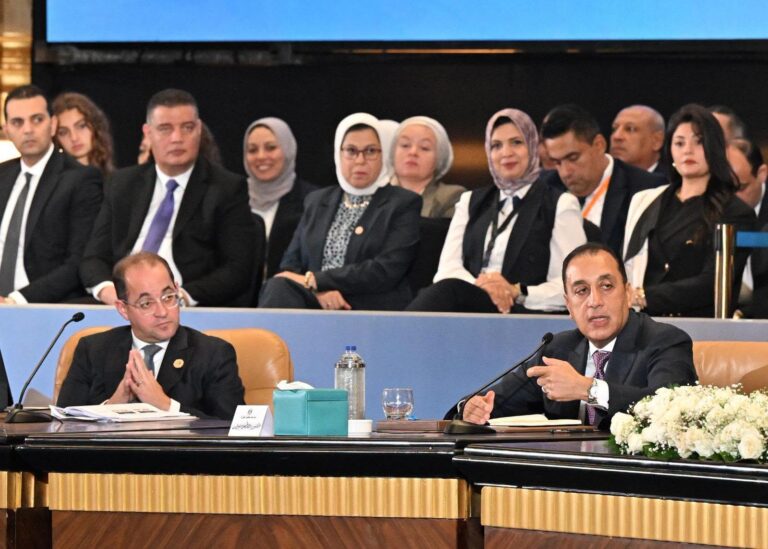
By Wael Salem The Egyptian government is putting together a comprehensive national economic programme to steer the country once its current agreement with the International Monetary Fund (IMF) ends. The plan will be opened up for public discussion with economists and specialists before it goes to President Abdel Fattah El Sisi for final approval and implementation. Prime Minister Moustafa Madbouli told a cabinet meeting last week that the strategy is being developed in close coordination with senior officials from the Central Bank of Egypt. The initiative follows President Sisi’s recent remarks at the inauguration of the Strategic Command headquarters in the New Administrative Capital. He called for the next phase to shift focus from economic reforms to improving welfare, prosperity, and living standards for ordinary Egyptians. Prime Minister Madbouli outlined the main elements of the new programme, drawing on lessons learned from other countries that have completed similar IMF-supported plans, according to Cabinet Spokesman Mohamed el-Homsany. A working group with representatives from relevant state bodies has been set up to finalise the document. It aims to create a unified vision that reflects the government’s economic priorities for the years ahead and ensures better coordination between fiscal and monetary policies. The new programme will build on the government’s existing National Structural Reform Programme, the National Narrative for Comprehensive Development, and Egypt Vision 2030. It is being prepared as Egypt nears the end of its current IMF arrangement. That deal was expanded from $3 billion to $8 billion in March 2024 as part of a wider international support package. Recently, Egyptian authorities and the IMF reached a staff-level agreement on the seventh review of the Extended Fund Facility, which would unlock about $1.6 billion, plus another $136 million from the Resilience and Sustainability Facility. Once approved by the IMF’s Executive Board, total disbursements under the programme would reach roughly $7.2 billion. Prominent banking expert Mohamed Abdel Aal believes the new programme should continue the current reform path, while tackling unfinished priorities. He highlighted the need to reduce Egypt’s external debt by cutting reliance on expensive borrowing, securing more concessional loans and grants, and converting Gulf deposits at the Central Bank into actual investments to ease the debt burden. “The next phase should also speed up the government’s initial public offerings, attract more foreign direct investment, and strengthen productive sectors,” Abdel Aal told The Egyptian Gazette. He added that the plan needs to maintain export growth, deepen local manufacturing, and promote industrial localisation so that the cost of imported inputs does not outweigh export earnings. Abdel Aal stressed that a flexible exchange rate and gradual monetary easing remain key, noting that inflation should continue to ease unless new global shocks disrupt supply chains. While Egypt already has a broad vision until 2030, he said the country now needs a clear economic programme with specific targets, measurable indicators, and proper follow-up mechanisms. Leading economist Hassan el-Sady said the programme should focus on restructuring the economy, using resources more efficiently, and raising productivity, instead of depending on more borrowing. In an interview with this newspaper, el-Sady, who is a professor of finance and investment at Cairo University, underscored the importance of prioritising higher production, attracting direct investment, accelerating privatisation, and supporting key sectors like industry and agriculture to boost exports and reduce reliance on imports. He pointed out that many factories are running below capacity due to the lack of working capital and urged the government to provide financing to expand production, create jobs, and lower costs, which would make the local economy more competitive. Revitalising tourism should also be a top priority, he said, through better service quality, improved staff training, and strengthening Egypt’s image as a leading global destination, especially given the sector’s importance as a source of foreign currency. El-Sady called for expanding technical and vocational training to match labour market needs and reviewing some labour regulations to boost efficiency. Raising worker productivity, he noted, would be one of the most important drivers of future growth. “The new programme should aim to translate economic stability into higher growth through increased investment and production, leading to more jobs, higher incomes, and better living standards,” he said. “For these benefits to materialise, the reforms must deliver stronger investment, production, employment, and purchasing power while preserving stability,” El-Sady added. The post Egypt drafting economic plan for post-IMF era appeared first on Egyptian Gazette.