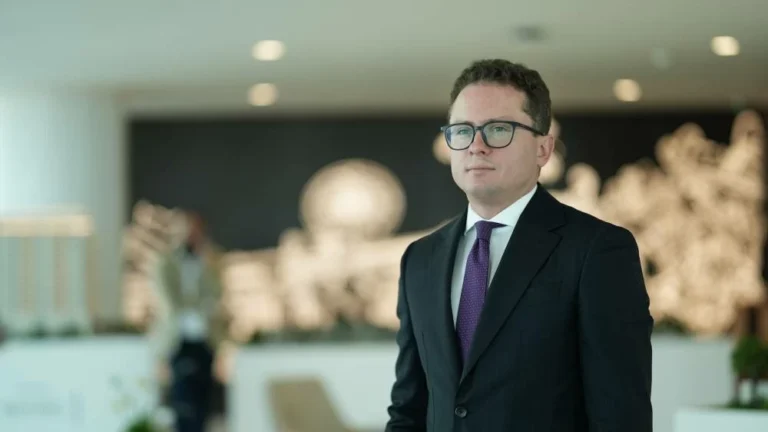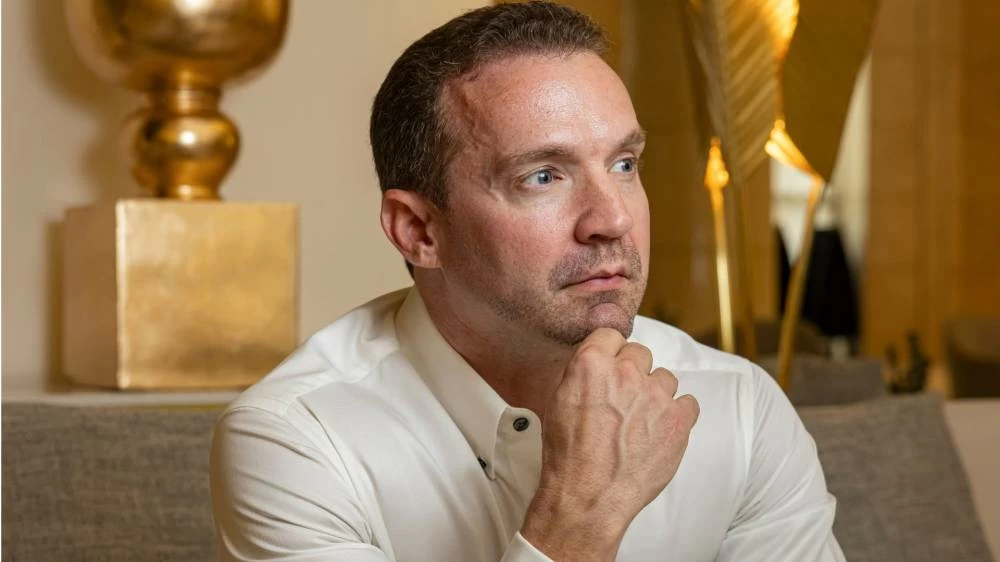
Dubai: When Christian Kiefer arrived in Dubai in 2010, he left a job that paid about 10,000 euros (Dh41,474) for a starting salary of Dh8,000.“I did not hesitate to take that offer,” he said. At the time, the German national had spent four years working in the wellness industry, living at sea and creating spa experiences aboard Steiner Transocean luxury cruise ships.Kiefer said: “I saw 52 countries by the time I turned 27... but on cruise ships, we have a golden rule, where we say, you should not work on a ship for more than four or five years.” Life on a cruise liner, he said, was a “bubble”, where everything was taken care of.“On a ship, you have everything made for you, everything done for you. You’re having lobster tails for dinner every night. It’s not an independent lifestyle.”From ocean to desertKiefer knew he had to leave, and he had a clear idea of his destination: Dubai. Around 16 years ago, the wellness and spa industry in the emirate was still young, and Kiefer recognised the city’s potential: “I saw a lot of opportunity.”When he arrived, he set about building his own “little nest”. Unfamiliar with how things worked in the city, Kiefer remembers making multiple trips to Dragon Mart to load his car with essentials. “Then someone told me that for a few Dirhams, I could have just asked them to deliver it to me. I didn’t know anything,” he said with a laugh.Despite the change in lifestyle, Kiefer found some similarities. “It’s the same mix of nationalities, and a similar profile of people – people who leave home behind, those who want to challenge themselves, or want something new, and that’s why they moved to Dubai. Everyone is here for a reason.”Kiefer went on to work with the Palace Spa under EMAAR and later served as area director of spa and leisure for Starwood MENA. He eventually made another change. In 2020, he started his own business.Wellness is a journeyOver the years, Kiefer has introduced cutting-edge therapeutic techniques and treatments. Picture credit: SuppliedKiefer became the CEO and founder of Spa Wellness Project Management, focusing on personalised wellness solutions for hotel operators and guests. In the same year, he launched Rayya Wellness, a hospitality wellness brand offering spa treatments, wellness rituals and retreats, including yoga, meditation and sound therapy.Over the years, Kiefer has introduced treatments and techniques ranging from cryo-chambers and intravenous (IV) drips to neurolinguistic programming, hypnotherapy and laughter yoga sessions. “I always tell my team – don’t see the guest as a big dollar sign. We try to train people to be educators who promote wellness. Our menu is not a standard menu.”For Kiefer, one of the challenges in Dubai is getting people to slow down enough to prioritise self-care.“For many, it’s not a priority because people’s lives are so dictated. Not in a bad way – it’s just a code that is running. Family. Drop off kids. Eat. Work. Sleep. It’s a script, and if you don’t rewrite the code, it will continue… until you wake up one day with a belly and diabetes.”Reality checkKiefer had his own wake-up call back in Germany in the 2000s. “I was working as an industrial sales manager… I had a stable job, there was nothing wrong with it. But I was stuck. The days were so repetitive, sometimes I didn’t even know if it was Monday or Tuesday. Every day, it was the same monotonous thing – going to the office, with the little Tupperware box, keying in the same numbers. It was a horrendous hamster wheel, and I was only living for the weekend.”When Friday rolled around, Kiefer would spend his nights DJ-ing. “I would work two gigs in a row, on Friday and Saturday. On Sunday, I was done for.” Sundays were when he turned to wellness.“My partner at the time and I would drive to eastern Germany on Sundays. We would get cheap vouchers for spa treatments, which we were able to use in any hotel. We used to go there, to the saunas, relax at the spa, walk in their grounds and forests. I needed that – both extremes need to be met, for me to feel fulfilled.”Wellness, he realised, was one of the few things that left him feeling replenished. At the office one day, he wrote a poem that helped clarify what he wanted to do next.“It was extremely deep. My mum still has [the poem]. For me, destiny and fate are very big. That day, in my mind, I was already somewhere else, and I feel I was destined to be there. You should be living, you should be doing everything you can so you can say ‘I’ve done my best’. In the office, I was not trying, I was not doing my best – I was wasting away. That’s not a life I wanted to strive for.”Kiefer enrolled in a degree programme to become a wellness practitioner. He drove an hour from his workplace every day to study in Hamburg, learning about therapies, fitness, traditional Chinese medicine, holistic wellness, chakras and energy work. Once he graduated, he told his family what he planned to do.“After I got my degree, I told my family I’m going to quit my job and become a massage therapist. My brother said, ‘What happened to you?’ But I didn’t hesitate. I left Germany two weeks later and went to work for Steiner Transocean’s cruise ships.”Shifting prioritiesToday, Kiefer’s priorities have changed. “My daughter, Sophia, 6, is the light of my life, and educating and parenting her well – that’s my priority.” It is one of the reasons he continues to stay in Dubai and build his future here, nearly 17 years after he arrived. “The one thing that’s important for me is purpose. I’ve done it all – I’ve been on a rollercoaster ride, had my adventures. But now, I’m settled. I’m grounded.”His work in wellness continues to evolve. “The Global Wellness Institute (GWI) redefines wellness almost every two years. What it was 10 years ago is not the same as it is now. It’s also different for different people. For me, wellness needs to be personalised – it’s a one-size-fits-one approach.”Individual genetics, nutrition, lifestyles and routines, he says, all play a role in creating wellness solutions that work and are sustainable. Kiefer also believes succeeding in Dubai has become increasingly competitive.“Back then [in my early years here], I would have said, if you are very good at what you do, you will succeed here. Now, I would say, if you are the best at what you do, you will succeed.”For Kiefer, running a business in the emirate comes with competition, but also opportunity. “Dubai opened the door for me, and gave me the chance to show I’m the best at what I do. It’s also letting us all innovate – there are no blockades here that you sometimes have in other countries, in terms of legal systems and business relationships. It’s all there. You just have to do it, and do it well.”