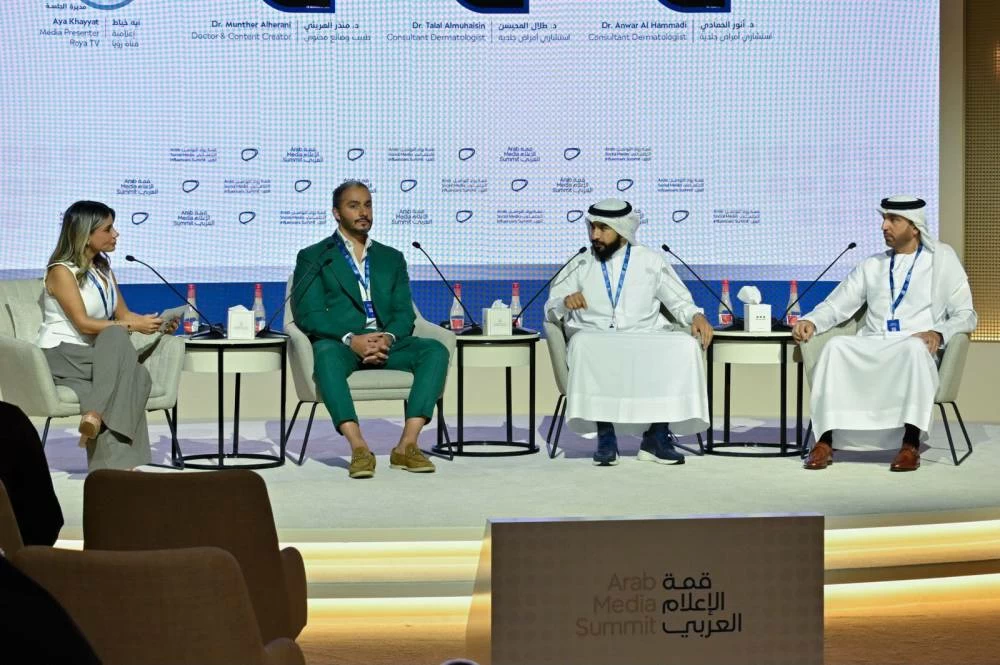
Dubai: Doctors have warned about the growing spread of misleading medical information on social media platforms, saying inaccurate health claims can go viral within seconds while it may take doctors weeks or months to correct them and raise public awareness.Speaking during a panel discussion titled “Doctor or Influencer: Who Do We Believe?” on the second day of the Arab Media Summit, health experts said personal experiences shared by influencers about medicines, treatments and health products have become among the most significant sources of misinformation.They stressed that viral content should not be seen as proof of accuracy and called on doctors to have a stronger presence on digital platforms by presenting clear and accessible medical information capable of competing with influencer content through the same algorithms and channels.Influential doctor, not marketing doctorDermatology consultant Dr Anwar Al Hammadi described social media as a “golden opportunity” for medical professionals, saying it can help build a more informed and health-conscious society when used responsibly.He said public trust is earned by those who provide valuable information and warned against doctors using their platforms primarily to market products.“I am with the influential doctor and not the marketing doctor,” he said.Al Hammadi noted that some doctors have recently begun promoting specific products and services, calling this one of the major challenges facing the profession. He added that paid medical advertising places even greater responsibility on doctors regarding the information they share.He also called for stronger self-regulation among content creators and cautioned against misleading promotional material, particularly “before-and-after” videos linked to cosmetic products and procedures.Al Hammadi stressed that a doctor's role should extend beyond diagnosing patients and prescribing medication to include raising public awareness and correcting inaccurate health information.Influencers have become louder than doctorsDermatology consultant Dr Talal Al Muhaisen said doctors now share the digital space with influencers who often prioritise views, engagement and audience growth.He said that despite doctors adhering to professional standards, they face a challenge because “the voices of influencers today are louder than the voice of the doctor”.According to Al Muhaisen, influencers benefit from their constant presence on social media and their willingness to make sweeping promises, whereas doctors remain bound by professional and ethical responsibilities.He added that advertising remains one of the key challenges, stressing that promotional content should be clearly identified as advertising to ensure transparency with audiences.Al Muhaisen warned that widely viewed videos are not necessarily accurate and pointed out that medical misinformation can become a trend in a matter of minutes, while correcting it often requires months of effort.He said personal experiences have become one of the most popular forms of online content and can attract millions of views, but may be dangerous when treated by audiences as scientific or medical evidence.Referencing an influencer who discussed personal experiences with slimming injections, Al Muhaisen said the risks arise when audiences generalise individual experiences and assume other advice from the same source is equally reliable.“The spread of information does not mean that it is true,” he said, adding that views and engagement are not reliable measures of medical accuracy.Doctors must compete for attentionCosmetic dentist and content creator Dr Munther Al Harini said medical education does not adequately prepare doctors for media appearances and communication through social media platforms.He stressed that doctors have a responsibility to challenge and correct false medical information whenever it appears online.Al Harini also warned against the casual use of psychological and medical terms on social media, noting that labels such as “narcissist” or references to hyperactivity disorders are increasingly being used without professional diagnosis.He said doctors need to communicate in simple language and adopt styles that resonate with audiences.“If the influencer can reach people through video, then the doctor should use the same tools and algorithms to reach the audience,” he said.Al Harini added that doctors should not limit themselves to traditional responses to misinformation but should create engaging content capable of reaching large audiences and spreading accurate medical information more effectively.