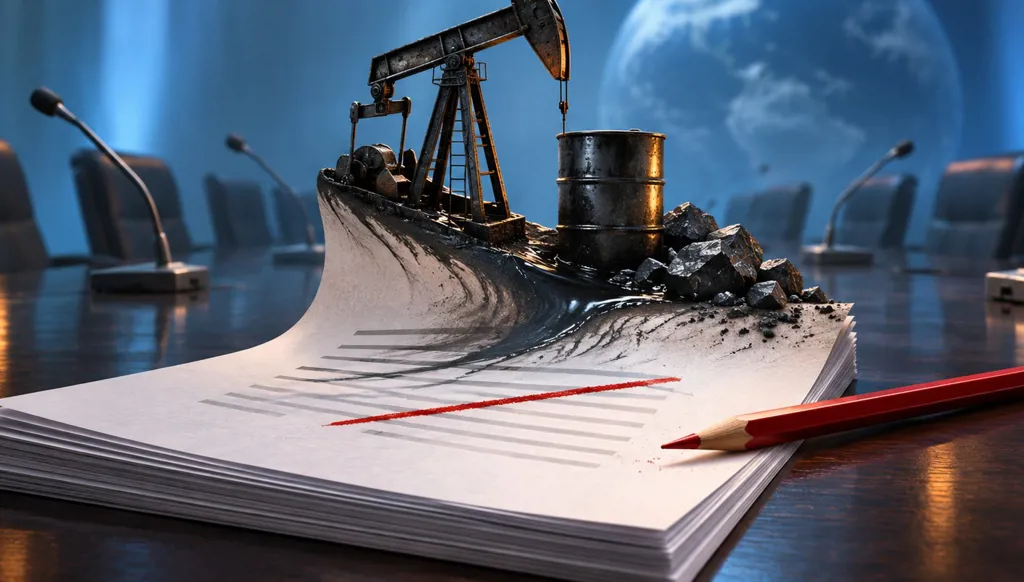
The dispute over the future of fossil fuels entered a more defined phase at the climate conference in Antalya, COP31, after the conference presidency published an initial 18-page draft of the anticipated political decision on Monday, November 16. The document includes wording on transitioning away from fossil fuels and other language calling for an accelerated phase-out, but it does not represent an agreement among countries. The new development is that negotiators now have a text that can be amended, watered down or deleted, as the conference approaches its official closing date on Friday, November 20.
The draft reveals a widening gap between positions rather than an approaching compromise. Beyond oil, gas and coal, disagreements also extend to the electrification of economies and the amount of funding wealthy countries should provide to help developing nations adapt to climate change. Reuters explicitly reported that both fossil fuel proposals could be removed from the final agreement.
One version revives the language of the UAE Consensus adopted at COP28, which calls for transitioning away from fossil fuels in energy systems in a just, orderly and equitable manner. Another version goes a step further, calling for accelerated action to phase them out, including an immediate start to the transition away from fossil fuels in energy systems.
Fossil fuels have made it into the initial text; whether they remain in the final decision, and how strongly they are addressed, is still an open battle.
Politically, the difference lies in how clearly the conference wants to define the direction of travel. The phrase "transitioning away from fossil fuels" leaves more room for interpretation regarding the pace and path, while "phase-out" points to a clearer end to their use. However, the strength of the wording alone does not determine its impact. Questions remain about how it will be implemented, what funding will be available and the extent to which it will take countries' differing circumstances into account.
The conference presidency offered an explicit explanation of the document's nature: the initial version brings together a broad range of proposals from countries, including elements supported by some parties and rejected by others. It clarified that the text does not reflect a consensus and that all its elements remain open to discussion, including whether they should be included in the final outcome at all.
More importantly, the presidency did not include a "no text" option for each provision, since deletion remains a possibility for all of them. Nor does the limited use of brackets mean that paragraphs without them have become acceptable. Accordingly, the inclusion of fossil fuels in the document cannot be treated as a new commitment adopted by countries.
COP31 chief negotiator and Australian Minister Chris Bowen said that publishing the draft earlier than at previous conferences was intended to allow more time for negotiations. He stressed that it was an initial version that would change, and that the goal was to achieve the strongest possible outcome that consensus would allow.
The Arab Group and Russia rejected the draft, objecting to its targeting of specific energy sources, the imposition of sectoral targets from the top down, and the inclusion of a 35% electrification target by 2035. They also stressed the obligations of developed countries to provide funding, including replenishing the Green Climate Fund.
The Like-Minded Developing Countries (LMDC) group likewise considered that the document crossed its red lines, including the electrification target, the roadmap for transitioning away from fossil fuels and the push towards specific options for implementing emissions reductions. Meanwhile, the least developed countries called for the funding gap to be addressed, access to finance to be simplified and concessional funding for adaptation to be increased.
The "35 by 2035" target proposes increasing electricity's share to 35% of global final energy consumption. It concerns the use of electricity across the economy and does not mean that 35% of electricity will come from renewable sources. Its climate benefits therefore depend on the sources used to generate electricity and the extent to which it replaces fossil fuels.
The objections make clear that negotiations are also about how the cost of the transition will be distributed: who will finance grids, technologies and infrastructure, and how can global targets be translated into national pathways that can actually be implemented?
By Friday, the test will lie in which wording survives the negotiations and what conditions accompany it. Fossil fuels have made it into the initial text; whether they remain in the final decision, and how strongly they are addressed, is still an open battle.