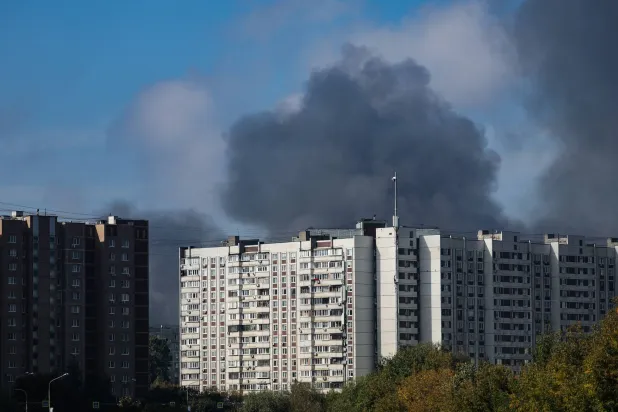
On Aug. 2, an Israeli drone fired two missiles at a vehicle carrying three Palestinian members of the Qassam Brigades, Hamas’ armed wing. All three were killed, along with a civilian passing nearby. Social media accounts quickly claimed that a senior Qassam commander had been targeted. Some of the accounts were Israeli, while others were run, directly or indirectly, by Israeli intelligence, according to a Haaretz report published during the Gaza war. The early speculation centered on Nafez Sobeih, a Qassam commander. It later emerged that the strike had killed his son, Jalal, and two senior operatives traveling with him. Security officials from Palestinian factions believed the strike may have been aimed at drawing out information about the elder Sobeih’s whereabouts and establishing whether he had been inside the vehicle. Israeli media went further, describing Sobeih as the Qassam Brigades’ new commander. Palestinian sources have neither confirmed nor denied that claim. The episode unfolded amid growing talk that Hamas has been trying to deceive Israel over the fate of commanders and senior operatives targeted in assassination attempts. Throughout the war, the Israeli military has repeatedly announced that prominent figures had been killed, only for some of them to later emerge alive. Qassam Brigades fignters are seen in Gaza City on November 25, 2025 (EPA) Surveillance and informants One such case occurred on July 26, when the Israeli military said it had killed Hamam Eid, a Qassam engineer involved in the manufacture and development of drones. The strike had taken place a day earlier. Eid, however, had survived. His family announced his death the following day, saying he had succumbed to his wounds. Hamas field sources told Asharq Al-Awsat that similar incidents had become increasingly common, with the Israeli military declaring commanders and senior field operatives dead while they were still alive. The sources pointed to at least two separate cases in which Israel said it had targeted commanders from the Beit Hanoun and Shati battalions. Both were later found to be alive. On July 14, the Israeli military said it had killed Yamen Obeid, an officer in the Hamas-run government whom Israel accused of serving as a Qassam operative. Obeid had been wounded, not killed. His family announced his death 11 days later. The Hamas field sources said Israel had recruited informants to remain inside hospitals and verify the identities of the dead and wounded, particularly senior commanders and operatives targeted in strikes. They also said Israel continued to use technological surveillance tools to monitor the phones of operatives’ relatives and friends in an effort to establish whether the targets had survived. Several informants were arrested and admitted that their mission was to confirm the deaths of senior figures targeted in Israeli strikes, the sources said. One was arrested inside Gaza City’s Al-Shifa Medical Complex after trying to examine casualty lists and determine whether Qassam commander Izz al-Din al-Haddad had been killed in a strike in mid-May. ‘They were not wounded at all’ Palestinians inspect the site of a destroyed building as smoke billows following an Israeli airstrike targeting Izz al-Din al-Haddad in the Al Rimal neighborhood of Gaza City, Gaza Strip, 15 May 2026 EPA/MOHAMMED SABER The Israeli blog Abu Ali Express, which publishes security reports on Israeli military operations in Gaza, has highlighted the army’s statements on Hamam Eid and Yamen Obeid, both of whom were later found to have died from their wounds rather than in the initial strikes. A Haaretz investigation published in February 2022 said the blog was linked to the Israeli military’s Southern Command and received funding and sensitive information from it. The blog has acknowledged that Hamas members were, in many cases, reported dead by Gaza social media accounts and the Israeli military, only to later emerge alive. Some died afterward. The pattern may point to an effort by Hamas to persuade Israel that an assassination had succeeded, allowing the intended target to continue operating under reduced intelligence scrutiny. “Some field commanders whom the Israeli military said it had assassinated are still alive,” a Hamas field source told Asharq Al-Awsat. “Some were wounded in strikes and recovered. Others were not wounded at all.” An ‘undeclared’ war The source described one case from June, when an apartment in a Gaza City neighborhood was bombed. Two or three days later, the Israeli military announced that it had killed a senior field commander holding an important post in the Qassam Brigades’ Gaza Brigade. The target had survived without injury and remains alive, the source said. Palestinians walk past the rubble of residential buildings destroyed during the war, at Jabalia refugee camp in the northern Gaza Strip, August 5, 2026. REUTERS/Mahmoud Issa There were other similar cases in which the Israeli military still largely believes it eliminated its targets, the source added. The source also cited the case of a Qassam engineer who worked on electronic circuit boards used in drones, missiles and other weapons. The engineer and his family were targeted in a 2025 strike that killed several relatives. Israel announced that he had been assassinated. He had survived. Israeli intelligence discovered the truth about three months later, and he was then killed in a second attack. After the first strike, the engineer’s family and close associates were deliberately told that he had died in an effort to protect him, the source said. But he was later seen by mistake at an undisclosed location, allowing Israeli forces to track him down and kill him. The sources said the war had repeatedly played out as a hidden intelligence battle, including over the locations of Israeli hostages.