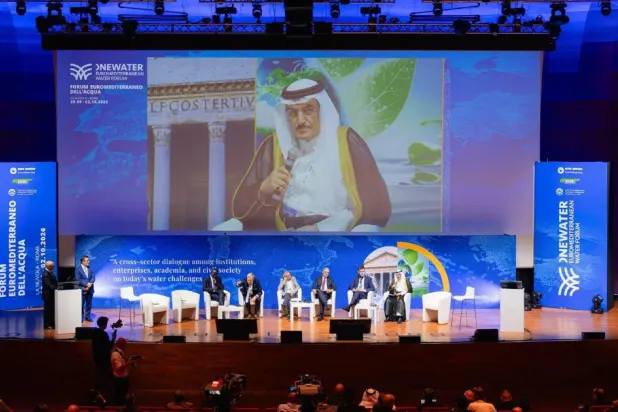
The upcoming Gulf-EU summit in Saudi Arabia carries added weight amid regional turmoil, with both sides seeking a stronger partnership spanning security, defense, the economy, new technologies and artificial intelligence, said Luigi Di Maio, the European Union’s special representative for the Gulf region. Speaking to Asharq Al-Awsat on Wednesday at the Saudi-European Foresight Dialogue in Riyadh, organized by the Gulf Research Center and the EU, Di Maio said European leaders’ attendance would underscore the importance both sides placed on their ties. It would also signal solidarity and political support for countries in the region, particularly Saudi Arabia, amid current developments. Riyadh will host the second Gulf-EU summit in October, bringing together monarchs and heads of state and government from both sides. Di Maio said regional conditions made the summit all the more important, with European leaders’ participation demonstrating both the strength of the relationship and support for Gulf countries, especially Saudi Arabia. High ambitions The summit comes two years after the first meeting of the Gulf Cooperation Council and EU leaders in Brussels, which set the stage for regular summits. Di Maio said that the meeting established a two-year cycle, with Saudi Arabia set to host the second summit. He declined to disclose the main agenda items while preparations and negotiations were underway, but said both sides wanted a highly ambitious summit. Geopolitical upheaval Di Maio linked closer Gulf-EU ties to rapid shifts in the international order, saying the two regions faced shared security challenges that demanded stronger cooperation. He described a new era in which the world was moving from multilateralism toward a multipolar order, exposing Europe and the Gulf to upheaval from accelerating geopolitical changes. Both regions would be better placed to confront those challenges together, he said, with each needing stronger cooperation with the other. From defense to AI Di Maio said the scope for cooperation extended well beyond politics and security, encompassing the economy, defense, ties between people and modern technologies. He called for stronger partnerships across those fields, including the race in artificial intelligence, as well as closer links between universities and businesses in the two regions. Many initiatives were already underway among European and Gulf institutions, companies and communities, he said. The time had come to bring them into a more structured, integrated partnership, building on the strategic partnership for peace and prosperity agreed by leaders at the first summit. Greater European involvement Abdulaziz bin Sager, chairman of the Gulf Research Center, called for Gulf-EU agreement on key regional issues. He pointed to France’s support for Saudi efforts toward a two-state solution and work to advance it in New York, alongside several countries’ recognition of a Palestinian state. In a separate interview with Asharq Al-Awsat, bin Sager said priorities included building a shared understanding of Gulf security and addressing Iranian attacks on regional countries, the closure of the Strait of Hormuz and Tehran’s use of proxies to obstruct shipping through the Bab al-Mandab Strait. Those actions affected the global economy, freedom of navigation and political positions, he said. He called for commitments to translate into active participation in safeguarding maritime navigation. The European Aspides mission was a capable force, he said, but needed to double its capabilities. “Europeans also benefit from the security of maritime routes. Protecting navigation is an international responsibility, not Saudi Arabia’s alone,” he said.