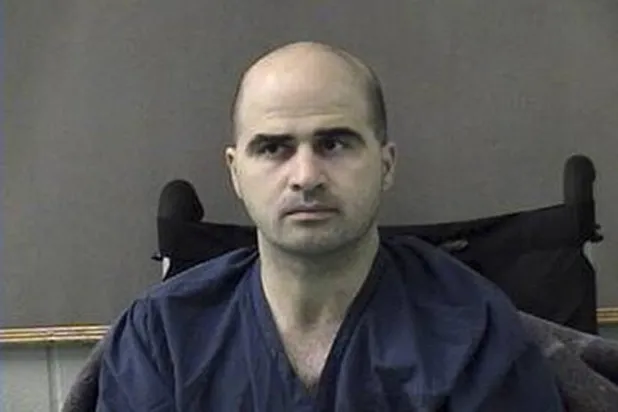
On August 25, 2026, in a quiet corner of the Libyan capital Tripoli, the life of Libyan citizen Al-Amin Khalifa Fhimah came quietly to an end at the age of nearly 70. His death officially closes one of the most mysterious and compelling chapters in the history of the diplomatic and intelligence conflict between East and West. It also closes a living chapter in the case of the bombing of Pan Am Flight 103, which was traveling from Frankfurt to New York via London when it exploded over the Scottish town of Lockerbie in 1988, an incident that reshaped international politics for decades. For an entire decade, the name of this man, who began his career as a low-ranking airline employee, echoed through the corridors of the United Nations Security Council. His photograph appeared on television screens around the world and in newspapers for years as the "second suspect" in the most horrific act of aerial terrorism of the 20th century. Fhimah was an unwilling participant in a unique legal and political saga in which the details of his everyday life on the island of Malta became the basis of an international case that nearly brought an entire country to the brink. He later stood behind the glass of the historic Camp Zeist courtroom in the Netherlands and heard the word "acquitted" pronounced by Scottish justice at the dawn of the new millennium. He returned home carrying an acquittal that politics had been unable to grant him for years. His death has reopened the memories of the era of crippling sanctions and international isolation, reminding the world of the story of a man who lived at the heart of the storm and died in complete seclusion, far from the political turmoil that had nearly consumed him. Forgotten Beginnings: From Tripoli to Luqa Airport Al-Amin Khalifa Fhimah was born in 1956 in the Souq al-Jumaa area on the outskirts of the Libyan capital, Tripoli. He progressed through his career until he joined Libyan Arab Airlines. In the mid-1980s, he was sent to work as an airline official, dispatcher, and station manager for the company at Luqa Airport in Malta. The position appeared routine for the young employee, had it not intersected with the intense intelligence conflict unfolding across the Mediterranean between the former Libyan regime and the United States and its Western allies. At the time, Fhimah did not know that his signature on cargo documents and the timing of his shifts at the Mediterranean airport would later become key evidence cited in the international indictment prepared by senior investigators in Washington and London. The Night the Plane Fell and the International Storm Began On December 21, 1988, the sky over the Scottish town of Lockerbie was torn apart when a Boeing 747 operated by Pan Am, Flight 103, exploded while traveling from Frankfurt to New York, killing 270 people. After three years of complex joint investigations by the US Federal Bureau of Investigation (FBI) and Scottish police, two Libyan nationals were formally accused in November 1991: Abdelbaset al-Megrahi and Al-Amin Khalifa Fhimah. At the time, Western investigators alleged that Fhimah had used his position and contacts at Malta's airport to facilitate the passage of a bomb-laden brown Samsonite suitcase. The suitcase contained a timed bomb concealed inside a cassette recorder and was allegedly placed aboard a Libyan Airlines flight bound for Frankfurt, from where it was transferred to the doomed Pan Am flight. Historic Handover and Trial on Neutral Ground Tripoli initially refused to hand over its citizens, placing Libya under severe international sanctions and an air and economic blockade imposed by the UN Security Council in 1992. Libya endured a decade of deep isolation and economic paralysis until difficult diplomatic efforts led by Arab and African parties produced a unique legal and historic settlement. Under the settlement, Libya agreed in 1999 to hand over the two suspects for trial before a special Scottish court, but on neutral ground at Camp Zeist, a former US military base near Utrecht in the Netherlands, under Scottish criminal law. Camp Zeist Shock: Historic Acquittal and Return On January 31, 2001, the world held its breath as Scottish judges delivered the verdict millions had been awaiting. While his associate Abdelbaset al-Megrahi was convicted and sentenced to life imprisonment, the court definitively acquitted Al-Amin Khalifa Fhimah of all charges and ordered his immediate release from behind the bulletproof glass enclosure. The judges based his acquittal on insufficient evidence and major gaps in the witnesses' account, particularly that of Maltese clothing merchant Tony Gauci. The defense also conclusively established that Fhimah was not in Malta but was in Sweden on a business trip when the bomb-laden suitcase was checked in. Voluntary Seclusion Until His Final Days Following his acquittal, Fhimah returned immediately to Libya, where he received a hero's welcome in Tripoli from both officials and the public. He was portrayed as living proof that Western justice itself had established the innocence of the Libyan state from the full American account of events. Yet the man, exhausted by years of fear, uncertainty, and detention, made a firm decision to stay completely out of the spotlight and politics. He lived the rest of his life as an ordinary citizen among his family in Tripoli, refusing to give press interviews that might reveal the secrets of that era. The announcement of his death and the official mourning that followed brought a complete chapter of the bitter Libyan-Western conflict to a close.