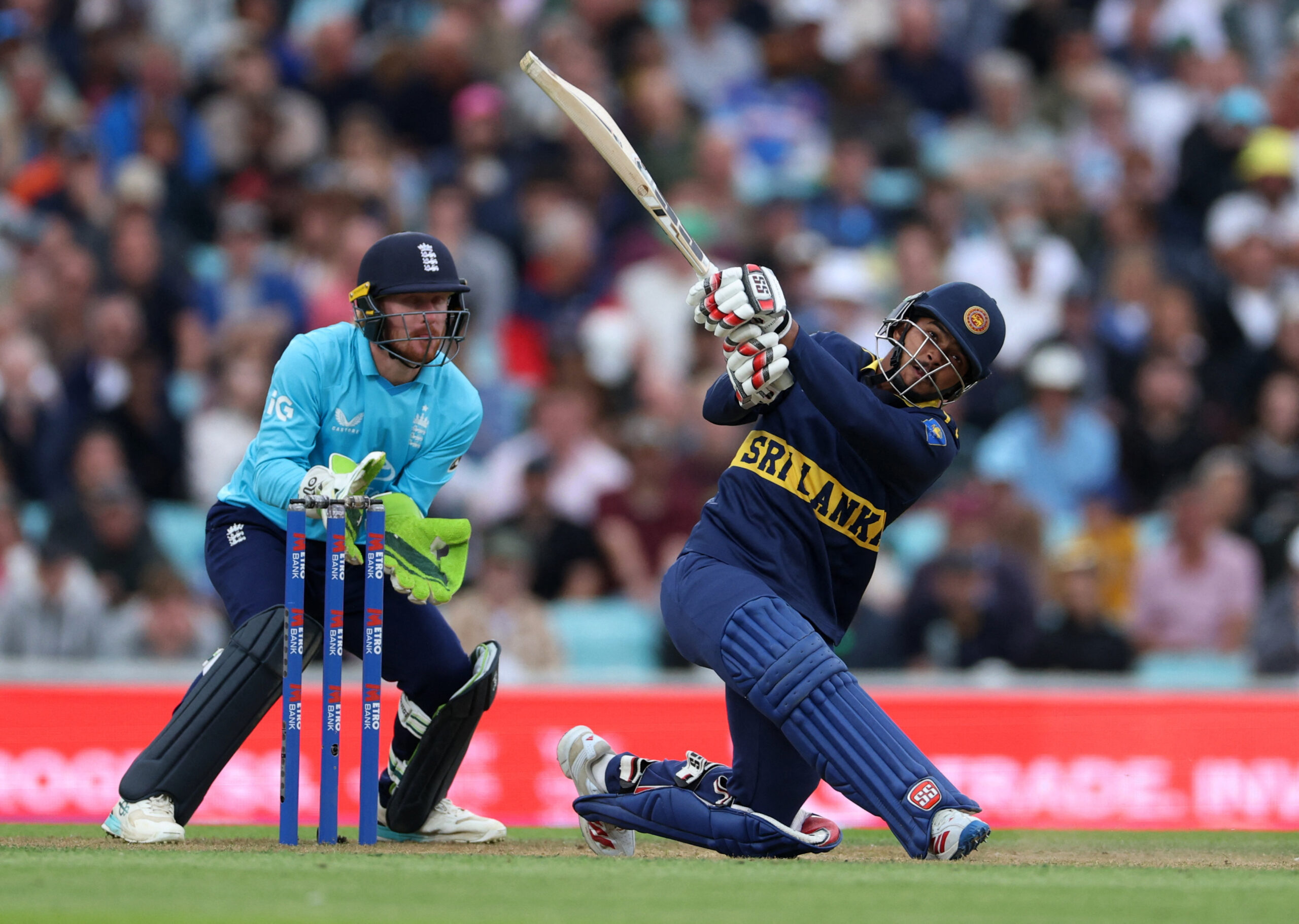
There is always a certain sadness for me when the English and Welsh cricket season ends, which it did on Sept. 27. England battered Sri Lanka into submission in front of a full house at the Kennington Oval in the third of three One Day Internationals, whilst Warwickshire claimed the county championship as their rivals fell away. Decades ago, this would have meant alternative winter occupation for those players not selected for England’s winter tours. These days, there is a full schedule for the national team and franchise leagues around the world for those not selected for national duty. In preparation for the 2027 ODI World Cup, countries are now engaging in ODI matches, a format which is entering endangered species territory. England will travel to Pakistan to play in a tri-series against Pakistan and Sri Lanka between Oct. 18-30. Australia is currently in South Africa and has lost the first two ODIs in a three-match series, which is followed by a three-Test series. In the next cycle of tours program, to run from April 2027 until April 2031, the 12 ICC full members are likely to play more T20Is, with a corresponding reduction in the number of bilateral ODIs played between them. The extent of this change will probably not be known until November, as there are so many variables to consider. One of these is the jockeying for calendar position by the T20 franchise leagues. The ODI World Cup, which is played every four years, is one of cricket’s showpiece events and is not likely to become extinct in the near future. The ICC needs to find a way to make the format more meaningful, which could lead to more tri-series and quadrangular series.Now that cricket’s fulcrum has shifted away from Europe for the next six months, there is an abundance of cricket to unfold. In the UAE, the Emirates Cricket Board is gearing up for the fifth edition of ILT20, scheduled for Nov. 21 to Dec. 20. The player auction was held on Oct. 1. Each of the six franchises and the tournament organizers were faced with even greater uncertainty surrounding player availability than in 2025. This has led to revised rules relating to squad composition. In previous editions, ILT20 has overlapped with South Africa’s SA20 and Australia’s Big Bash League, leading to player movement in and out at both ends of the league. In this edition, there is no overlap with SA 20, but there will be with the BBL. The fifth edition also faces an availability issue involving leading UAE players who may be required for the next stage of the 2027 ODI World Cup Qualifier playoffs. The ICC has yet to confirm these dates or the venue but is thought that they will be played in December. If that is the case, then some UAE players will miss a portion of the ILT20 league. Its COO, Mike Fordham, clarified that “other players not selected would remain fully available in this circumstance, including many of the top performers from the UAE in the league in recent seasons.”In anticipation of potential availability issues, ILT20 has restructured the composition requirements for franchise squads, which must contain a minimum of 18 and a maximum of 23 players. At least 11 players must come from ICC full member countries, at least four players from Afghanistan and at least one from Ireland (both ICC full members), at least four from the UAE, at least one from both Kuwait and Saudi Arabia, and at least one additional player from an ICC Associate nation, excluding the UAE, Kuwait and Saudi Arabia. Over 200 players are set to go under the hammer, including cricketers from all 11 full-member nations, as well as 12 associate-member countries. The players have been divided into three base-price brackets: $80,000, $40,000 and $10,000.The largest cohort of players is from the UAE, with almost 50. England provides the next largest with 40, followed by Afghanistan with 35. The USA provides 15, the West Indies 14 and Ireland 13. Australia has few representatives, as does New Zealand. This distribution will undoubtedly mean that the squads show significant change from the fourth edition. However, there are big names available. One is Babar Azam, who has registered for the tournament for the first time and is placed in the highest price category. As I anticipated last week after watching him in the Caribbean Premier League, Pakistan’s Maaz Sadaqat is available for $40,000. Fierce competition should be expected. Another player whose stock has risen is England’s Tom Banton, who has previously played with the Dubai Capitals and MI Emirates in the ILT20. On Sept. 27, against Sri Lanka, he scored his first international century, a timely nudge to the bidders. They may be wary of him being selected for England’s white-ball tour of Australia, which ends on Dec. 2. Prior to the auction, each ILT20 franchise had a window until Aug. 3 to lock in up to four players. This could be achieved by retaining someone from the previous season or by signing a new player. A mix of strategies was adopted, with the Desert Vipers retaining three players, compared with the Sharjah Warriorz, who retained only one. Franchises must spend a minimum of $1.5m and a maximum of $2m. Each enters the auction with a purse of $1.3m in addition to any remaining amount from $700,000 allocated for pre-signings. They can also sign one wildcard player after the auction for a maximum additional fee of $250,000. It is clear that a number of factors are combining to reshape T20 franchise league squads’ season upon season. Several national boards have chosen to restrict the number of T20 leagues their players can join, including Pakistan, Bangladesh, and Afghanistan. At first sight, the ILT20’s decision to mandate four Afghan players and one Irish in each squad looked surprising. In the context of shifting sands of player availability, it is less surprising. By way of clarification, an ILT20 spokesperson confirmed that “with the Afghanistan Cricket Board and Ireland Cricket we have entered strategic partnerships aimed at