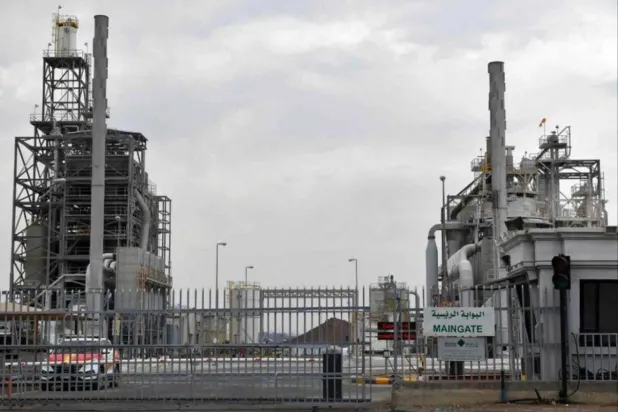
RIYADH: Once a lifeline for Saudi oil, the Trans-Arabian Pipeline is now the Kingdom’s first industrial heritage site. But with chokepoint risks rising, could a modernized Tapline make commercial sense again?
The Tapline, which began pumping in 1950, stretched 1,664 km from Saudi Arabia’s Eastern Province to the Lebanese port of Sidon, at one point carrying roughly 30 percent of the Kingdom’s oil output. It bypassed the Suez Canal and offered a direct overland route to European markets.
Today, with the Strait of Hormuz under persistent threat and Red Sea shipping increasingly exposed, the strategic logic behind such a route is resurfacing.
According to a 2014 study by Asher Kaufman, professor of history and peace studies at the US-based University of Notre Dame, the pipeline’s construction was an astonishing feat: 16,000 local workers, 265,000 tonnes of steel plate, and a purpose‑built access road that became a transport backbone. By 1950, the first tanker was loaded at Al-Zahrani, Sidon in Lebanon.
By the mid-1970s, supertankers and the reopening of the Suez Canal had made maritime transport more competitive. The Lebanese Civil War and later the Gulf War accelerated its demise, and operations ceased in 1990.
In July 2019, Saudi Arabia’s Ministry of Culture launched the Kingdom’s first industrial heritage competition. Shortly after, the Heritage Commission registered Tapline as the first official industrial heritage site in the Kingdom.
As Aramco’s history of the project recounts, Tapline was more than just an artery for oil. “The Tapline forever changed Saudi Arabia’s northern region, bringing facilities and prosperity along its route,” it read.
The pipeline’s relevance is not merely historical. Back in 2005, Jordan’s then-Energy Minister Azmi Khreizat confirmed that Amman had considered the rehabilitation of the Trans-Arabian Pipeline as a strategic option to address the country’s acute need for oil resources.
Amid the 2022 energy crisis, when supply disruptions pushed European buyers to seek alternatives to seaborne energy routes, the pipeline was once again mooted as a possible solution.
Any revival would face a more complex transit landscape than in the past. A pipeline from Saudi Arabia to the Mediterranean would need to cross multiple states, each requiring stable, long-term agreements resilient to political shifts.
Jassem Ajaka, economist and university professor, argued that in today’s environment, “the presence of such infrastructure is not just about transporting oil but also serves as a form of geopolitical hedging for the countries it passes through, creating a kind of network of mutual interests.”
On the economic justification for such a project, Ajaka said that as a result of the Strait of Hormuz crisis and the elevated cost of insurance, maritime transportation is no longer the best or cheapest option to export oil.
He noted that “insurance prices surged by more than 400 percent during the first 48 hours of the war, forcing ships that attempted to pass through the alternative maritime route — the South African Cape of Good Hope — to pay up to $15 per barrel for insurance alone, a substantial cost compared to the price of a barrel.”
Under stable security, reviving the Tapline could deliver oil to Lebanon for just $3 per barrel, beating maritime shipping if insurance and transit fees stay under $5-$7.
But even if the Strait of Hormuz crisis ends, maritime insurance may remain high — $15 per barrel with oil at $70 would still make sea transport far costlier than pipelines. Still, he doubted maritime shipping beneficiaries would support such pipeline development.
Energy policy expert, and Middle East and North Africa director of the Natural Resource Governance Institute, Laury Haytayan offered a more cautious view, emphasizing that viability depends on whether such a route can compete with existing export flows to Asia, which remain Saudi Arabia’s primary market.
“Timing is also important because it affects transportation costs, which in turn determine how competitive the project will be,” she explained, adding: “At the same time, you need to consider where your existing infrastructure — such as production fields — is located, and whether additional infrastructure is required, since that would increase your overall costs.” Haytayan continued: “When you weigh all these factors together, along with current risks like congestion at key choke points, you can ultimately determine whether a new project makes sense.”
The pipeline’s original terminus in Sidon now sits within one of the region’s most complex geopolitical fault lines. Lebanon and Israel remain formal adversaries, complicating any revival along the historic route.
Ajaka said any lasting Lebanon-Israel deal would automatically de-risk a Tapline-like project, removing the need for expensive government guarantees and making financing easier.
Geographically, reviving the Tapline would give the Mediterranean basin a geopolitical edge by channeling Gulf oil through it, boosting the economies of involved states.
Regarding a Lebanon-Israel peace agreement, Haytayan said energy could be on the table in the negotiations but she questioned whether a revived Tapline would be a priority even under such conditions, noting that Gulf energy flows are still primarily oriented toward Asia.
She suggested alternative roles for Lebanon, such as storage or processing infrastructure, may be more realistic.
• Under stable security, reviving the Tapline could deliver oil to Lebanon for just $3 per barrel, beating maritime shipping if insurance and transit fees stay under $5-$7.
• But even if the Strait of Hormuz crisis ends, maritime insurance may remain high — $15 per barrel with oil at $70 would still make sea transport far costlier than pipelines.