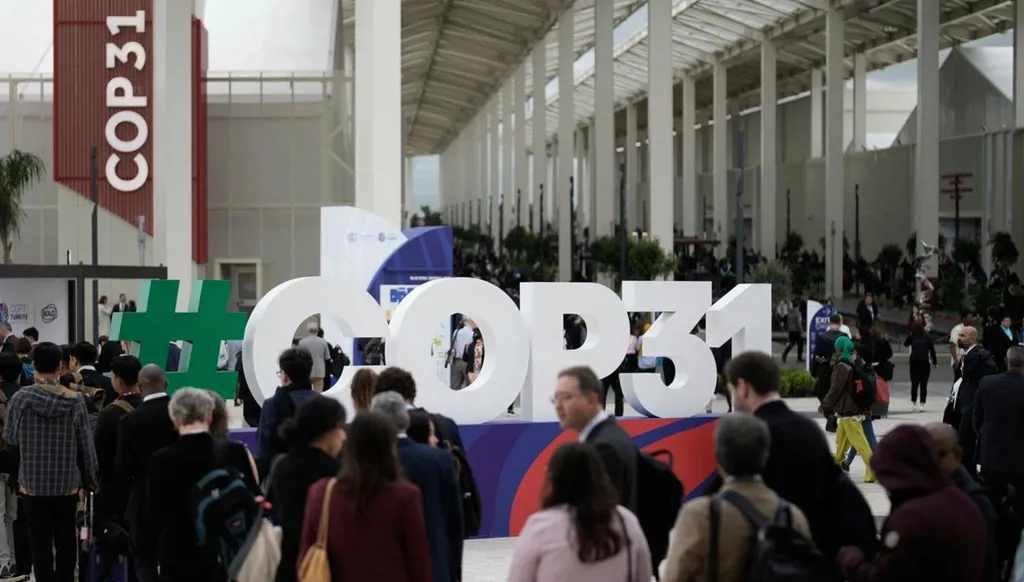
Climate negotiations at COP31 in Antalya are entering their decisive week, with disagreements preceding ministers to the negotiating table. Following a week of technical discussions, outstanding issues are now moving to the political level, but no compromise has yet emerged that reconciles demands for emissions cuts, guarantees of funding, and protection for economies affected by the transition. The main development so far is the start of efforts to seek a comprehensive deal. Its substance, however, and even the scope of the political decision that will underpin it, remain contested.
Attention is focused on the first draft of the conference's overarching decision, which is expected to be presented today, according to Climate Home News. Its wording will reveal how much ground the Turkish and Australian presidencies can bridge between widely diverging positions, as ministers arrived in Antalya amid cautious expectations of reaching an ambitious outcome.
As of the latest information available at the time of writing, the draft had yet to be released. The document published by the presidency on November 13 was a structured compilation of what countries want included, rather than an agreement or a text endorsed by consensus. The distinction is significant: the inclusion of a demand in the presidency's document does not mean that all parties have agreed to it.
The political agenda is now taking shape around issues referred by the two subsidiary bodies after their work concluded late Saturday and in the early hours of Sunday. These include the mitigation work programme, the global goal on adaptation, national adaptation plans, the Adaptation Fund, just transition, and the impacts of climate response measures.
The plan for the second week combines presidential consultations, ministerial intervention to resolve political issues, and continued technical negotiations to incorporate any understandings reached into the texts. This transition does not mean that the details have been settled. Ministers are taking over issues that still require negotiating work, not merely a final signature.
A proposal to increase electricity's share of global final energy consumption to 35 percent by 2035 is emerging as one of the most significant tests of a potential compromise. However, turning it from a voluntary initiative into an element of a negotiated decision requires consensus, which is not yet in place.
By contrast, the Arab Group maintains its opposition to top-down global targets or targets aimed at specific sectors and energy sources. This puts the presidency before a difficult question: How can the push for electrification be translated into a shared commitment while taking into account differences in countries' circumstances and capabilities?
This dispute is inseparable from the future of fossil fuels. Saudi Arabia rejected any reference to Brazil's roadmap for transitioning away from fossil fuels, while India objected to the inclusion of scientific reports and findings that it considers outside the relevant UN negotiating process. The disagreement therefore extends beyond the measures required to the very sources of reference on which the decision will be based.
The financing deadlock enters the second week amid disagreements that go beyond the amounts involved. In negotiations over the guidance of the Green Climate Fund, the Arab Group described expanding the donor base as a red line, while the European Union invoked the wording contained in the new collective quantified goal on climate finance.
The nature of the funding is also a point of contention. The Philippines criticized the growing use of loans, particularly to finance adaptation, while the European Union supported the use of different instruments, including grants for least developed countries and small island states. The issue directly affects the ability of vulnerable countries to protect their populations without increasing their debt burdens. These disagreements carried over from the end of the first week; they are not compromises reached today.
Another track that could offer an opportunity for progress is gaining prominence: a proposal for a just transition mechanism that would combine policy guidance with practical support, with a focus on training, social protection, and worker participation in industrial restructuring. However, it remains a potential basis for discussion and has not yet become an adopted mechanism.
On this day, Antalya appears to be facing the challenge of turning the ministers' arrival into genuine convergence. The clearest indication will come from the anticipated draft: will it narrow the gaps between the parties, or simply bring their conflicting demands together in a single document? So far, the phase of decisive political negotiations has begun, but no major compromise has yet taken shape.