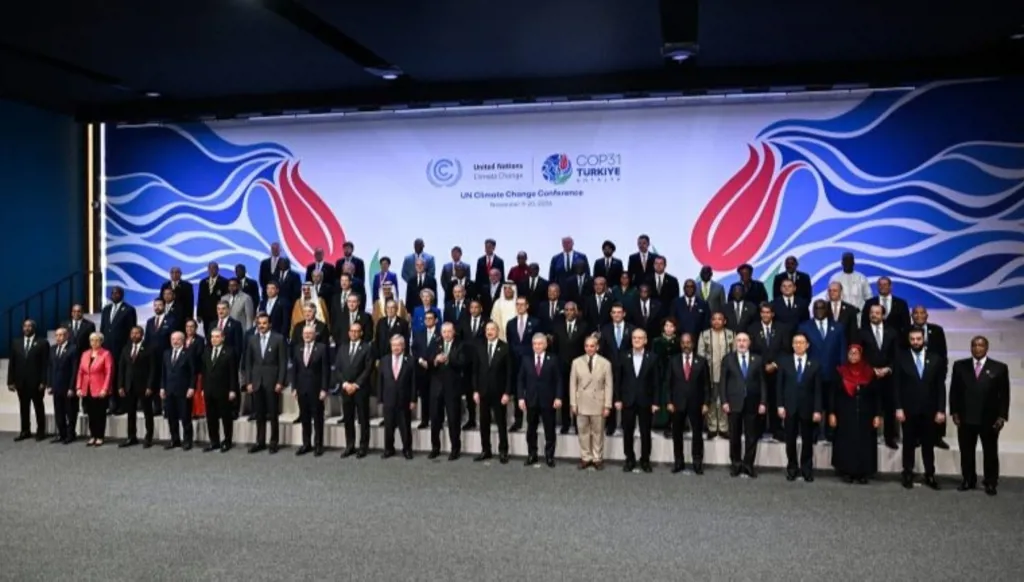
The Italian news agency Ansa reported that members of the Italian delegation to the COP31 climate conference said the plenary session held on Friday evening focused on approving secondary and procedural texts, while the main political files remained unresolved.
These include the final decision, financing, adaptation, mitigation, and a fair transition, all of which have been postponed for resolution until Saturday, November 21, 2026.
According to Reuters, the draft final statement shows a concerning regression, with references to ending the use of fossil fuels removed following objections from oil- and gas-producing countries. Panama, meanwhile, has threatened to reject any agreement that does not address the issue.
Furthermore, leaks from Antalya confirm that the goal of providing $120 billion annually to help developing countries adapt to climate change has been removed. The circulated draft retains a reference to tripling funding for climate impact mitigation, but does not specify a clear amount.
Regarding the "35 by 2035" goal, disagreements persist. The target aims to increase electricity's share of global final energy consumption from approximately 21% to 35% by 2035. However, the draft does not stipulate that this electricity must come from renewable sources, leaving the door open to including electricity generated from fossil fuels.
For now, the overall picture remains unclear, with a negotiating gain for oil-producing countries potentially contrasted by a loss for Arab countries most exposed to climate risks. Removing the reference to fossil fuels reduces political pressure on producing countries, while the absence of a clear figure for adaptation funding weakens the position of countries that need resources to address drought, heat, water scarcity, and rising sea levels.
Additionally, none of this can be considered a definitive gain or loss before the approved texts are released. The Arab position cannot be reduced to a single stance, as the interests of energy-producing countries do not necessarily align with the priorities of North African and Mashreq countries, which are more vulnerable to climate change.
As a result, no definitive agreement has been reached, and the main issues have been pushed to Saturday. The key points to watch in the coming hours are whether the final version reinstates any commitment on fossil fuels and whether adaptation funding receives a clear numerical target rather than a general pledge.