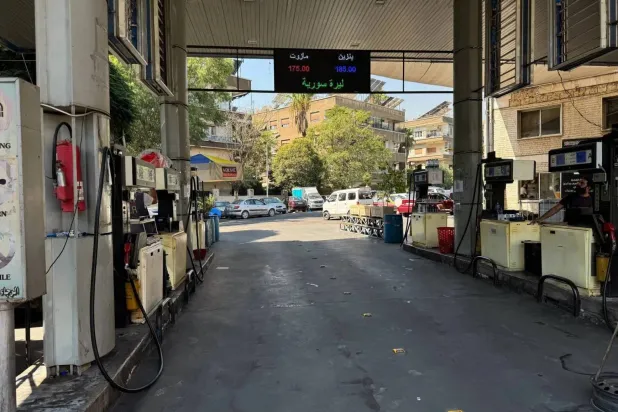
A video of a young girl collecting animal dung for heating in northeastern Syria has revived memories of bitter winters during the war, as rising fuel prices, a weakening currency and a scandal involving contaminated gasoline fuel concerns over a worsening cost-of-living crisis. The widely circulated footage shows the girl gathering dung from farmland in rural Hasakah to make "jalla", a traditional fuel used for heating. With winter approaching, she explains that diesel is too expensive to obtain. The images brought back painful memories for Fatima Hamid, 49, who fled Deir Ezzor for Sahnaya, near Damascus, where she spent several years living with her three children in a cold, dark basement. For Hamid, the recent increase in diesel prices and plans to introduce a cheaper, lower-quality heating fuel have revived fears of the hardships she endured. “Under Assad, they used to sell us tiny quantities of black diesel, thick as mud, for our heaters. Its smell would suffocate us,” she recalled. “Today, we fear the cheaper diesel they’re talking about will be like the red gasoline that damaged cars.” Fuel prices rise as pound weakens Syria’s Energy Ministry raised diesel and other petroleum product prices by 40% in September, increasing the price of diesel from 125 to 175 Syrian pounds per liter. Authorities subsequently introduced a lower-quality, subsidized diesel for heating and agricultural use at 115 pounds per liter. The Syrian pound weakened against the dollar on Tuesday, with the exchange rate exceeding 141 pounds to the dollar after several months of stability at around 130. Economists linked the depreciation to inflationary pressures resulting from higher fuel prices. Meanwhile, the Syrian Petroleum Company recently refused to unload two diesel tankers because their cargoes failed to meet required specifications. Oday al-Sattouf, the company’s media department director, announced that a tanker carrying 16,000 tons of diesel had begun docking and unloading at storage facilities in the port of Baniyas, while a second vessel was awaiting its turn. The shipments are intended to meet growing demand ahead of winter. Speaking to the official SANA news agency, al-Sattouf outlined measures to address shortages, including coordinating with the Homs refinery to increase production and supply diesel to all provinces at 150 pounds per liter. Additional quantities priced at 115 pounds per liter would be produced at Hasakah refineries, while remaining stocks at the Tishreen and Baniyas storage facilities would also be used. He expected supplies to stabilize as deliveries became regular and the Baniyas refinery resumed operations. Contaminated gasoline sparks anger The controversy over contaminated gasoline distributed in Syrian markets has continued since the beginning of October. It followed fuel shortages and widespread confusion after authorities raised the price of 90-octane gasoline to 185 pounds per liter and 95-octane gasoline to 195 pounds. An employee at a Damascus filling station told Asharq Al-Awsat that the adulterated fuel had been withdrawn from all government-run Sadcop stations. Supplies of gasoline meeting the required specifications began reaching those outlets early Tuesday, following quality checks at both the source and delivery points in Damascus. The additional inspections delayed deliveries to filling stations in several provinces, the employee explained. He denied that there was a gasoline shortage and advised motorists to use government stations until the remaining contaminated fuel had been removed from private-sector outlets. Khaled Jamal al-Khalaf, a member of the Syrian People’s Assembly’s fuel committee, has called for the dismissal and prosecution of Syrian Petroleum Company director Youssef Qablawi. Speaking on Syria’s state news channel on Sunday, al-Khalaf held Qablawi fully responsible for what he described as the “contaminated gasoline disaster,” citing extensive damage to motorists’ vehicles. At a car repair workshop in Damascus, Fadi al-Akram was trying to drain the contaminated gasoline from his vehicle and assess the damage to its fuel pump. He estimated his initial loss at two million Syrian pounds for the gasoline alone, while repairs could cost another five million. Al-Akram questioned who would compensate him for the damage. Investigation results pending Authorities have yet to announce the findings of an investigation into the contaminated gasoline. The Syrian Company for the Storage and Distribution of Petroleum Products, Sadcop, previously announced an inquiry into the source of the substandard fuel and how it had reached filling stations. In a statement issued amid mounting complaints, the company reported that tests on samples collected at different stages of the supply chain showed compliance with approved specifications. It nevertheless acknowledged that cases of fuel failing to meet quality standards had been detected in the domestic market.