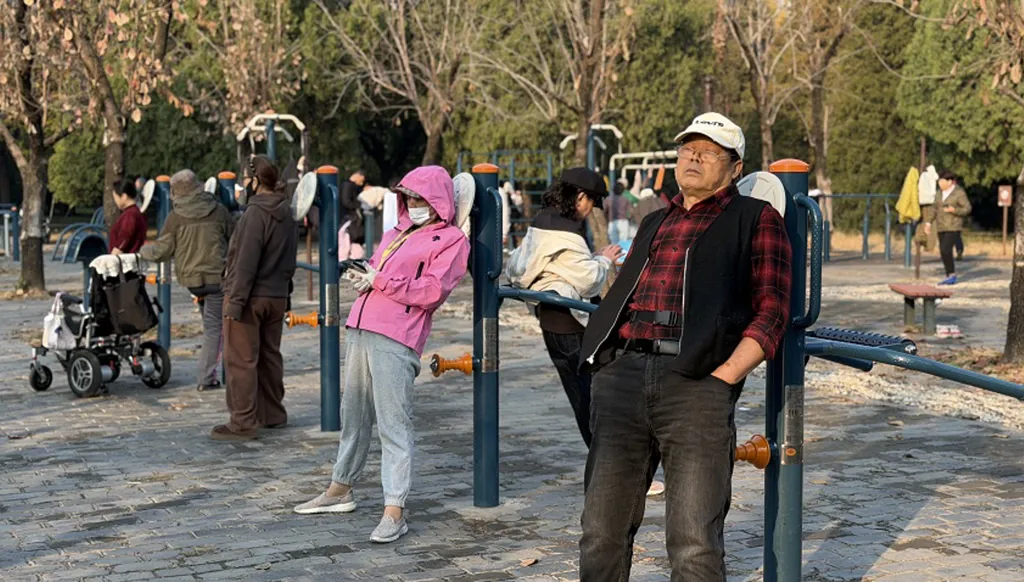
In Beijing, all it takes is a short stroll through one of its parks to discover a scene that may be unfamiliar to many: groups of older people filling the space with energy and activity, from dancing and exercising to playing traditional games. This everyday scene caught my curiosity, particularly as I kept seeing older people across different parts of the city. So I decided to visit the Temple of Heaven Park to take a closer look at this phenomenon.
Since arriving in China, one of the things that has struck me most is the presence of older people in public spaces. In streets, squares and parks, men and women head out every day to exercise, dance to music and meet friends. Some practise tai chi, others play badminton, while groups gather for walks or fitness exercises.
What is particularly striking is that these scenes are not limited to the early morning hours. They continue throughout the day and into the evening. For many of these people, exercise is not simply a way to stay fit, but an integral part of their daily routine and an opportunity to meet friends and spend time together.
To witness this scene up close, I visited a park within Beijing's Temple of Heaven, one of China's most famous historical landmarks. There, the presence of older people was particularly noticeable. While tourists visit the site to explore its history, local residents come to exercise, with some areas having become regular daily meeting spots.
During my visit, I met an elderly Chinese woman named Min Guihua, who spoke to Annahar about her daily exercise routine in the park. "We come to this beautiful place every day to exercise, and we make sure to do strength and stretching exercises, along with shoulder and neck exercises," she said. Her activities do not stop there. She also sets aside time every day to play jianzi, a traditional Chinese game in which players use their feet to keep a small shuttlecock in the air.
Speaking about the importance of these activities, she explained that exercise helps older people maintain both their physical and mental health. "Brisk walking helps us sleep better at night," she added. She also considers the Temple of Heaven Park an ideal place to exercise, given the variety of activities it offers, from walking and running to stretching and massage.
In China, attention to older people extends beyond daily activities to cultural celebrations. The country has an annual festival known as Chongyang, or the Double Ninth Festival, celebrated on the ninth day of the ninth lunar month. It is an occasion to honour older people and express respect and appreciation for them.
These scenes take on added significance in a country experiencing a growing elderly population. According to 2025 data from China's National Bureau of Statistics, the number of people aged 60 and above has exceeded 323 million, representing around 23 per cent of the country's total population.
These figures reflect the demographic shift taking place in China and underscore the growing importance of caring for older people's health, quality of life and social participation. Against this backdrop, parks and public spaces appear to be more than just places for leisure. They provide opportunities for movement and social interaction, helping older people remain active participants in everyday life.
In many societies, retirement can mark the beginning of a period of withdrawal from everyday life. But in China's parks, I witnessed a different picture: people heading out every morning, meeting their friends, dancing and exercising, as though they had a standing date with life. It is an experience worth embracing more widely, as it embodies a simple yet profound idea: that people should remain active, surrounded by others and engaged with life, no matter how old they get. Age may advance, but the spirit of youth should never retire.