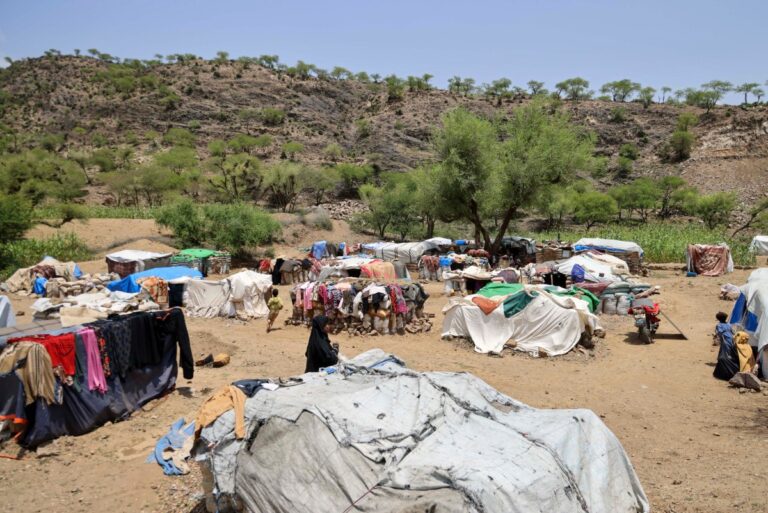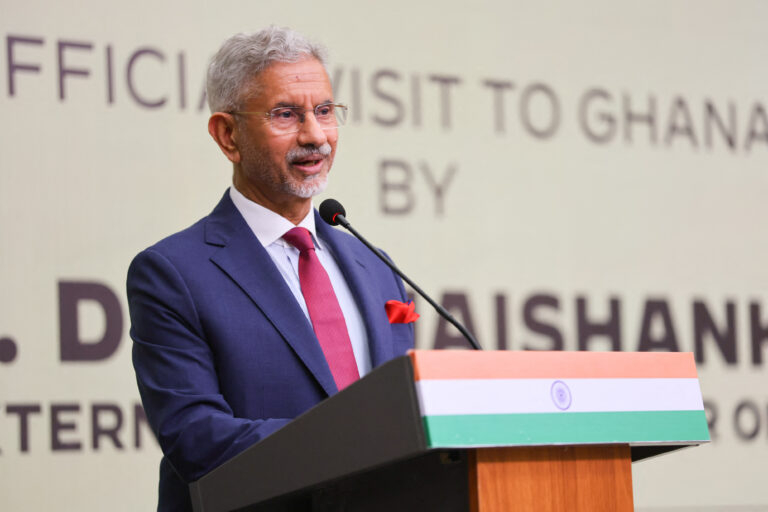
After nearly a decade of failed repatriation efforts, Bangladesh is once again looking to regional diplomacy for a solution to the Rohingya crisis. Dhaka announced this month that it plans to hold talks with China and Myanmar, with State Minister for Foreign Affairs Humaiun Kobir stressing that only a political solution can ultimately resolve the displacement of more than a million Rohingya. Bangladesh continues to insist that any return must be safe, voluntary, dignified and sustainable.
China is an obvious participant. It has strong relationships with both Bangladesh and Myanmar, significant economic interests in each country and a direct interest in stability around the Bay of Bengal. Beijing has also been involved in Rohingya diplomacy for years. In 2019, it helped establish a trilateral mechanism with Bangladesh and Myanmar intended to facilitate repatriation and support economic development in Rakhine State.
The renewed discussions therefore offer an opportunity to view the Rohingya crisis not simply as a humanitarian burden but as a regional problem in which Chinese diplomatic, economic and strategic interests increasingly converge.
A more stable Rakhine State would benefit China in several ways.
The first is economic. Rakhine sits at an important point in China’s regional connectivity ambitions. Beijing and Myanmar have agreed to advance major elements of the China-Myanmar Economic Corridor, including the Kyaukphyu Deep Sea Port, while the oil and gas pipelines connecting Myanmar’s coast with China already give the region considerable strategic significance. During Myanmar President Min Aung Hlaing’s state visit to China in June, the two governments again committed themselves to advancing the corridor and other infrastructure projects.
In reality, protracted displacement can impose substantial economic and political costs on entire regions
Long-term instability is therefore not in China's economic interest. Infrastructure requires predictable borders, functioning local economies, secure transport routes and political stability. Persistent conflict and displacement create precisely the opposite environment. A meaningful political settlement involving the Rohingya would consequently complement rather than compete with China’s economic objectives.
The same applies to Bangladesh. Relations between Beijing and Dhaka have expanded considerably. Prime Minister Tarique Rahman’s visit to China this year produced discussions on infrastructure, investment, ports, energy and greater economic connectivity. Bangladesh and China are also exploring a Bangladesh-China-Myanmar economic corridor, while officials in Dhaka and Beijing discussed the proposal again this month.
Here the Rohingya crisis intersects directly with economic geography. A corridor linking Bangladesh, Myanmar and China would pass through a region whose economic potential has been constrained by insecurity and political fragmentation.
Resolving the Rohingya crisis would therefore not be separate from regional development. It could become part of the foundation upon which deeper regional economic integration is built.
There is a useful lesson here. Humanitarian crises and economic development are too often treated as separate policy areas. In reality, protracted displacement can impose substantial economic and political costs on entire regions.
Bangladesh has hosted more than a million Rohingya despite the immense pressure this places on public services, local communities and the environment. Dhaka has repeatedly made clear that indefinite displacement cannot constitute a permanent solution.
Chinese engagement need not be understood as a choice between humanitarian responsibility and national interest
China has previously recognized the connection between political stability and development. Its earlier trilateral framework explicitly identified development as an important component of resolving the Rakhine crisis, alongside repatriation and dialogue. That approach deserves serious consideration.
Return cannot be sustained merely by transporting refugees across a border. People require livelihoods, education, healthcare, infrastructure and security if communities are to survive after repatriation. Economic reconstruction is therefore not an alternative to political rights. Properly structured, it can help create the material conditions in which a political settlement becomes durable.
This is an area where China possesses particular capabilities. Few countries can combine diplomatic engagement with Myanmar, close relations with Bangladesh and the ability to mobilize large-scale infrastructure and development investment. That combination creates possibilities unavailable to actors relying primarily on diplomatic pressure or humanitarian assistance.
China also has another advantage: access. Western engagement with Myanmar has been constrained by sanctions and political isolation. Beijing has maintained working relations with Myanmar’s government while simultaneously developing increasingly close ties with Bangladesh.
That does not guarantee diplomatic success. Myanmar’s civil war has made the political landscape far more complicated than it was when the original trilateral mechanism was established. But sustained access can create opportunities for incremental progress where public confrontation cannot.
For Beijing, successful engagement would also reinforce its wider diplomatic objectives. China increasingly presents economic development, regional connectivity and political dialogue as complementary instruments of international cooperation. The Rohingya crisis provides an opportunity to demonstrate what that model can achieve in practice.
A process that gradually creates the conditions for voluntary return, economic reconstruction and greater stability in Rakhine would deliver benefits extending beyond the Rohingya themselves.