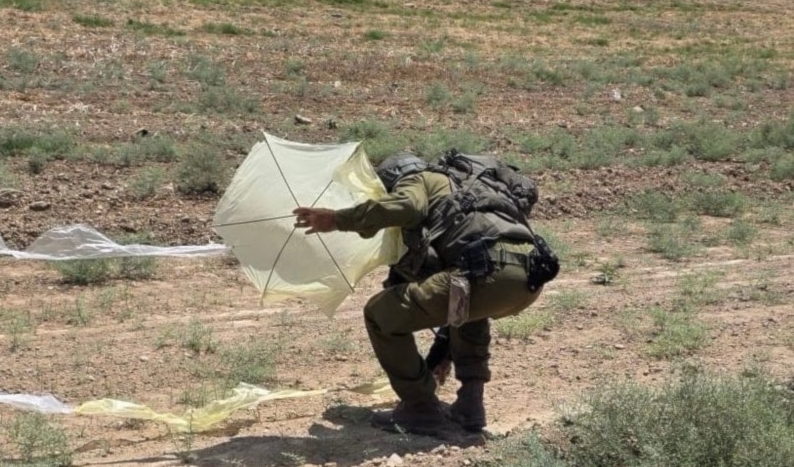
Israel is calibrating its assault on the Gaza Strip around domestic political needs as the election season approaches. In this phase, even minor incidents are being turned into political tools, with Palestinians paying the price. The latest example came after Defense Minister Israel Katz summoned military chief Eyal Zamir for an urgent discussion over kites launched from Gaza, following the fall of one of the toys children fly during the summer in the occupied territories. Israeli media devoted extensive coverage to what it called the “terror of kites”. Kan channel said 10 unarmed kites had fallen in Gaza border settlements over the past week. Prime Minister Benjamin Netanyahu appeared holding a model F-35 fighter while drawing a parallel between armed drones used on the Lebanon, Iran and Ukraine fronts and kites in Gaza. “This is the F-35. Do you have a drone at home? It can be just as lethal if they come in large numbers, are armed and highly accurate, and are difficult to detect,” Netanyahu said. He added that Israel had been working for years to counter drones and ordered security forces to “do everything possible” against what he called the threat, including targeting the devices, their operators and launch sites. On the ground, relative calm lasted only two days before violence gradually resumed. Since the start of the week, Israeli forces have struck a house in Deir Al-Balah, a tent sheltering displaced people in Khan Younis, a commercial structure in Al-Zawaida and a sheltering school in northern Gaza. They also carried out dozens of live-fire and artillery attacks around the “Yellow Line” east of Gaza City. In Deir Al-Balah, Israeli forces struck the courtyard of a house belonging to Al-Hasanat family, claiming to have killed a resistance member, Sharif Al-Hasanat. An industrial fuel production workshop in Al-Maghazi refugee camp was also hit, killing one person and injuring others. After the wave of strikes, Katz said he had ordered a response to the kite launches, calling them a “serious threat”. The most significant escalation was the renewed threat against civilian and commercial buildings. Residents of Al-Zawaida were ordered to evacuate a commercial structure surrounded by dozens of tents housing displaced people. A warplane then struck it with three missiles, killing and injuring several people. In Khan Younis, an Israeli strike on a displacement tent injured five people. After the wave of strikes, Katz said he had ordered a response to the kite launches, calling them a “serious threat”. Netanyahu and Katz also held a security meeting attended by Zamir, the national security adviser and senior military commanders. In a joint statement, they warned Hamas that if the “launches” toward the occupied territories did not stop immediately, the military would intensify assassinations of those responsible and evacuate residents from launch areas. Netanyahu said Israel would not allow a return to the situation before October 7 or permit threats to Gaza border settlements. No launch of kites carrying explosives or incendiary materials was reported before the announcement. The episode suggests the Israeli government may continue finding pretexts to renew escalation when politically necessary. Hamas official Basem Naim said US envoy Jared Kushner and other members of the US delegation had asked Hamas to consider the “sensitivity” of the timing of the recently reached agreement for Netanyahu, whom they described as facing a “delicate internal” period. Maariv military correspondent Alon Ben David wrote that the military establishment understood Netanyahu did not want to close any of the open fronts and might seek to reignite one, most likely Gaza, to disrupt or postpone elections. He quoted senior military officials as saying they “would not cooperate” in entering an unnecessary new war. Gaza’s fate may therefore remain tied to the Israeli coalition’s domestic calculations and electoral interests, with no clear path toward even a temporary de-escalation or progress on the second phase of the Trump plan. This is an edited translation for a report published in Arabic.