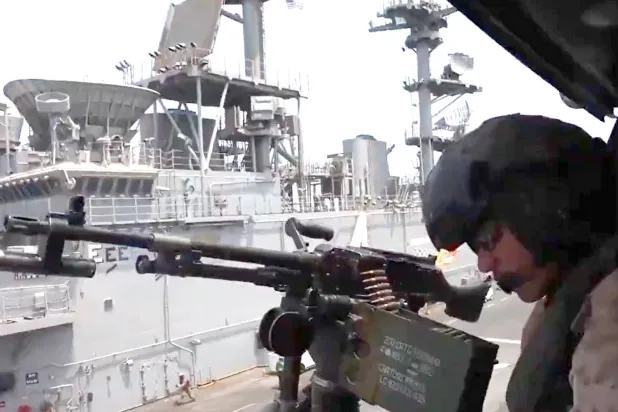
The United States is working to secure navigation in the Strait of Hormuz, as talks between Washington and Tehran remain stalled and the war is in its seventh month. US Central Command (CENTCOM) commander Adm. Brad Cooper said on Saturday that the US military is continuously working to keep the Strait of Hormuz open and secure, adding that US forces supported the transport of over 1 billion crude oil barrels through the Strait of Hormuz “in the last couple of months” despite an ongoing exchange of strikes with Iran. “We’ve reached this significant milestone while assisting over 2000 commercial ship transits through the Strait by providing coordinated protection. Clearly momentum is building,” Cooper said in a video posted on social media. “Thousands of ships have passed through the Strait. Over 1 billion barrels of crude have been shipped from Gulf partners through the Strait of Hormuz, and Iran has exported zero barrels thanks to our ironclad blockade,” he continued. The US commander said CENTCOM is working with regional partners, along with insurance and shipping companies, to increase commercial traffic through the waterway. “We're also working with every partner in the region, enhancing their air defense, forming a new coalition attack drone unit, and keeping the Strait of Hormuz and surrounding waters open and clear,” Cooper said. His comments came as the United States and Iran remain locked in a military conflict following the collapse of both the April and June 2026 ceasefire agreements. The US re-imposed its blockade of Iran's shipping and ports on July 13 in an attempt to cut off oil sales — Tehran's primary source of hard currency — compounding earlier losses from wartime strikes on its energy infrastructure. CENTCOM said it assisted over 2000 commercial ship transits through the Strait Iranian-Pakistani Talks Amid growing concerns over the safety of oil supply routes, Pakistan has recently intensified its contacts with Tehran on regional developments. Pakistani Foreign Minister Ishaq Dar and his Iranian counterpart Abbas Araghchi discussed regional developments over the phone on Saturday. Dar emphasized the importance of “uninterrupted energy supplies and the safe and expeditious passage of ships,” particularly given their impact on developing countries and global supply chains, according to a Pakistani Foreign Ministry statement. He stressed that dialogue and diplomacy remain the “only viable means” of ensuring peace and stability in the region. The two sides agreed to maintain close cooperation and meet in New York on the sidelines of the 81st UN General Assembly next week. On Friday, The Financial Times said Pakistan’s army chief has urged Iran to try to rein in Houthi escalation in the region. Field Marshal Asim Munir travelled to Tehran last month to meet Iran’s President Masoud Pezeshkian and other political leaders and has held multiple phone calls with Araghchi — most recently on Thursday, according to Iranian news agency IRNA. South Korea Does Not Object Meanwhile, South Korea’s presidential office said Saturday that President Lee Jae Myung’s earlier remarks ruling out troop deployments that could involve the country in a war, did not amount to a “refusal of US President Donald Trump’s request for Seoul to send forces” to the strategic Strait of Hormuz, according to the Yonhap news agency. Myung said on Friday he would not deploy military assets to the Middle East in a way that could draw the country into conflict, but Seoul was reviewing whether to play a greater role in safeguarding navigation in the region. According to The New York Times, Myung pushed back against pressure from the Trump administration when he declared that his country would not deploy troops or military assets to support the US-led war against Iran. “Lee did not turn down Trump’s request for South Korea’s cooperation on Middle East-related issues during yesterday’s press conference,” the Yonhap news agency reported on Saturday, citing a presidential official who spoke to reporters on condition of anonymity. The official said the government was reviewing “practical ways to contribute” in close coordination with the international community. Seoul will continue to examine concrete options under its stated principle of not intervening in wars or combat, the official added. Trump’s Major Decision In Washington, US President Donald Trump has again raised the possibility of a major new military escalation against Iran while keeping the door open to negotiations. Trump told Axios on Thursday that he was approaching a major decision over whether to restart large-scale attacks against Iran, asking whether he wanted to “go in and annihilate” the Iranian regime. Trump on Wednesday said he hoped an end to the war against Iran was near. But US officials warned that the conflict had entered an “unsustainable stalemate that is neither full-scale war nor stable peace.”