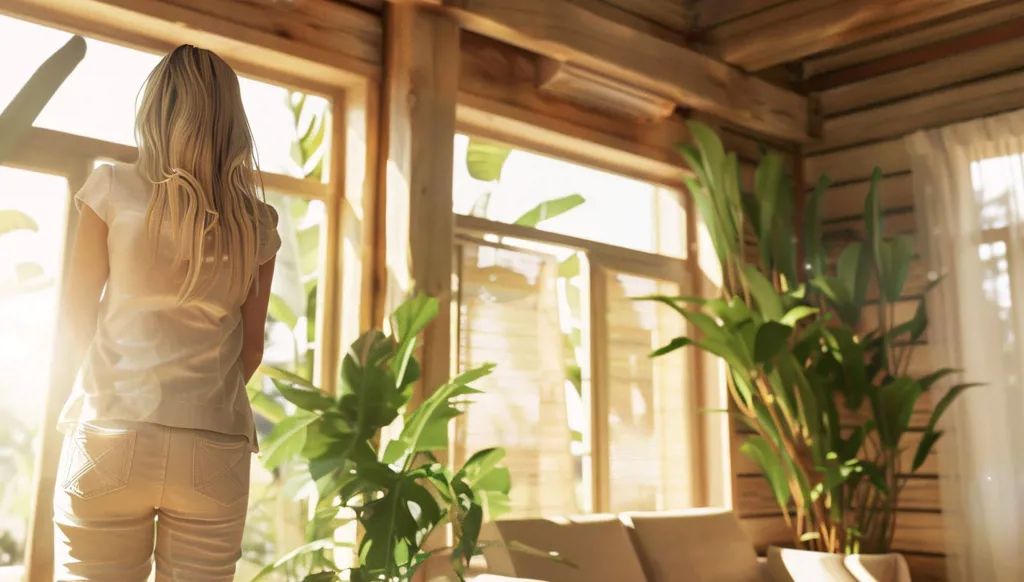
We spend most of our time indoors, with our homes serving as the places we retreat to for rest, relaxation and recharging after a long day. Yet, we rarely consider how a home's design and finer details affect our mental and physical health, or how suitable our living environment is for our long-term well-being. Is a home simply a place that provides shelter and aesthetic appeal, or can it go further and become a key factor in improving our quality of life and perhaps even helping us live longer?
The concept of wellness at home is no longer limited to adding sauna rooms or setting aside spaces for relaxation. Instead, it has taken on a broader meaning linked to what is known as healthspan, or the number of years a person can enjoy good health and an active life. Against this backdrop, designers and architects are beginning to raise new questions about the role of residential spaces in supporting human health and how the home itself can influence the lives of its occupants over several decades.
In an exclusive interview with Annahar, interior designer Caroline Ezzeddine highlights a number of key elements that should be taken into consideration when designing a home, given their impact on both mental and physical health. These include air quality, proper ventilation and humidity control.
She also stresses the importance of thermal and acoustic insulation in creating a peaceful and comfortable home environment by maintaining suitable temperatures and reducing external noise.
As a result, the measure of a good home is no longer limited to its luxury or aesthetic design. It is also increasingly defined by its ability to provide a healthy, comfortable environment that enhances our quality of life.
According to a report published by Architectural Digest, home design is no longer solely about aesthetics and luxury. It is increasingly connected to human health and long-term well-being. We spend most of our lives indoors, where we are constantly exposed to the materials used in construction and furnishings, while being affected by air quality, lighting and the details of our surroundings, often without even realizing it.
The report points out that choosing healthier materials, planning spaces thoughtfully and basing design decisions on scientific evidence can transform a home into an environment that supports health and recovery. In this context, it introduces the concept of Longevity Living, an approach to interior design that focuses on creating spaces that help people restore their physical and psychological balance, support nervous system health and promote long-term well-being.
Pay attention to air quality: Ventilate rooms daily, open windows whenever possible and use air purifiers when needed.
Choose the right lighting: Make the most of natural daylight and opt for warm, comfortable lighting in the evening, particularly in bedrooms.
Reduce visual clutter: Opt for a simple, organized design and limit the number of objects, colours and conflicting details that may create a sense of distraction.
Choose healthy materials: Prioritize paints, furniture and materials with low chemical emissions, and avoid, as far as possible, products that negatively affect indoor air quality.
Control temperature and humidity: Invest in thermal insulation, ensure proper ventilation and address sources of moisture to prevent mould from building up.
Improve sound insulation: Use curtains, rugs and sound-absorbing materials to reduce noise and create a quieter environment.
Create spaces for relaxation: Set aside a corner for reading, meditation or a quiet activity, away from screens and sources of disturbance.