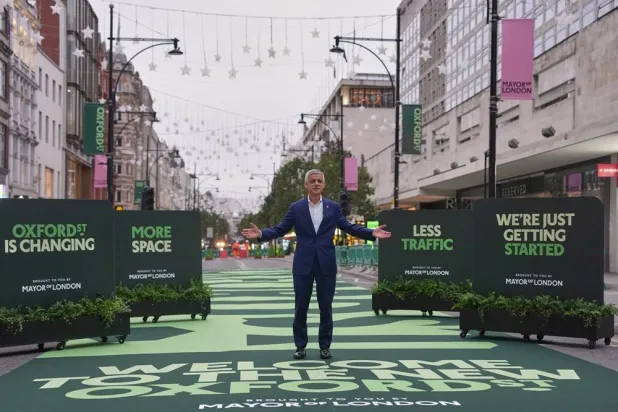
Part of London's Oxford Street, Britain's busiest shopping thoroughfare, went permanently traffic-free on Monday in an effort to revitalize the area and create a new public space to boost economic growth. An almost 1-km (0.6-mile) section of Oxford Street between the Selfridges and IKEA stores is now closed to buses, cars, taxis, cycles, scooters and pedicabs, the office of London Mayor Sadiq Khan said. The move has been more than two decades in the making. It and a wider regeneration project aim to put Oxford Street back among top global shopping destinations including New York's Times Square, Paris' Champs-Élysées and Barcelona's La Rambla. "After so many false dawns, and now working with a government who share the scale of my ambition, I’m proud that we’re finally unlocking a new era for the street," Khan said. "Revitalizing Oxford Street will boost jobs and economic growth in the capital." Oxford Street, connected to Bond Street and Regent Street and home to John Lewis, Marks & Spencer, Tiffany & Co and many others, has struggled since the COVID pandemic, with the arrival of US candy stores putting off many shoppers. The pedestrianization is the first stage of a transformation, although minimal construction will take place during the run-up to Christmas, a busy shopping period. Plans for 2027 include more than 50 new trees, 100 new seats, two public squares, rest areas and better signage and lighting. Oxford Street attracts around half a million visitors every day, according to the mayor's office, but many flagship stores, including House of Fraser and Topshop, have shut in recent years, and Khan said the area had been neglected. "This marks an exciting new chapter for Oxford Street, creating a greener, more vibrant place that will attract visitors and investment, support businesses and jobs, and drive growth in the heart of our capital," British housing, communities and local government minister Angela Rayner said.