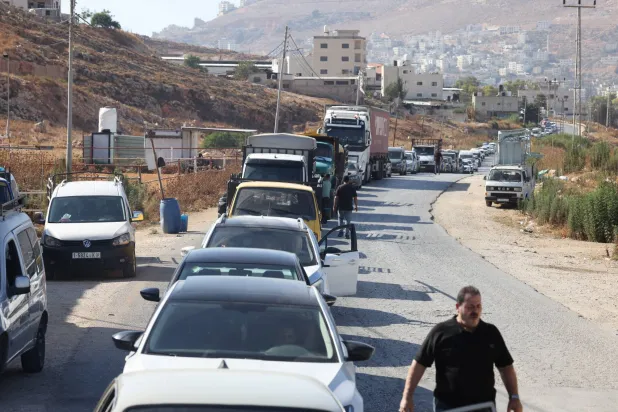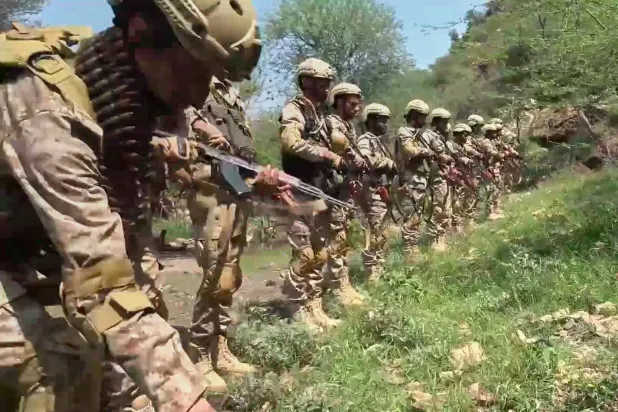
Fighting between Yemeni government forces and the Houthis continued across interconnected fronts stretching from western Taiz to Lahj and the west coast, with clashes intensifying on high ground overlooking the Bab al-Mandab strait and routes leading to the coast. Government forces reported recapturing positions, repelling attacks and shooting down drones as airstrikes targeted Houthi fortifications and reinforcements. The fighting has centered on an area extending from Ras al-Ara and Al-Mudaribah in Lahj through Al-Wazi’iyah and Kahbub to the southern countryside of Taiz, where the two sides are battling for high ground overlooking supply routes and coastal areas. Government forces reported repelling a Houthi attack in the strategic Kahbub mountain range and regaining large parts of contested positions, while limited Houthi pockets remained in some sectors. Strategic mountain retaken In southern rural Taiz, government forces said they had taken full control of Jabal Qarfan in the Harad Jirdad area of Al-Shamayatayn district after fierce fighting with the Houthis. Maj. Gen. Abdulaziz al-Majidi, chief of staff of the Taiz Military Axis, said government troops, backed by fighters from Bani Omar, seized the mountain, which he described as a strategic position in the range overlooking Al-Wazi’iyah. The government forces said more than five Houthi fighters were killed and around 20 wounded in the clashes. The high ground around Al-Wazi’iyah and Kahbub is strategically important because it overlooks parts of the coast and roads leading to it. Government forces say the Houthis use valleys, ravines and dense vegetation around Al-Wazi’iyah to conceal fighters and equipment and maintain supply lines toward the west coast. Field sources said Houthi reinforcements continued to arrive, particularly in Al-Wazi’iyah, as the intensity of fighting shifted between fronts. Government denial Separately, government forces and the Houthis traded accusations over the deaths of government prisoners in Al-Jawf province. Yemeni Armed Forces spokesman Col. Majed al-Nazili rejected a Houthi account claiming prisoners had been killed at a detention facility in Al-Hazm district, calling it “false and misleading” and accusing the group of trying to blame government forces for their deaths. Al-Nazili maintained that no strike had been carried out inside Al-Hazm city, whose military sites he said were under Houthi control. He called on the group to ensure the safety of prisoners and detainees, keep them away from combat zones and inform the International Committee of the Red Cross of detention locations. He also accused the Houthis of seeking to exploit the prisoners’ case to mislead public opinion, linking it to what he described as a Houthi attack on a market in Lahj province. Government forces also announced strikes against Houthi personnel and equipment in the city of Mokha in Taiz province and in Al-Bayda, saying the operations were aimed at limiting the group’s ability to attack troops and civilians. Displacement could top 230,000 The fighting comes as the latest escalation fuels a growing displacement crisis. The UN refugee agency warned that the number of people internally displaced by the recent escalation could exceed 230,000 if the current pace of fighting and displacement continues. UNHCR Yemen representative Armen Yedigaryan noted that more than 130,000 people had fled their homes since the beginning of September. More than 3,000 people have also reached Djibouti, while hundreds have fled to Somaliland and Puntland in Somalia. The latest displacement comes on top of a protracted crisis that had already forced more than 5.2 million people from their homes, according to UNHCR. Yedigaryan said more than 22 million people in Yemen require humanitarian assistance, including around 65,000 refugees and asylum-seekers, while aid operations face severe constraints from insecurity, movement restrictions, communications disruptions, damaged roads and infrastructure, and funding shortages. Taiz accounts for more than 60 percent of the latest displacement, UNHCR revealed, with additional displacement reported in Al-Jawf, Marib and Hodeidah. According to UNHCR spokesman Babar Baloch, some mothers had reported being displaced for the fourth time since the war began more than 12 years ago.