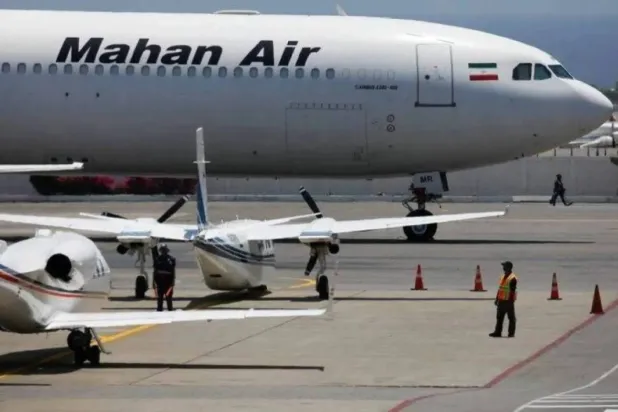
Under pressure from armed factions, Prime Minister Ali al-Zaidi’s government secured US approval for Iranian airlines, excluding Mahan Air, to operate 40 daily flights to and from Najaf airport, drawing praise from Iran-aligned figures and groups in Iraq. The US Treasury Department issued a tightly restricted, one-month license last Tuesday, allowing Iraqi Airways to fly to Iran exclusively from Najaf airport. It did not cover Iranian airlines operating flights in the opposite direction. The license also strictly limited eligible passengers to specified categories, including students, patients and visitors to religious sites. The prime minister’s media office said in a statement that al-Zaidi had undertaken “close follow-up and a series of contacts” before securing a US license allowing Iranian airlines to resume flights to and from Najaf International Airport. “The efforts resulted in an agreement allowing Iranian airlines, excluding Mahan Air, to operate 40 flights daily to and from Najaf International Airport,” it said. According to the statement, al-Zaidi welcomed “the US government’s positive response to Iraqi efforts and its cooperation in granting the requested exemption, helping resolve this issue and facilitate travel for pilgrims and other passengers, particularly those traveling for treatment, religious visits and tourism.” “Air traffic is more than transport between two airports; it is a bridge connecting peoples,” the statement quoted al-Zaidi as saying. “Among the passengers are patients waiting to reach treatment facilities, pilgrims heading to holy shrines and families waiting to reunite easily, alongside the importance of these flights for tourism, the economy and social ties.” It remains unclear whether the new US license will be open-ended or expire on Oct. 28, as stipulated in Washington’s initial authorization. Sources told Asharq Al-Awsat, however, that the license grants specific exemptions for humanitarian needs, medical treatment, education and religious tourism. Its primary purpose is to facilitate travel between the two countries for Iranian and Iraqi passengers and pilgrims. Transporting cash Even under the new license, sources said, the ban will remain in force on transporting large amounts of cash or shipping goods intended for the Revolutionary Guards, the military, or Iranian entities under US sanctions. The exemption also prohibits “the export or re-export of any technology or software to Iran” and permits only personal baggage and aviation safety supplies, the sources said. Al-Zaidi’s government had faced fierce criticism from Iran-aligned factions, political figures and sympathizers in Iraq over its compliance with US Treasury sanctions on Iranian civilian airlines. Some staged protests denouncing the government and threatened to shut all airports if it maintained its position. That stance shifted today, with the same groups beginning to praise the government’s efforts after it secured the US exemption. A member of the Coordination Framework who heads the Imam Ali Brigades praised the government’s efforts, as did Badr Organization leader Hadi al-Amiri, who welcomed the work that led to the resumption of Iranian flights to Najaf airport. Disarming the factions Separately, groups within the Coordination Framework renewed their full support for the government's efforts to bring all weapons under state control and to disarm the factions. They also backed the continued work of a four-member committee previously formed by the alliance to resolve the weapons issue. The ruling alliance met on Friday evening, with al-Zaidi attending, to discuss current political and security developments and priorities following “Sovereignty Day.” The term refers to Sept. 30, when US-led international coalition forces withdrew from Iraq after a mission to help the country fight ISIS. The secretary-general of Kataib Hezbollah, Abu Hussein al-Hamidawi, announced the day after the coalition’s withdrawal “a complete halt to all military operations and mobile logistical activities.”