ALBAWABA- An armed group has shut a valve on a crude oil pipeline linking Libya’s Sharara oilfield to the Zawiya port, sharply reducing production and raising the risk of a complete shutdown, the National Oil Corporation (NOC) said on Monday.
The group closed valve No. 7, causing pressure to build in the pipeline and significantly reducing output from Sharara, one of Libya’s largest oilfields. NOC technical teams have been unable to access the area around valves 6 and 7, while efforts to secure access through the Southwest Oil Facilities Security Department have so far failed, the corporation said.
The NOC warned that if the closure continues, production at Sharara and related transport and export operations could be suspended. It said the disruption would reduce state revenues and could also force the Zawiya refinery to shut down, increasing Libya’s reliance on imported refined fuels.
The corporation said it could declare force majeure if the situation persists and called for the pipeline to be reopened immediately. It also urged authorities to protect oil facilities from armed groups, protests and other disruptions.
Sharara, operated by Akakus Oil Operations, has a production capacity of about 300,000 barrels per day. The field is located in southwestern Libya, with crude transported through the pipeline to the Zawiya terminal on the Mediterranean coast.
#Libya: National Oil Corporation Statement Regarding the Closure of the Sharara Crude Oil Pipeline by an Armed GroupThis morning, Monday, an armed military group closed valve number 7, leading to the shutdown of the crude oil pipeline from the Sharara field, operated by Akakus… pic.twitter.com/yBM7651PaZ
The latest disruption comes amid repeated attacks and closures affecting Libya’s oil industry, which has faced instability since the 2011 uprising. Earlier this month, similar valve closures linked to armed groups disrupted production at Sharara and other fields, prompting temporary force majeure declarations.
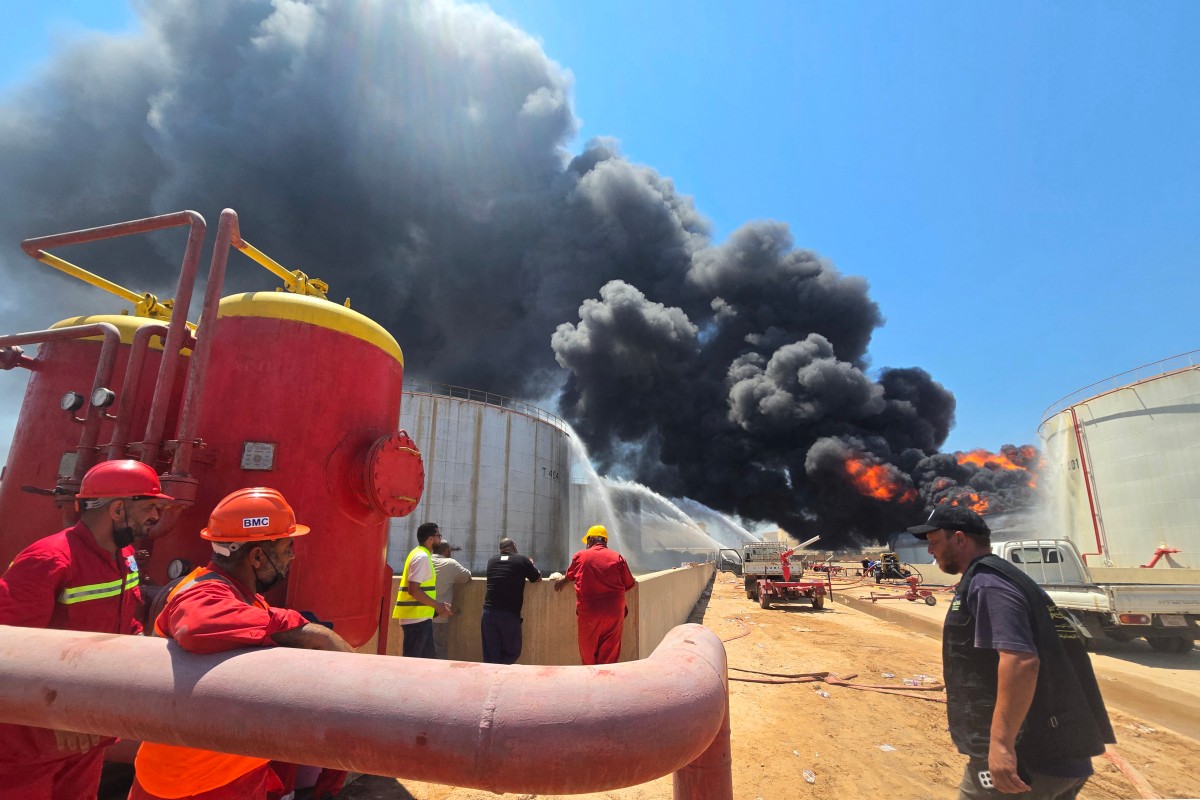
Western Libya has also experienced recent drone attacks targeting oil infrastructure around Zawiya. The NOC has reported strikes on a blending facility and fuel storage tanks, including a gasoline tank containing millions of liters.
Libya remains politically divided between rival authorities in the west and east, while armed groups continue to exert influence over key infrastructure. The recurring disruptions have increased concerns over the security and reliability of the country's oil production and export operations.
Dr. Mansour Al-Maswari is Postdoctoral Fellow at Columbia University-Global Center, Amman. A Yemeni academician with a Ph.D. in English "Comparative Literature" and two MA degrees, one in political science and the other in English, Dr. Al-Maswari possesses more than 17 years of extensive experience in university-level teaching, research, research reviewing, bilingual translation, and copy-writing...
Subscribe to our newsletter for exclusive updates and enhanced content