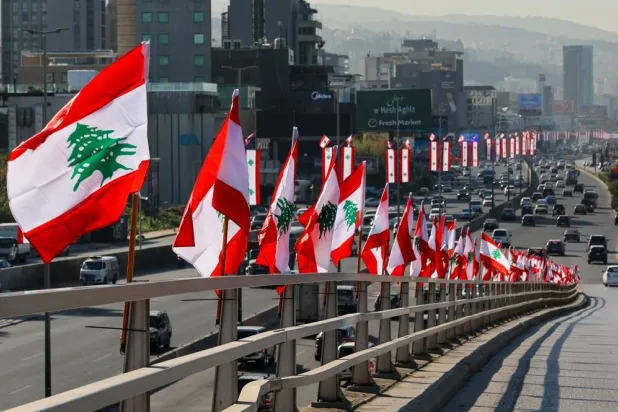
Lebanese President Joseph Aoun stressed on Sunday that "Lebanon will neither be liberated, nor stabilize, nor prosper except through sovereignty resting solely with the state, not through mini-state projects." He made his remarks on 37th anniversary of the assassination of President Rene Moawad, building upon the position he declared on Independence Day on the state's exclusive control over arms and the need to establish a state with sole decision-making authority. His stance was met with support and praise from religious authorities and political forces, and backlash from Hezbollah and its allies. Separately, Marking Independence Day, Parliament Speaker Nabih Berri said that "independence this year is incomplete and unfulfilled, and will only be realized by liberating the land and restoring unity across official and popular Lebanon." Speaking on the anniversary of Moawad’s assassination, Aoun said: "They blew up President Rene Moawad because he refused to trade the presidency for sovereignty, refused to relinquish independence in exchange for stability, and confronted the equation of surrendering to the tutelage of a friend as a coercive price imposed to confront the occupier." "He realized 37 years ago that Lebanon will neither be liberated, nor stabilize, nor prosper, nor remain a final homeland for all its citizens, except through sovereignty resting solely with the state, not through mini-state projects; through consensus anchored in balance, not illusions of hegemony; and through complete and responsible national freedom, with belonging and loyalty solely to Lebanon, not to the dreams of foreign powers of control, annexation, and encroachment,” he noted. Lebanon’s Grand Mufti Sheikh Abdul Latif Derian said the speeches delivered by Aoun and Prime Minister Nawaf Salam on Independence Day fostered reassurance, describing their positions as "bold, courageous, and firm" at this critical juncture for the country. Derian stressed that both addresses are rooted in the Taif Agreement, which mandates the state's monopoly on weapons and the extension of its authority across all Lebanese territory. He also underscored support for the diplomacy pursued to end the Israeli occupation, calling it the best path for residents of the South to return to their villages and towns and launch the reconstruction process. In his Independence Day address, Aoun declared: "Completing our independence today faces two main obstacles: the Israeli occupation of parts of our land, and foreign interference in our affairs, specifically by certain influential quarters within the Iranian regime, through weapons and decision-making outside the authority of the Lebanese state." Salam stressed that the state alone holds the power over war and peace, and that its authority will extend across all territory under a single legitimate armed force. Support for Aoun's speech Lebanese Forces party leader Samir Geagea said Aoun's speech reflects "the voice of an overwhelming majority of Lebanese," urging that the address be translated into tangible steps on the ground as quickly as possible. MP Ashraf Rifi declared his full backing for the president, describing his address as "the true Independence Day speech" because it clearly identified the obstacles to completing Lebanon's independence: Israeli occupation, Iranian interference, and weapons outside state authority. Rifi questioned critics of the president’s remarks: "What has Lebanon gained from the 'support wars' and regional axes other than destruction, displacement, and losses? And who granted any faction the right to drag the nation into regional conflicts in service of foreign interests?" Along the same lines, Maronite Patriarch Beshara al-Rahi stressed in his Sunday sermon that independence must not remain "merely written in history," but must be tangible on the ground and embodied in national will and decision-making. He urged the necessity of protecting the South, reclaiming all Lebanese territory, and keeping the country neutral from conflicts and wars. Qabalan attacks Aoun Senior Jaafari Mufti Sheikh Ahmad Qabalan rejected Aoun’s characterization of Iranian involvement as foreign interference. Qabalan said: "There is no party tied to Iranian interference; rather, there is a Lebanese resistance faction that fought Israel for decades, made the greatest sacrifices to defeat the occupying Zionist army, defeated it with God's help and Tehran's assistance, and liberated our country, Lebanon." He added that the price paid by the "resistance duo" - comprising the Amal Movement, Hezbollah, and their popular base - was paid "so that Lebanon and the Middle East region remain, and so that Your Excellency remains in Baabda Palace." Hezbollah Hezbollah bloc MP Hassan Fadlallah said Lebanon's independence remains incomplete due to the ongoing Israeli occupation of parts of its land and foreign interference in state decisions and the shaping of its policies and stances. Fadlallah accused the US administration and foreign embassies of inciting certain Lebanese parties to confront other Lebanese, aiming to undermine internal unity and push the country into a clash serving foreign interests. By contrast, he expressed confidence in Iran, asserting that it is "shaping a new equation in the region from which Lebanon will be the primary beneficiary."