Egyptian President Abdel Fattah Al-Sisi said on Tuesday that Egypt’s cooperation programme with the International Monetary Fund (IMF) was nearing completion, citing economic growth of 5.1% in the 2025/26 fiscal year, foreign reserves of $57.5bn in October and foreign direct investment (FDI) of approximately $18bn.
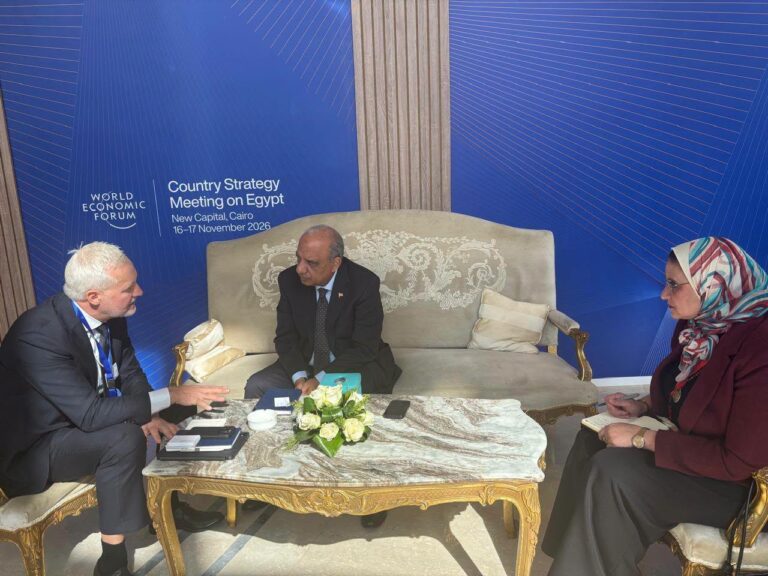
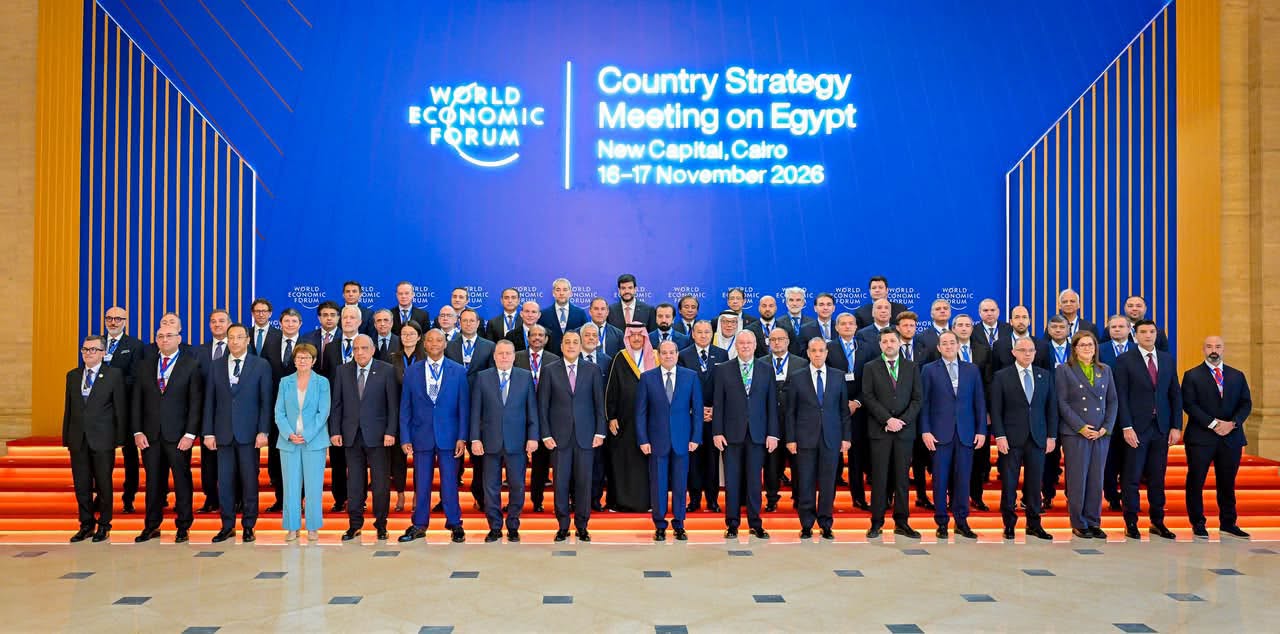
Al-Sisi made the remarks during a high-level strategic dialogue at an Egypt-focused meeting organised by the World Economic Forum (WEF) in Cairo on November 16–17, attended by representatives of around 80 major companies and multilateral financial institutions.
The president said Egypt had implemented economic reform programmes over the past 12 years in cooperation with international institutions, particularly the IMF, adding that the country had met programme targets despite what he described as the significant costs borne by Egyptians.
He said the next phase would focus on boosting economic productivity, expanding the private sector’s role and integrating the economy more deeply into regional and global value chains through a national transformation programme for 2027-2030, scheduled to be announced in December.
Al-Sisi said Egypt aimed to establish itself as an industrial, production and export hub by localising industries, transferring technology and increasing local content.
Egypt’s 2030 industrial strategy targets raising manufacturing’s contribution to gross domestic product (GDP) to 20%, with green industries accounting for 5%, he said.
Private-sector investment increased by 25.9% in the first quarter of the 2025/26 fiscal year, accounting for 66% of total investment, Al-Sisi said, citing ongoing efforts to implement the State Ownership Policy and expand the role of private companies in economic activity.
He said Egypt was offering incentives in priority sectors, including clean energy, automotive manufacturing and electric vehicles, pharmaceuticals, solar-panel production, and information and communications technology (ICT).
Al-Sisi also highlighted the government’s golden licence programme and said customs reforms had reduced average cargo clearance times to two days. The government is also developing a unified digital platform for businesses, he added.
Energy expansion and regional ambitions
On energy, Al-Sisi said Egypt’s electricity generation capacity had increased from around 28 gigawatts (GW) to approximately 64 GW, while the country was targeting a renewable energy share of 45% by 2028.
Egypt is also expanding electricity interconnections with neighbouring countries, as well as Greece, Italy and Cyprus, he said.
The president said Egypt sought to strengthen its position as a regional energy hub for the eastern Mediterranean and Africa, drawing on its gas and electricity networks, liquefied natural gas (LNG) facilities in Idku and Damietta, refineries and port infrastructure.
He said Egypt had fully settled its arrears to foreign oil and gas partners by June 30, 2026, and was working with Cyprus on plans to transport Cypriot gas to Egypt’s LNG facilities for re-export to European markets by 2028.
Al-Sisi said the adoption of a flexible exchange rate had helped ease foreign currency shortages and address difficulties previously faced by foreign investors in repatriating capital and profits.
Foreign investors could now transfer their profits abroad and obtain foreign currency through the banking system to finance imports, he added.
Infrastructure and Suez Canal recovery
On infrastructure, Al-Sisi said Egypt’s inhabited and developed land area had doubled from approximately 7% to 14%, while the number of new cities had increased from 22 to 61.
The country’s main road network now exceeds 30,000 kilometres, he said, adding that the state spends around EGP 1trn annually on infrastructure, including ports, airports, logistics centres and facilities for storing strategic commodities and fuel.
Al-Sisi said Egypt had lost approximately $20 billion in Suez Canal revenues over recent years because of regional crises, but noted that shipping traffic through the waterway was recovering.
He also said developments involving Iran and the Strait of Hormuz had influenced thinking about logistics hubs and international trade routes.
The president said recent crises had reinforced the Suez Canal’s importance to global trade, arguing that alternative transport routes could complement, but not replace, the waterway.
Around 12% of global trade passes through the Suez Canal, he said, adding that Egypt’s expanded ports and logistics corridors strengthened its position as a link between Asia, Europe and Africa.
Al-Sisi also highlighted opportunities for Egyptian and international companies to cooperate on infrastructure projects across Africa, citing Egyptian involvement in Tanzania’s Julius Nyerere hydropower project, the Jiji and Mulembwe hydropower projects in Burundi, and the Moheli port project in Comoros.
AI and digital infrastructure
On artificial intelligence (AI), Al-Sisi said Egypt had recently issued the second version of its national AI strategy and was expanding its digital infrastructure, data centres and cloud computing capabilities.
He said the country was seeking investment in data centres, cloud computing, the development of AI models and algorithms, research and development, and innovation centres.
Egypt now has 131 universities, Al-Sisi said, adding that efforts were focused on equipping graduates with the skills required in artificial intelligence, digital technologies and the evolving labour market.
During a discussion with international business leaders, Al-Sisi said investors could be confident in Egypt, citing what he described as political and economic stability, infrastructure development, and regulatory and tax reforms.
Participants raised questions about Egypt’s investment climate and opportunities in trade, manufacturing, renewable energy, artificial intelligence and digital infrastructure.