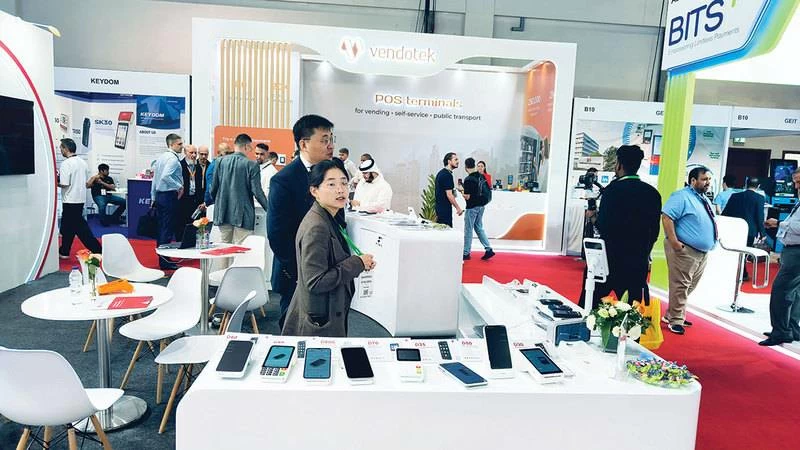
Dubai: The UAE is witnessing growing adoption of artificial intelligence (AI) across digital payment systems, with businesses increasingly using the technology to speed up transactions, improve customer experience and strengthen fraud detection capabilities.Industry experts speaking on the sidelines of Seamless Middle East 2026, which opened yesterday (22/09/2026) at the Dubai World Trade Centre, said AI is reshaping the payments landscape by making digital transactions faster, easier and more secure.Remo GiovanniRemo Giovanni, General Manager for the Middle East and North Africa at Checkout.com, said digital payments in the UAE continue to grow rapidly, with transactions through digital channels rising by 64 per cent since the start of this year.He said strong demand from businesses to adopt AI-powered payment systems is driving significant change across the sector.According to Giovanni, AI is helping enhance payment speeds, improve data classification and strengthen cybersecurity by identifying and preventing fraudulent transactions.He explained that AI systems can analyse customer information across payment networks, recognise suspicious activity and detect whether a transaction is genuine or part of a fraud attempt, even if previous attempts were made through different platforms.The technology can automatically reject suspicious transactions and prevent fraud before it occurs.Giovanni added that AI can also simplify payments for first-time users, including customers making purchases from outside the UAE, by rapidly verifying their details and linking them to new platforms, making transactions smoother and more secure.He noted that consumers increasingly prefer easy and seamless payment experiences, a trend that AI is helping to support.Improving efficiency and securityNakul KothariNakul Kothari, Head of Asia Pacific and the Middle East at global payments technology company JSpay, said AI adoption is increasing steadily across digital payment systems in the UAE.He said the technology enhances payment processing by linking transactions to invoices, purchase records and payment data while improving customer data analysis, classification and storage.According to Kothari, AI also helps businesses understand purchasing patterns and customer behaviour, making payment systems more efficient and intelligent.He said one of the most significant benefits of AI is the improvement of cybersecurity standards through enhanced monitoring and analysis of potential fraud and cyberattack attempts.Kothari added that JSpay's systems process more than 350 million transactions daily worldwide and support payment integration in the UAE through a partnership with Al-Futtaim Group aimed at unifying digital payment systems.Supporting digital commerceJamil Kay, Director of Subi Systems Technology Company, said AI is becoming increasingly widespread across digital commerce platforms in the UAE.He said the technology enables faster and more convenient digital payments while helping businesses personalise offers according to customers' purchase histories and buying patterns.Kay added that AI also contributes to stronger cybersecurity protection across digital commerce platforms.During a panel discussion at the exhibition, Philippe Daoust, Vice President of Innovation at the National Bank of Canada, said customers are primarily focused on obtaining services easily and securely rather than on the complex processes operating behind banking systems.He said integrating finance, artificial intelligence and user experience enables financial services to be delivered seamlessly within the customer journey while banking infrastructure and payment systems continue operating in the background.Daoust added that AI allows banks to move beyond simply responding to customer needs and towards providing proactive services by analysing financial behaviour and identifying potential risks or needs before they arise.Rise of 'invisible payments'Giovanni also highlighted growing interest in what is known as "invisible payments", revealing that 97 per cent of consumers surveyed by Checkout.com expressed interest in this type of payment experience.He explained that invisible payments are designed to make transactions more seamless and integrated into the purchasing journey by reducing friction and minimising the number of steps consumers must take to complete a payment.For businesses, the efficiency of the payment experience is becoming increasingly important.According to Checkout.com data, 35 per cent of consumers will switch to a competitor if they are unable to complete a payment transaction successfully, making smooth and reliable payment systems a critical factor in customer retention.