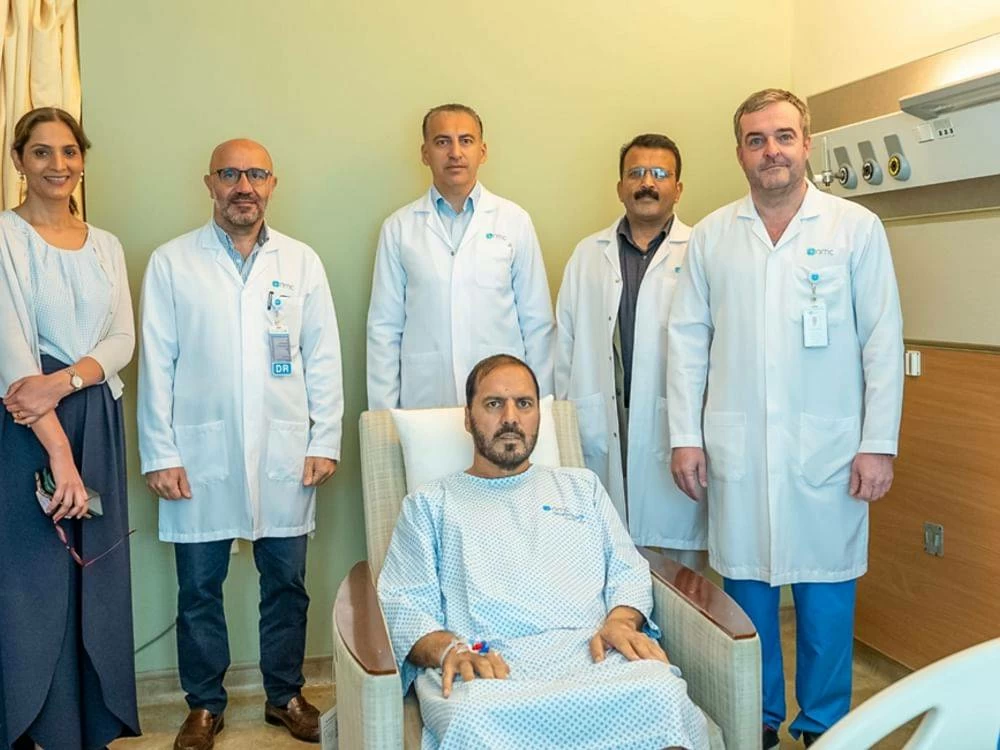
Abu Dhabi: A multidisciplinary surgical team at NMC Royal Hospital, Khalifa City, Abu Dhabi, has successfully removed an exceptionally rare cancerous tumour weighing 4.4 kilograms and measuring 36 centimetres in length from a 49-year-old patient, during a complex six-hour operation that involved several vital organs and presented significant surgical challenges.
The successful procedure represents a notable medical achievement due to the extraordinary size, unusual location and rarity of the tumour, which originated from the patient's 12th rib and extended into the abdominal cavity.
According to the treating medical team, this rare form of cancer affects approximately one person in every two million annually. While such tumours typically develop in the chest, the growth into the abdominal cavity observed in this case is exceptionally uncommon, with only a handful of comparable cases reportedly documented worldwide over the past three decades.
Measuring 36 by 17 centimetres and weighing more than the average newborn baby, the tumour occupied most of the right side of the patient's abdomen, extending from the diaphragm to the pelvis. Its enormous size had displaced several major abdominal organs, including the liver, stomach, intestines and kidney, from their normal positions.
The patient initially experienced pain on the right side of his abdomen approximately five months before seeking medical attention.
During the six-hour procedure, surgeons carefully separated the tumour from surrounding structures while protecting major blood vessels and other vital organs.
Dr Hassan Elberm, Consultant General and Hepatopancreatobiliary (HPB) Surgeon, who led the operation, said the operation presented exceptional challenges because of the tumour's size and its close relationship with several vital organs and major blood vessels.
"The greatest challenge was not simply the size of the tumour, but its location and proximity to critical abdominal structures. The mass occupied a substantial part of the abdominal cavity, leaving very limited space for surgical manoeuvring. Any injury to the surrounding organs or major blood vessels could have resulted in serious, potentially life-threatening complications," he said.
Dr Elberm explained that extensive preoperative planning and close coordination between specialists from different surgical disciplines were essential to the successful outcome.
"Our team carefully planned every stage of the operation and prepared for possible complications, particularly major bleeding. We were able to remove the entire tumour with minimal blood loss and without the need for a blood transfusion, which was a particularly encouraging result given the complexity of the case," he added.
He noted that removing the affected organs and surrounding tissues was necessary to achieve appropriate surgical margins and reduce the risk of leaving cancerous tissue behind, giving the patient the best possible chance of long-term survival.