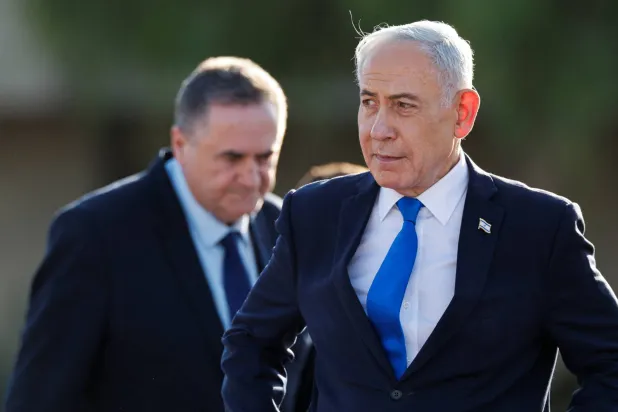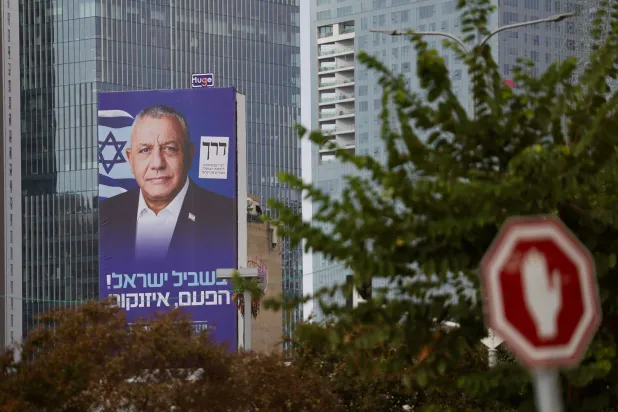
Three years after the Hamas-led attacks on Israel that triggered the war in Gaza, Israeli voters will decide next week whether to grant Benjamin Netanyahu yet another term as prime minister — or usher in a new era of Israeli politics. Polling suggests a tight race between Netanyahu, leader of the nationalist Likud party, and his chief rival, Gadi Eisenkot, who leads the centrist Yashar! for control of the government. Israelis vote for parties, which then form alliances to create a majority coalition. No single party has ever won a majority in the 120-member parliament, or Knesset. Here is a look at some of the most important leaders of the major parties ahead of the election: Benjamin Netanyahu, prime minister Netanyahu, 77, is Israel’s longest-serving prime minister and the most dominant force in Israeli politics, having persevered through wars, crises, scandals and the Oct. 7, 2023 attack — the deadliest in Israel's history. He is the longtime leader of the Likud party, and supporters point to his record on security and the economy, as well as his close ties with US President Donald Trump, who has endorsed Netanyahu. Netanyahu's opponents say he's responsible for the policy and security failures that preceded the Oct. 7, 2023, attack and accuse him of mismanaging the wars that followed. In 2024, the International Criminal Court issued a warrant for Netanyahu's arrest over allegations of war crimes and crimes against humanity. He is also embroiled in a years-long legal scandal at home, having been charged with fraud, breach of trust and accepting bribes. Netanyahu denies any wrongdoing. Gadi Eisenkot, former military chief of staff Eisenkot, 66, comes from a working-class family of Jewish Moroccan immigrants. He spent four decades rising through the ranks of Israel's military, eventually becoming the chief of staff. The general currently leads the largest opposition party — the centrist Yashar! — after entering politics in 2022. His son and two nephews were all killed in combat in Gaza following the Oct. 7 attacks. Eisenkot also served as an observer in Netanyahu's war cabinet, but resigned after eight months, when he accused the prime minister of lacking a clear strategy. He has since positioned himself as a moderate alternative to Netanyahu, but remains hawkish on security. Eisenkot is credited with formulating Israel’s so‑called “Dahiyeh Doctrine,” a military strategy calling for the use of disproportionate power in areas from which militants launch attacks. If he succeeds in forming a coalition, Eisenkot could become the first Israeli prime minister of Mizrahi descent. Israel's Mizrahim, who come from North Africa and the Middle East, have historically faced discrimination from the country's European-descended elite. Former Israeli Prime Minister and candidate for Knesset, Naftali Bennett (C) reacts as he campaigns in Jerusalem, 19 October 2026. (EPA) Naftali Bennett, former prime minister Bennett, 54, is the right-wing and religiously observant leader of Beyachad (Together), a joint ticket with centrist politician Yair Lapid. He opposes Palestinian independence and supports settlement-building in the occupied West Bank. Before entering the Knesset in 2013, Bennett served as Netanyahu's chief of staff and also was head of the Yesha Council, an umbrella organization of local authorities inside Israeli settlements. His conservative Yamina party won seven seats, which helped him cobble together a coalition of both left-wing and Arab parties. He then briefly served as prime minister in 2021, the result of a power-sharing agreement, also with Lapid. While Bennett, like Netanyahu, takes a hard line toward the Palestinians, the two men have deep disagreements over Netanyahu's handling of security issues and his battle against the Israeli legal system. Itamar Ben-Gvir, national security minister Ben-Gvir, 50, is Israel's national security minister and a far-right provocateur with multiple convictions, including for supporting a terrorist organization. He leads Otzma Yehudit (Jewish Power), an ultra-nationalist party whose strong showing in the last election secured him his Cabinet post and helped push Netanyahu's coalition further to the right. Ultra-Orthodox Jews pass an election billboard of Minister of National Security and leader of the Otzma Yehudit party, Itamar Ben-Gvir, with a Hebrew slogan reading "Ben-Gvir strong, Israel strong", in an ultra-Orthodox neighborhood in Jerusalem, 21 October 2026. (EPA) He is a trained lawyer who gained recognition by successfully defending right-wing Jewish extremists accused of violence against Palestinians. When Ben-Gvir was a teenager, the military refused to draft him because of his extreme views. He was also a follower of Meir Kahane, the violently racist rabbi who advocated for expelling Palestinians from Israel, Gaza and the West Bank. Ben-Gvir has also laid out plans for what he says would be the “voluntary” emigration of roughly 2 million Palestinians from the Gaza Strip, where he has advocated for re-building Jewish settlements. Mansour Abbas, Knesset member and leader of Ra'am Abbas, 52, is a Palestinian Arab politician and dentist from northern Israel. He leads Ra'am, an Islamist party that was the first Arab-led party to join a governing coalition in 2021. His strategy has been to focus on more local issues, such as crime in Arab communities, rather than the larger Israeli-Palestinian conflict, in the hopes it will win Ra'am more seats in the Knesset and court potential coalition partners. As part of this push, Abbas named former police commander and centrist Jewish politician Yoav Segalovitz as the number two candidate on Ra'am's electoral list. Abbas has served in the Knesset since 2019.