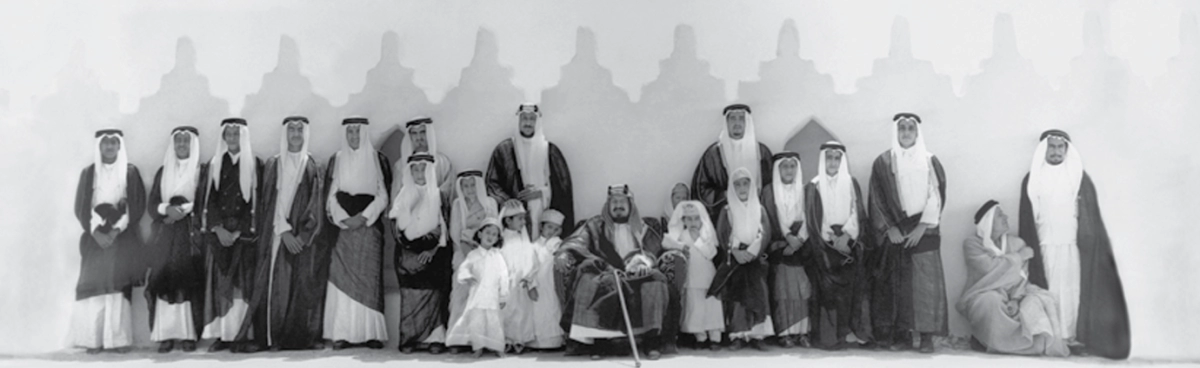
RIYADH — History remembers King Abdulaziz bin Abdulrahman Al Saud as the founder who unified Saudi Arabia. His children remembered another side of him.They remembered a father.Their recollections, preserved by the King Abdulaziz Foundation for Research and Archives, known as Darah, offer a rare view inside the royal household and reveal the values King Abdulaziz sought to instill in the next generation.Life at Al-Murabba Palace was shaped by order and responsibility.King Abdulaziz paid close attention to the upbringing of his children, particularly their education and religious instruction. Their learning was not treated as separate from their preparation for life; it formed part of the discipline expected of them from an early age.Prayer occupied a central place in the family's routine.The King's children recalled his insistence on performing prayers and his attention to ensuring that they observed them. Their memories portray a household in which religious commitment was reinforced through everyday practice rather than reserved for formal occasions.Education received similar attention.King Abdulaziz followed his children's studies and surrounded them with teachers who instructed them in the Qur'an, religious knowledge and other subjects.The expectation was clear: being the sons of the King did not exempt them from discipline. It increased the responsibility placed upon them.The recollections also illuminate the relationship between the founder's public responsibilities and his private life.Outside Al-Murabba, King Abdulaziz was managing the affairs of a growing country, receiving citizens and officials and following matters of government.Inside, he remained closely interested in how his children were being raised.That distinction was not absolute.The qualities encouraged within the household — faith, discipline, learning and responsibility — reflected many of the principles King Abdulaziz considered important beyond it.Al-Murabba Palace consequently emerges from these memories as more than a royal residence.It was a family home and a place of education.Children grew up within the same complex from which their father followed the affairs of the Kingdom. They encountered the routines of family life alongside the responsibilities surrounding the leadership of the country.The recollections are valuable precisely because they are personal.Official documents can record decisions.Newspapers can preserve events.Photographs can capture occasions.But memories preserve different details: the expectations of a father, the routines of a household and the lessons children carried with them long after childhood had passed.Through those memories, the founder appears not only as the man who built a state, but as a father determined to prepare his children for the responsibilities that awaited them.