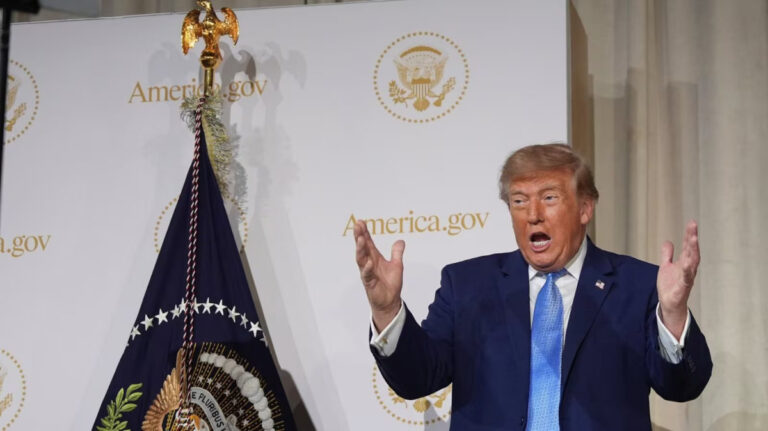
Thirteen years after the ouster of the Muslim Brotherhood's rule in Egypt during the events of "June 30" 2013, the group has suffered major setbacks locally and internationally. The group, whose rule lasted for one year since its member Mohamed Morsi ascended to the presidency in 2012, is now experiencing a domestic blow amidst judicial and security prosecutions. Its international presence has also shrunk due to decisions by Western countries to pursue and label it as terrorist, with observers and analysts predicting that "the organization and its ideology will soon disappear.” A Pivotal Day June 30, 2013, is considered a pivotal day in modern Egyptian history. One year after Morsi assumed the presidency, massive demonstrations erupted across Egypt's governorates demanding the removal of the Muslim Brotherhood from power and Morsi's ouster. On July 3 of that year, his removal was announced in response to these demands. In the same year, Egyptian authorities banned the Muslim Brotherhood and placed it on the list of "terrorist entities." Now, hundreds of its leaders and supporters are imprisoned, headed by its Supreme Guide Mohammed Badie. Some have received sentences of execution, harsh imprisonment, and life in prison. The group's presence is now only known in cyberspace through platforms abroad, mainly in Türkiye and the United Kingdom. Disappearance Domestically Egyptian researcher specializing in extremist groups Munir Adib states that when discussing the disappearance of the Muslim Brotherhood on the thirteenth anniversary of the June 30 events, "it is necessary to differentiate between two things: the disappearance of the organization and the disappearance of the ideology." "In both cases, the Egyptian state and its security agencies have succeeded over 13 years in dismantling, neutralizing the organization, and refuting many of its ideas to the extent that it no longer has the influence it had before 2013 or even before 2011,” he adds in a statement to Asharq Al-Awsat. He predicted that the organization would disappear soon, saying: "The organization, which is now 98 years old, has only two more years left, for its hundredth year to be its last... to become merely a line in history books." Ahmed Ban, an analyst specializing in religious and extremist groups, states that the group has shifted from a tangible existence to a mere presence on media platforms, specifically non-traditional media such as social media platforms, digital platforms, and artificial intelligence technologies to spread messages of frustration and chaos. International Moves Internationally, the organization's situation is no different than in Egypt, with official movements in Austria, Germany, France, and the Netherlands witnessing radical shifts in their stances over the past years, moving from a phase of monitoring and caution to prosecution. In May 2026, the administration of US President Donald Trump unveiled a new national counter-terrorism strategy, which at its core focused on the Muslim Brotherhood as the ideological source of modern "militant terrorism." This was preceded last January by Washington's designation of the Muslim Brotherhood in Egypt, as well as its branches in Jordan and Lebanon, as "terrorist organizations." This was followed in March by placing its Sudanese branch on the same list. Moreover, a majority in the French Parliament agreed last January to call on the European Commission to add the Brotherhood and its leaders to the list of terrorist organizations. This was followed in March by the Dutch Parliament's approval of a proposal calling for a ban on the Muslim Brotherhood and its affiliated organizations, though it has not yet been implemented. Adib believes that these international moves are "an essential part of the confrontation that will lead to the disappearance of the organization, especially since the international community, Europe, and the United States represented the lifeline it breathed from." He noted that the situation has now changed with the European move to re-evaluate the presence of the Muslim Brotherhood and its institutions, which has tightened the noose on the group, contributed to its neutralization, and consolidated predictions of its complete disappearance, along with its ideology, within the coming years.