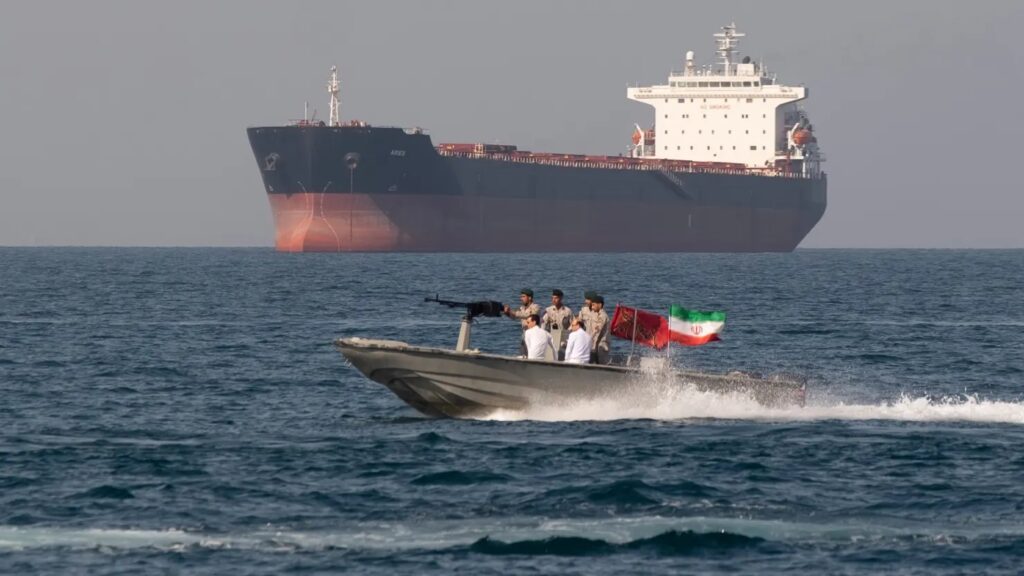
Donald Trump on Saturday called on countries that rely on Middle Eastern oil to deploy naval forces to help keep the Strait of Hormuz open, as tensions escalate amid ongoing U.S. and Israeli attacks on Iran and Tehran’s retaliatory operations in the region.
The U.S. president said nations that benefit from the crucial maritime corridor should take a more active role in protecting it, while Washington coordinates military efforts to safeguard the passage.
“The Countries of the World that receive Oil through the Hormuz Strait must take care of that passage, and we will help — A LOT!” Trump wrote in a post on the social platform Truth Social.
In a separate message earlier in the day, he predicted that many countries would soon deploy naval assets alongside the United States to ensure shipping continues through the strategic waterway.
“Many Countries, especially those who are affected by Iran’s attempted closure of the Hormuz Strait, will be sending War Ships, in conjunction with the United States of America, to keep the Strait open and safe,” Trump wrote.
He specifically cited China, France, Japan, South Korea, and the United Kingdom as countries that could contribute naval forces.
The Strait of Hormuz, a narrow channel between Iran and Oman, is one of the world’s most important energy transit routes. Roughly one-fifth of global oil and liquefied natural gas shipments pass through the strait, making it a critical artery for energy supplies flowing from the Gulf to Asia, Europe, and other markets.
The current disruption to the passage has triggered sharp spikes in oil prices and threatens global economic stability.
Iran’s proximity to the strait has long given Tehran the ability to threaten shipping in the area, a factor analysts say provides the country with significant geopolitical leverage during periods of conflict with Western powers.
Trump warned that the United States would take aggressive action to counter Iranian efforts to disrupt traffic through the corridor.
“In the meantime, the United States will be bombing the hell out of the shoreline, and continually shooting Iranian Boats and Ships out of the water,” he wrote.
The call for an international naval effort comes as Western countries expand their military presence around the eastern Mediterranean and the Gulf amid the widening conflict. Security concerns intensified after an Iranian-made drone struck a British military base in Cyprus on March 2, raising fears that the conflict could spill further into regional infrastructure and shipping routes.
The United Kingdom is already considering additional deployments to the Gulf region following a series of attacks on vessels.
John Healey, Britain’s defense minister, said the government was examining options alongside allied nations to protect maritime traffic. A spokesperson for the UK Ministry of Defense said London was discussing “a range of options to ensure the security of shipping in the region.”
Meanwhile, the French Navy has begun deploying about a dozen naval vessels, including an aircraft carrier strike group, across the Mediterranean and the Red Sea, with the possibility of extending operations toward the Strait of Hormuz.
French officials said the deployments are intended as defensive support for allies and could eventually support tanker escort missions through the strait if tensions continue to escalate.
Officials in France said the government has been consulting with European, Asian, and Gulf Arab partners about forming a coordinated maritime security effort. One proposal under discussion would involve naval vessels escorting commercial oil tankers through the strait to protect them from potential attacks.
Such escort missions have been used in previous crises in the Gulf, particularly during periods when Iran threatened to block shipping lanes.
Trump had already indicated on Thursday that the United States was willing to escort ships through the strait if necessary to protect them from Iranian attacks.
The escalating confrontation has rattled energy markets, with traders increasingly worried that prolonged disruption in the Gulf could restrict global oil supplies. Because the Strait of Hormuz serves as the primary export route for oil producers such as Saudi Arabia, the United Arab Emirates, and Kuwait, any sustained closure could significantly reduce global energy flows.
Analysts have warned that even temporary disruptions can drive sharp increases in oil and natural gas prices, raising inflation risks and placing pressure on governments already grappling with fragile economic conditions.
Thus, Trump’s call for a multinational naval presence is seen as part of efforts among Western and allied governments to prevent the conflict with Iran from turning into a broader energy crisis that could ripple across the global economy.