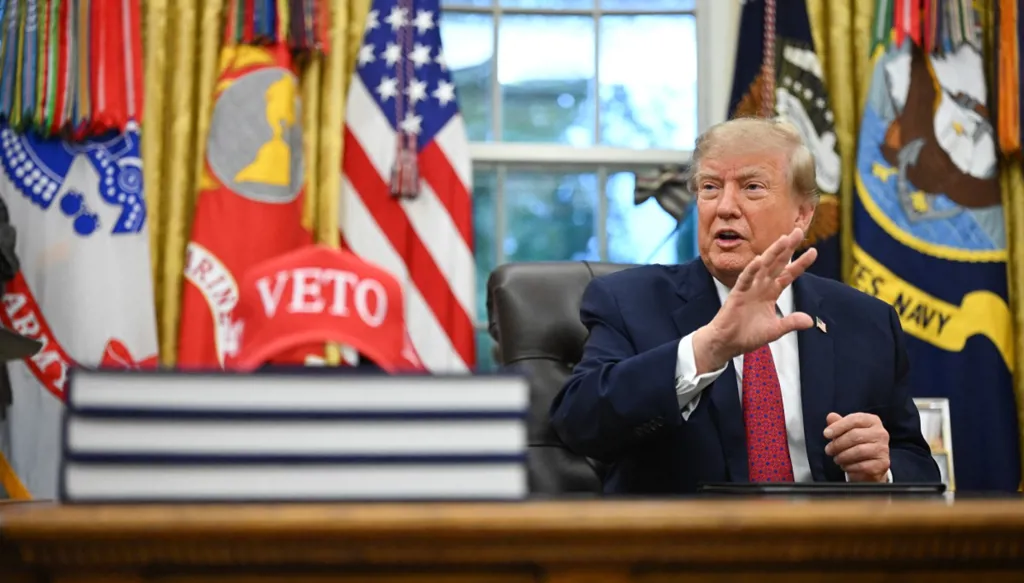
Trump has lost the election, but he hasn't lost the ability to ignite a war. This paradox should form the basis for understanding the next two months. While American voters sought to constrain their president, he still retains military and diplomatic tools that affect the lives of people who had no part in electing him, yet must pay the price for his decisions. Therefore, the Republicans' defeat is not enough to guarantee that the war with Iran is automatically nearing its end.
The election has raised the political cost of war, but it has not given Trump a way out. He could interpret the result as a call to reconsider his choices, or he could see it as a reason to prove that he has not been defeated. The difference between these two interpretations could determine whether the crisis moves toward a settlement that salvages what can be saved or an adventure aimed at rewriting the entire regional landscape.
Nevertheless, talk of "the next two months" requires precision. The new Congress, which convenes on January 3, will give Democrats stronger tools to exercise oversight and exert pressure through funding and legislation, but it will not put an end to the president's military powers. Nor are those powers unlimited today. What is narrowing for Trump is his margin of political protection and his ability to act without incurring greater domestic costs.
The current picture leaves room for both possibilities. On November 5, Reuters reported on an Iranian nuclear proposal conveyed through Qatar, while other reports by the agency cited sources expecting a resumption of U.S. strikes. This does not confirm a final decision to launch an attack, but it highlights how negotiations are continuing alongside the option of military force, while threats to navigation through the Strait of Hormuz remain unresolved.
In my view, Trump faces a problem of defining success before deciding on the means to achieve it. Maintaining pressure is not enough if its costs remain high, and destroying additional targets does not guarantee that Iran will accept American conditions. A settlement requires mutual concessions that are difficult to sell after a prolonged speech promising complete victory. The president wants an exit he can present as an achievement without appearing to retreat under pressure from voters.
Against this backdrop, the most likely short-term scenario is a continuation of negotiations under military pressure: threats and preparations, potentially accompanied by limited strikes, while mediation remains active. Trump may believe that demonstrating a readiness to escalate will convince Tehran that it is better to make concessions now, before the crisis develops into a broader confrontation.
But this gamble assumes that the other side's reaction can be controlled. What Washington considers a limited strike might be viewed by Tehran as the beginning of a military campaign requiring a response. The confrontation could then spread to maritime navigation or American and regional interests, pushing energy costs higher and putting renewed pressure on the economy. The very weapon intended to improve the conditions for an exit could instead deepen the trap.
The second possible path is a phased settlement that recognizes that eliminating the immediate danger is easier than resolving the entire dispute. Arrangements could be made to secure navigation, de-escalate tensions, and take reciprocal steps regarding the siege and sanctions, while establishing a negotiating framework for the nuclear issue. These are analytical possibilities, not elements of an announced agreement. Their value lies in giving both sides room to maneuver without requiring them to settle every outstanding issue at once.
Trump could present the restoration of trade flows and the easing of energy pressures as achievements resulting from his policy of strength. Iran, meanwhile, could seek economic and security gains to present to its domestic audience. But success would depend on implementation arrangements and guarantees: Who moves first? How does the other side verify compliance? And what prevents the understanding from collapsing after the first incident? Without practical answers, any agreement risks becoming merely a brief pause between rounds of confrontation.
Moreover, markets do not regain confidence through political directives. Shipping and insurance companies need convincing evidence that passage is safe and that another incident will not once again shut down the route. As a result, translating peace from statements by mediators into lower consumer bills could take time, even if military strikes stop.
The third path is continued attrition through slow-moving negotiations, intermittent violence, and persistent maritime risks. This would not necessarily be a scenario either side actively chooses as the best solution. Rather, it could emerge because making concessions is costly, while a full-scale war is even more expensive. The crisis would then reach the new Congress after consuming another two months of regional security and resources.
A broader escalation remains a possibility that cannot be ruled out. Trump might be tempted to secure a military outcome before domestic scrutiny intensifies, or to respond to a development on the ground that he perceives as a direct challenge. Yet expanding military strikes does not guarantee greater political gains. It could trigger a chain of responses that would be difficult to contain, particularly if the risks extend to energy facilities and Gulf countries.
Iran is not outside these calculations. It could interpret the American defeat as an opportunity to reach a settlement or as evidence of weakness that encourages a more assertive stance. If Tehran assumes that the incoming Democratic majority will immediately stop Trump, it could misjudge the powers he still retains. Likewise, Washington's assumption that pressure alone will force Tehran to surrender overlooks the Iranian regime's calculations regarding survival and prestige.
My prediction is that threats and mediation will continue to be combined in an effort to reach a face-saving settlement, while the risk of sliding into escalation remains. For this reason, the nature of military deployments, the content of proposals put forward by mediators, and the extent of Republican opposition to the war are more significant indicators than the increasingly forceful tone of public statements.
At the regional level, efforts should focus on securing guarantees for maritime navigation and establishing practical, implementable measures for de-escalation, rather than waiting for American elections to repair the damage caused by war. American voters have punished their president for the cost of his decisions, but the region cannot afford to wait for the next electoral lesson. The coming two months will test Trump's ability to find a way out, but the danger is that he may try to prove his strength in a way that makes it even harder for everyone else to escape the crisis.
Disclaimer: The opinions expressed by the writers are their own and do not necessarily represent the views of Annahar.