Dr. Sahar Khamis,Professor of Media at the University of Maryland, USA
The blue wave that swept the U.S. midterm elections was not merely a victory for the Democratic Party over its Republican rival. In my estimation, it was a clear popular referendum on Donald Trump's presidency, credibility, and domestic and foreign policies. With Democrats regaining control of both the House and the Senate, it has become clear that we are witnessing a shift that goes beyond traditional partisan calculations and reflects growing public discontent with the performance of the American administration.
Millions of Americans elected Trump based on his promises to improve the economy, lower the cost of living, and end wars and foreign conflicts. However, developments over the past two years have moved in the opposite direction in many respects. The war on Iran has imposed significant economic and military burdens, while rising fuel, food, and service costs have left American citizens feeling that the administration's policies have had no positive impact on their daily lives.
Interestingly, this discontent is no longer confined to Democrats or Trump's traditional opponents. It has also spread to segments of his well-established grassroots base, known as the 'MAGA' movement, an acronym for his campaign slogan, 'Make America Great Again.' Some of the movement's supporters have begun questioning what has become of his promises to deliver economic prosperity, avoid foreign wars, and put American interests first.
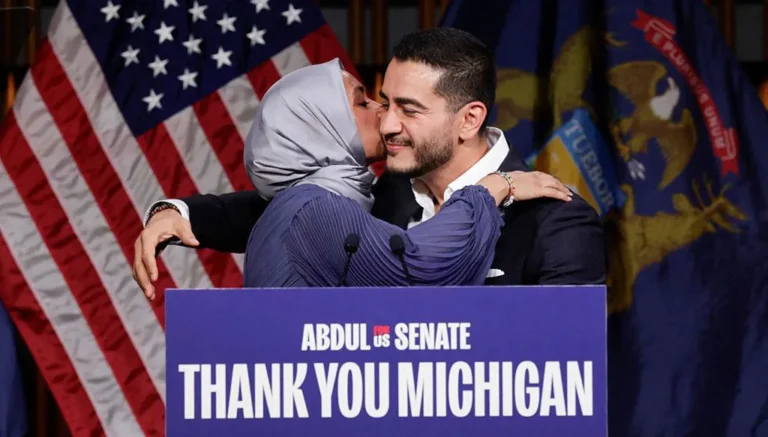
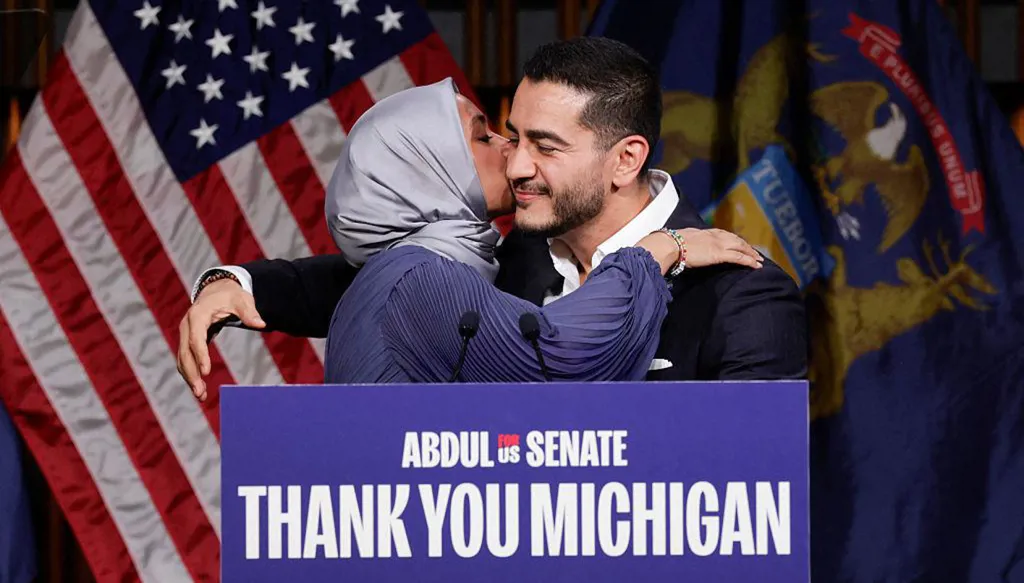
Amid these transformations, Abdul Rahman El-Sayed's victory in securing a Senate seat from Michigan carries extraordinary significance. He is the first Muslim elected to the Senate in American history, a milestone that cannot be reduced to an individual electoral success but must instead be viewed as a reflection of broader shifts taking place within American society.
El-Sayed faced a fierce political campaign, part of which targeted his religious identity and his positions on Israel and the Gaza conflict. In my opinion, this hostile discourse helped provoke a counterreaction, rallying segments of young people, minorities, Arabs, and Muslims, alongside other voters who rejected the use of religious affiliation as a tool of political exclusion.
However, the deeper significance of this victory lies in political funding. El-Sayed ran his campaign against massive spending by political groups and external spending committees backing his opponents, both in the primaries and the general election. By contrast, his reliance on grassroots funding and individual contributions became a defining feature of his political identity and campaign.
This is where one of the elections' most important messages emerges: substantial financial backing from pressure groups is no longer a guarantee of electoral success. El-Sayed's victory demonstrated that grassroots mobilization, strong field organization, and the ability to address citizens' concerns can serve as a counterforce to the financial influence of major institutions and vested interests.
This phenomenon does not appear to be isolated from the rise of other political figures, such as Zahran Mamdani in New York, whose success reflected a desire among segments of the electorate to move beyond traditional elites and turn to political figures who are closer to ordinary people and their everyday concerns.
In my estimation, we are witnessing a social and political movement driven by younger generations, with minorities and immigrants playing an active role. It brings together demands for economic justice and calls for more diverse political representation. This does not mean that Islamophobia or racism has decisively declined, but it does point to a growing ability to confront them through political and electoral participation.
However, the Democrats' victory does not mark the end of America's political crisis. Rather, it may herald the beginning of a more intense phase of confrontation between Congress and the President.
Over the past two years, the Trump administration benefited from Republican control of both chambers of Congress, limiting the effectiveness of parliamentary oversight on contentious issues involving conflicts of interest, the abuse of power, and business dealings linked to the President and his inner circle.
With control of Congress now shifting to the Democrats, I expect sensitive issues to be reopened, alongside calls for investigations, hearings, and accountability over the administration's practices. These include conflicts of interest, the misuse of authority, and matters related to Jeffrey Epstein.
However, attention should also be paid to the transitional period between the elections and the convening of the new Congress next January. Trump and his allies may seek to use this window to push through certain decisions or legislation, and possibly take escalatory steps in foreign policy, particularly regarding Iran, before the balance of power shifts in Washington.
The central question, therefore, is no longer why the Republicans lost, but what will happen when the executive branch finds itself facing a Congress dominated by the opposition.
American voters have demonstrated their ability to reshape political power through the ballot box. Yet the real test of American democracy begins now, depending on the institutions' ability to reclaim their oversight role, hold officials accountable, and establish clear limits on the exercise of power.
The coming months will outline a new chapter in American politics, combining hopes of restoring the balance between the branches of government and strengthening oversight and accountability. These transformations present an opportunity to correct the democratic course and respond to voters' aspirations, while also paving the way for anticipated political confrontations over contentious issues that could further deepen polarization.
The return of institutions to their oversight roles does not necessarily mean a reduction in political tensions. On the contrary, it may coincide with their escalation, reflecting the complexities and contradictions of the period ahead.
Disclaimer: The opinions expressed by the writers are their own and do not necessarily represent the views of Annahar.