Thirty-seven years after the agreement that ended Lebanon’s civil war, the country remains trapped in the cycle of external wars, foreign influence, and a struggle to reclaim its sovereignty and independence.
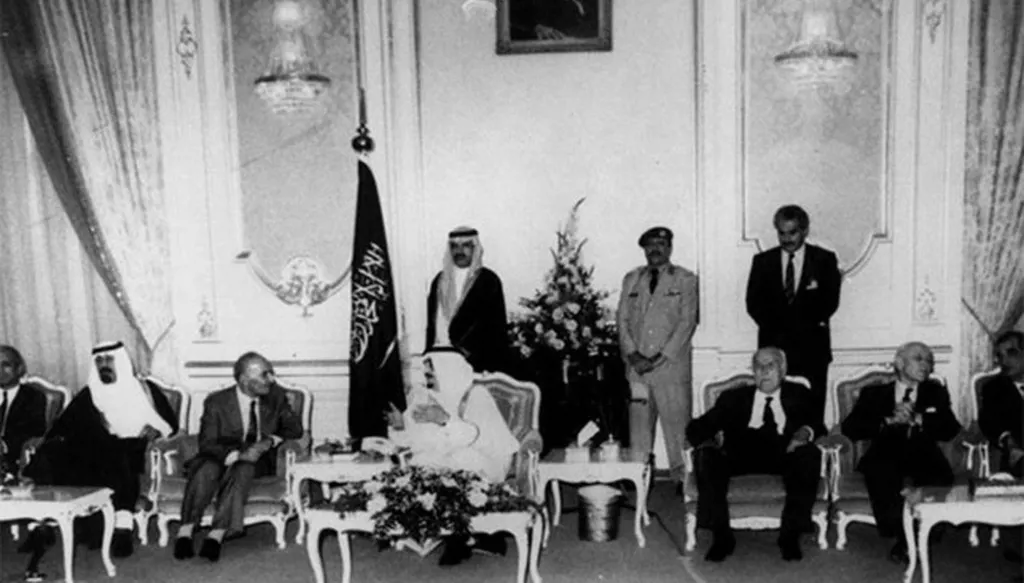
Annahar brushes the dust off the Taif Agreement, or pact, 37 years after it ended the Lebanese war in both its facets: the war of others on Lebanese soil and the civil war, following a decade and a half of conflict. It marked a historic turning point for Lebanon, accompanying the end of the Cold War and coinciding precisely with the fall of the Berlin Wall.
The anniversary comes amid Lebanon’s current dramatic equation. The least symbolic indication of this is that Lebanese people from older generations, who lived through that era, may not have the luxury of recalling the commemoration. For those belonging to younger generations, barely drawn to historical facts and more concerned with their conclusions and what remains of them, it means little.
Hundreds of reviews and analyses of the Taif Agreement have been conducted over the decades since its signing and implementation. Yet they have continued to revolve in a vicious circle, focusing on completing the implementation of many of its clauses that were never initially implemented, and then on developing the formula at the heart of Lebanon’s constitutional system in light of the constitutional amendments Taif introduced to the basic constitution.
Lebanon’s fate, or the nature of the strategic geography that has placed it in this eternally explosive and tumultuous corner of the world, ensures that the country remains hostage to equations and realities in which the players change, but the essence of the “eternal ailment” that almost defines Lebanon in every era does not. This holds true through Cold Wars, direct conflicts, and other curses of the “wars of the gods,” as the late Lebanese President Charles Helou called this characteristic.
More specifically, we mean the deadly scourge that has accompanied the history of destructive wars that have repeatedly torn Lebanon apart and continue to drag it into the depths of backwardness. As most of its young people emigrate, the country is emptied of its elites and its ability to shape a future that would keep the few remaining among its children on their land. This scourge lies in the destruction of external ties to Lebanese sovereignty and independence at every critical juncture the country faces, whether because of an internal crisis or as a result of regional conflicts.
The memory of Taif takes us back to the deep roots of the war that lasted from 1975 to 1990 and to everything that has followed since, forming a historical and contemporary narrative that confirms what is already established: Lebanon is pursued by the curse of other people’s wars being waged on its soil. This has overshadowed every internal factor, regardless of the position taken by those who favor another interpretation, emphasizing Lebanese divisions, conflicts, and their sectarian nature, which leave the country vulnerable and turn it into a playground for regional states and international powers.
No historical analysis seeking to glimpse the future can be undertaken without acknowledging the catastrophic history of submission to external parties that have succeeded one another in shaping Lebanon’s ongoing drama, rooted in its “modern” history, without going back to ancient history, at least since the 1970s.
Lebanon first ignited, even at the height of its prosperity, over what was called the Palestinian resistance, which evolved into the state of “Fatah Land” in the south and extended to the consolidation of control over large groups of Lebanese political and sectarian forces.
Palestinian weapons repeatedly dragged Israel into occupations, the most dangerous of which was the invasion of Beirut. The curse did not end with the departure of the Palestine Liberation Organization from Lebanon. Instead, it expanded with the entrenchment of Hafez al-Assad’s hellish system of guardianship, which began as he manipulated the world through his occupation of Lebanon.
This system, considered one of the most heinous in history, entered into a partnership reflecting its nature with the mullahs’ regime in Iran, enabling it to establish its disastrous influence in Lebanon through its arm, Hezbollah. Yet, following the collapse of Assad’s regime, Lebanon finds itself in the most catastrophic era, marked by successive wars of support ignited by the party under the orders of the Revolutionary Guard.
This is the journey of Taif before any debate!
Disclaimer: The opinions expressed by the writers are their own and do not necessarily represent the views of Annahar.
Thank you for subscribing to our newsletter