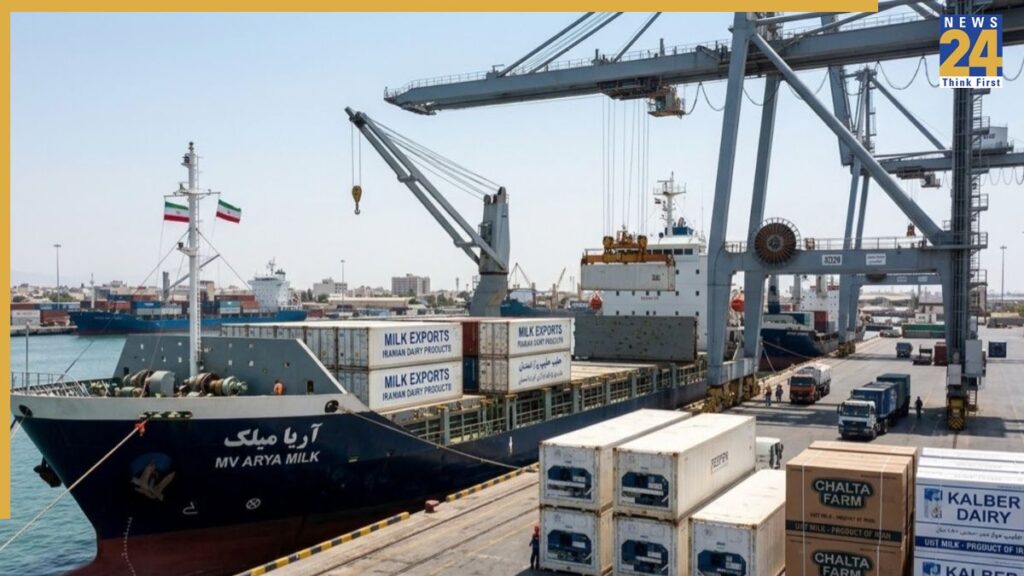
Iran milk production: While Iran is undoubtedly among the world’s most powerful players in crude oil and natural gas, the Islamic Republic is also a major producer of milk, and has emerged as prominent player in the dairy sector over the past few years.
According to latest data, Iran has emerged as the world’s fourth-largest milk exporter, surpassing Australia, and only behind major exporters like European Union (EU), New Zealand, and the United States.
In 2025, Iran is estimated to have exported 182,000 tons of milk powder, around 134,000 tons more than in 2021, marking a remarkable 27% year-on-year increase in milk exports.
Data from Expana’s benchmark price shows that Iran is a major reason for the more than 20% increase in skimmed milk powder prices, showcasing the country’s rising prominence in the dairy sector.
Iran processes millions of tons of raw milk each year, converting a large portion of it into skimmed milk powder, which it exports to neighbouring countries in the Middle East and beyond, with prominent buyers being countries like Pakistan, Iraq, United Arab Emirates and Afghanistan.
All these Muslim-majority countries have a high-demand of dairy and bakery products, and their dairy and bakery markets will likely come to a grinding halt if skimmed milk powder imports from Iran are disrupted or completely stopped.
Skimmed milk powder is produced almost completely removing the fat or cream from milk, and drying the skimmed milk derived from the process to make low-fat (around 0.5%) milk powder, which has a much longer shelf life compared to raw milk.
Skimmed milk powder is widely used in dairy products (milk, yogurt, sweets), as well as in the preparation of tea/coffee mixes, bakery items, ice cream, and in the food processing industry.
Major food processing companies in the Middle East import Iranian skimmed milk powder as its low fat but rich in protein and calcium, can be stored for long periods and can be reconstituted with water.