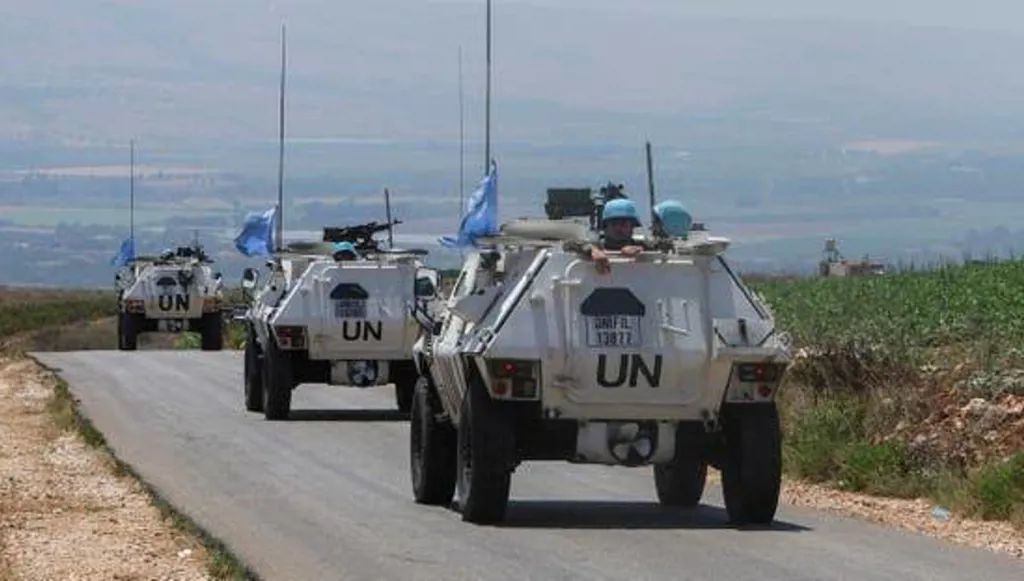
With the official mandate of the United Nations Interim Force in Lebanon (UNIFIL) set to end on December 31, Lebanon is approaching a new equation in the south, accompanied by a new Lebanese-Israeli framework for the future. The rapprochement recently witnessed between Washington and Paris, through French President Emmanuel Macron and US Secretary of State Marco Rubio on the sidelines of the G7 summit, has begun to take shape on two levels. The first concerns UNIFIL. The Americans may accept a flexible formula if no agreement is reached on deploying a new UN force to replace it, given the hardline positions of Israel, which rejects any international forces, and Hezbollah, which, through the position of its ally, Parliament Speaker Nabih Berri, insists that UNIFIL remain as it is, with no changes to its composition, mission or mandate. This makes it difficult to find a solution acceptable to all parties as the end of the current year approaches. In other words, efforts will focus on using time as a factor by extending the gradual withdrawal of the international force to prevent a security vacuum in the south. In this scenario, Lebanon could reach an understanding, with US and Israeli approval, with a number of concerned countries, including France, Italy and others, to extend the full withdrawal process until the end of 2027.
The second level involves the gradual withdrawal of UNIFIL being accompanied by an understanding between the United States and France to submit a new draft resolution to the UN Security Council. The proposal would incorporate the text of the trilateral framework agreement between Lebanon, Israel and the United States into Resolution 1701, making it a reference framework for relations between Lebanon and Israel. A new resolution would then be issued, turning the trilateral framework agreement into part of an international resolution addressing the Lebanese crisis. The importance of agreeing on this merger lies in preserving Resolution 1701 as the reference framework, even though developments have arguably rendered it outdated in its original form, while incorporating the updates made necessary by events since October 7, 2023.
Against this backdrop, the merger would reconcile the demands of the Shiite duo, which remains committed to Resolution 1701, a resolution that Hezbollah exploited over two decades to build enormous military capabilities in southern Lebanon, with the demands of the United States and Israel, which have introduced conditions relating to Hezbollah's disarmament alongside Israeli withdrawals from occupied Lebanese territory in the south. Put simply, this means proposing a new equation: weapons in exchange for land! This equation puts Hezbollah in a difficult position in principle. It is unable to confront Israel militarily, nor can it continue clinging to theoretical slogans that cannot be translated into reality on the ground, particularly as hundreds of thousands of southerners remain displaced from their villages and homes. Meanwhile, tensions are rising between them and members of other communities, whose anger is fuelled by their support for, or at least silence in the face of, Hezbollah's latest military adventures.
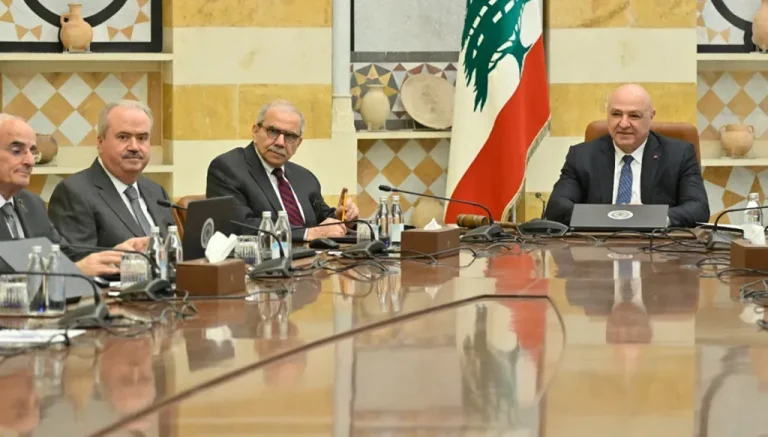
If Washington and Paris, together with the Lebanese state, succeed in launching the process of merging the trilateral framework agreement with Resolution 1701 and begin serious implementation on the ground, alongside the launch of a new round of direct negotiations with Israel under US auspices, President Joseph Aoun and Prime Minister Nawaf Salam will have taken a critically important step towards restoring sovereignty over decisions of war and peace. The key positive development here is that President Macron and Secretary Rubio have set a new dynamic in motion regarding Lebanon.
Disclaimer: The opinions expressed by the writers are their own and do not necessarily represent the views of Annahar