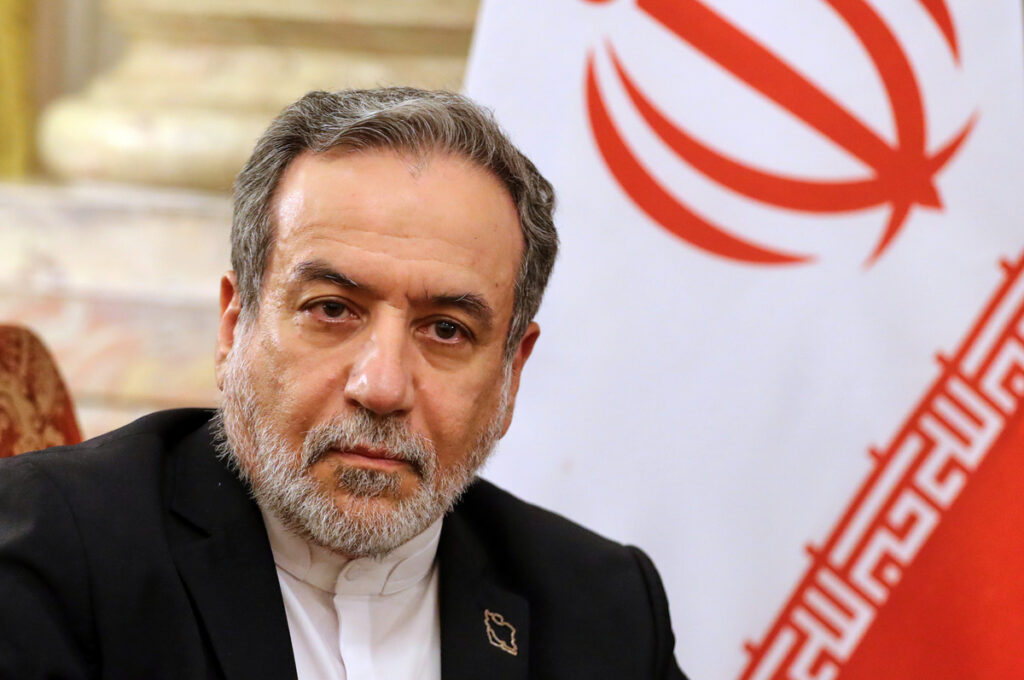
Iran’s foreign minister has said Tehran has “never asked for a ceasefire,” shortly after U.S. President Donald Trump said Iranian officials were looking to make a deal but the U.S. wasn’t yet satisfied with the terms.
“We have never asked even for negotiation,” Abbas Araghchi told CBS News’ Face the Nation in a program aired on Sunday.
More than a two weeks of strikes across the Middle East has ripped up flight schedules and unsettled global stock markets, while the U.S., Israel and Iran have not publicly indicated a willingness to bring the war to an end.
More than 1,300 people have been killed in attacks on Iran, according to a humanitarian group and Iran’s envoy to the United Nations. At least 850 have been killed in Lebanon, according to local authorities, and 12 people have been reported dead in Israel since February 28.
A total of 13 U.S. service members have been killed in action so far, and 18 people have died in U.S.-aligned Gulf states, according to government figures.
Trump said on Saturday Iran was keen to reach an agreement to end more than two weeks of strikes across the Middle East, but said he would not sign a deal “because the terms are not good enough yet.”
Trump, speaking to NBC News, did not elaborate on the potential terms but said Iran would need to turn away from any nuclear hopes, which has long been the U.S and Israeli position.
The U.S. and Israel said their wide-ranging attacks on Iran from February 28 targeted Iranian nuclear sites and ballistic missile facilities, while urging Iranians to go against authorities across the country.
Iran has retaliated by launching missile and drone attacks on a dozen countries in the region, often homing in on U.S. military bases. Israel, Saudi Arabia, Kuwait, Bahrain, and the United Arab Emirates (UAE) reported fresh Iranian attacks on Sunday.
Meanwhile, the Israeli military said it had carried out waves of strikes on western Iran, including on “key headquarters” linked to Iranian forces. Israel also said it had targeted Iran-backed militant group Hezbollah in Lebanon on Sunday, including in strikes on the southern neighborhoods of the capital, Beirut, which have historically been strongholds for the organization.
Trump has offered contradictory assessments of when the U.S. may finish its attacks on Iran, ranging from “soon” to a matter of weeks. But his administration faces increasing pressure the longer the Strait of Hormuz, a vital waterway, remains effectively closed under the threat of Iranian attacks on shipping vessels.
Trump has characterized oil price spikes as temporary while also threatening overwhelming assaults on Iran if Tehran continues to block shipping routes.
The steep drop-off in maritime traffic through the Strait, which sees roughly a fifth of the world’s oil and gas, has made global oil prices volatile and unsettled the stock markets.
“We are ready to defend ourselves as long as it takes,” Araghchi said on Sunday. “This is a war of choice by President Trump and the United States.”
The U.S. government has batted away efforts from nations in the Middle East to kick off negotiations aimed at ending the war, the Reuters news agency reported on Saturday, citing three sources familiar with the matter.
Iran has taken a ceasefire off the table until U.S. and Israeli strikes stop, according to the report.
“We don’t see any reason why we should talk with Americans,” Araghchi said on Sunday.
The Iranian minister said Tehran hadn’t shut the Strait of Hormuz, but that U.S. and Israeli ships would not be allowed to pass. Several countries are negotiating with Iran on safe shipping passage through the strait, Araghchi said, but did not point to specific nations.
Trump on Saturday called on China, France, Japan, South Korea, and the U.K. to send warships to the strait.
“One way or the other, we will soon get the Hormuz Strait OPEN, SAFE, and FREE!,” he said in a post to his Truth Social platform.