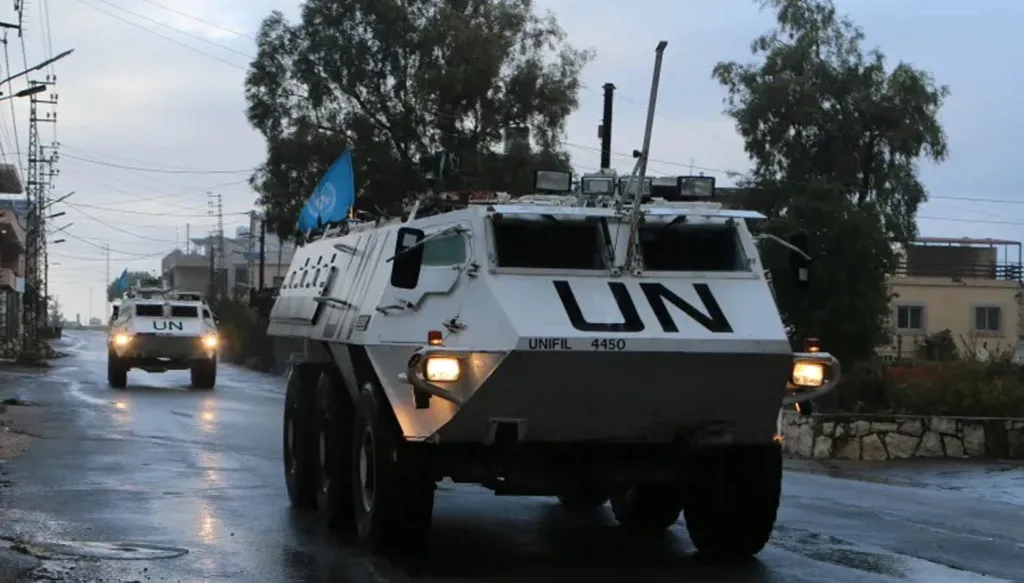
United Nations sources in New York told Annahar that France's ambassador to the UN, Jérôme Bonnafont, presented the broad outlines of the French plan for ending the mission of the United Nations Interim Force in Lebanon (UNIFIL) during last week's Security Council consultations.
The plan, which France is working to include in the draft resolution it is drafting, provides for an organized, gradual withdrawal of the international force over one year. The aim is to prevent any security vacuum in South Lebanon after UNIFIL's mandate expires on December 31.
Under the French plan, a number of UNIFIL personnel would remain during this transitional period to continue carrying out some of the tasks covered by the current mandate. These include ensuring liaison between the parties and coordinating on the ground to avoid friction between them, monitoring and reporting, providing field support through the force's demining and military engineering capabilities, and continuing humanitarian assistance to the population.
Bonnafont said some form of UN presence should be maintained in South Lebanon even after UNIFIL's mission ends and the force withdraws. Extending the withdrawal over a year would give France the time it needs to complete its efforts to form a multinational force to be deployed later in the south, and in parallel to examine what kind of limited UN presence could be retained.
France is currently working intensively with several European countries to form this force, chief among them Italy, which remains committed to taking part despite the reservations of its Prime Minister, Giorgia Meloni.
Meanwhile, the sources described the position of US Ambassador to the UN Mike Waltz on the French proposal as open to negotiation. They noted that the French side had largely paved the way for these discussions, especially since Waltz, given his military background, understands the danger of a security vacuum in an area like South Lebanon.
Before the Security Council consultations, the US ambassador visited Lebanon, the south and UNIFIL headquarters, where he saw first-hand the nature of the force's work, including its escort of humanitarian convoys. Israeli soldiers even stopped his motorcade at a checkpoint in the south for half an hour before UNIFIL intervened with them to let him through.
According to UN sources, Waltz showed a good understanding of the situation on the ground during his talks with the UNIFIL commander. What stood out about him, they said, was his interest in the humanitarian side and in the importance of supporting local residents and standing by them. The sources described his visit as very useful in showing him the reality of the situation in the area.
US Ambassador to Lebanon Michel Issa also showed interest in UNIFIL's missions and made a point of exchanging views with the force commander in a friendly and constructive atmosphere, even inviting him to his office to continue their discussion.
The sources also described China's position in the Security Council as constructive, noting that Beijing, which contributes around 400 troops to UNIFIL, had been calling for the force to be kept.
They added that the French ambassador has been holding ongoing consultations with the Americans, Lebanese and Israelis on the arrangements to be adopted for the post-UNIFIL phase, and they expect the draft resolution to be finalized within the next two weeks.
The sources confirmed that the draft resolution will refer to the framework agreement between Lebanon and Israel and to the importance of implementing UN Security Council Resolution 1701. As for assigning the remaining UNIFIL personnel on the ground the task of overseeing the framework agreement's implementation during the transitional period, the French ambassador mentioned this only in passing as an idea, and it has not yet taken a specific form.
Through these negotiations, French diplomacy seeks to ensure an orderly withdrawal of the international force that prevents a security vacuum in South Lebanon and allows enough time to put alternative security arrangements in place. At the same time, it aims to preserve a role for the United Nations and keep Resolution 1701 as a key reference for stability in South Lebanon.
Disclaimer: The opinions expressed by the writers are their own and do not necessarily represent the views of Annahar.