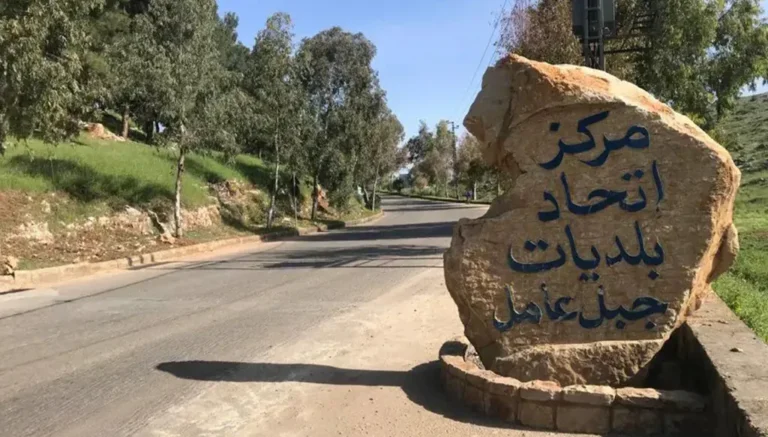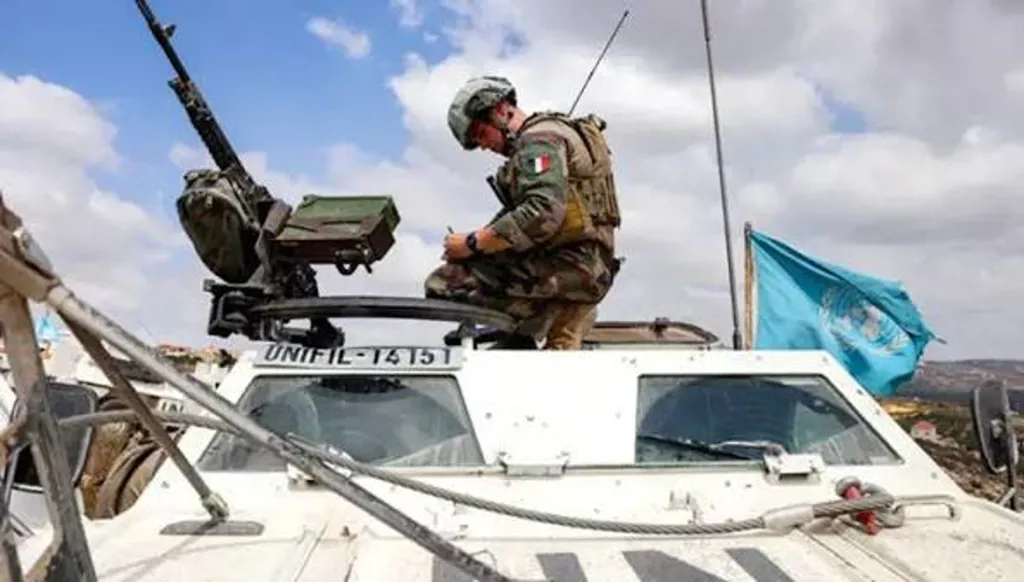
Lara El HajjOn 31 October, the United Nations closed its last mission in Somalia, after more than 30 years of work in the country. In two months, on 31 December, UNIFIL, the UN peacekeeping force in southern Lebanon, will stop its operations after almost 50 years. It will then have one year to leave. Most of the debate in Beirut has been about who, if anyone, will replace the force. But there is another question worth asking: what happened in other countries when UN missions left, and why did some become more stable while others did not?Three recent cases, in Mali, Darfur, and Somalia, give very different answers, most of them worrying. Each can be judged by the same four questions: Why did the mission end? Who took over? How was the handover managed? And what happened next?A force near the end of its mission UNIFIL was created in 1978, after Israel invaded southern Lebanon. its role grew after the 2006 was under the UN Security Council Resolution 1701. Its task was to monitor the ceasefire and help the Lebanese army deploy south of the Litani River.Today about 7,500 peacekeepers from nearly 50 countries serve along the Blue Line, the 120-kilometer line the UN drew between Lebanon and Israel. In August 2025, the Security Council renewed the mission “for a final time” through Resolution 2790. This was a compromise. France and Lebanon wanted the force to stay. The United States and Israel argued that it had failed to stop Hezbollah from building up its military strength. There is still no agreed plan for what comes next. Instead, there are three separate proposals. In June, UN Secretary-General Antonio Guterras suggested options for a smaller UN force. On 12 October, the European Union created a mission to advise and train Lebanon’s army and security forces. And a framework agreement signed by Lebanon, Israel, and the United States in June set up a military coordination group led by Washington. Mali: bases that were fought over Mali shows how quickly a UN exit can go wrong in June 2023, Mali’s military government told the UN mission, which had more than 15,000 personnel, to leave immediately. The Security Council agreed and gave it only six months. The UN handed its twelve bases to the Malian state. But some of them were in areas held by former rebel groups, which saif a 2015 peace agreement gave them the right and peacekeepers had to leave the northern Kidal region under threat. They destroyed vehicles and ammunition they could not take with them. Within weeks, the Malian army, supported by Russi’s Wagner Group, took the town of Kidal, and the peace agreement collapsed. The town has changed hands twice more since then. The lesson: when several armed groups compete for the same land, the bases a UN mission leaves behind are fought over instead of being handed over smoothly. Darfur: an exit built on a fragile deal Darfur shows the risk of linking a UN exit to a peace agreement. The Security Council ended the Darfur peacekeeping mission at the end of the 2020. It believed that Sudan’s new traditional government and the Juba Peace Agreement had improved the situation. The Sudanese state became responsible for protecting civilians. Many displaced people in Darfur protested, afraid they would be left without protection. They were right to worry. Of the fourteen bases handed over to local authorities, five were looted and three more were hit by crime, some only days after the handover. People were killed during looting in Shangil Tobaya and El Fasher. A smaller, civilian UN mission was set up to support the transition. But the peace deal fell apart, Sudan slid into war, and in late 2023 its authorities asked this mission to leave too. The lesion: a UN exit is only as strong as the agreement behind it. Somalia: an orderly handover, with a gap Somalia is the smoothest of the three cases, although it is not a perfect comparison. The last UN mission there was a political mission, not a peacekeeping force. Security in Somalia is handled by a separate African Union mission. The Somali government asked the UN to end its mission in 2024. It then agreed to a gradual, two-year handover, following a plan agreed with the UN. The mission’s work passed to Somali institutions and to about 25 UN agencies that are staying in the country. Somali officials celebrated the closure as a national achievement. Still, one gap is already clear. No one has taken over the mission’s role in helping rival Somali leaders agree on elections. The lesson: time and agreement made a smooth exit possible, but any task that no one takes over becomes a weak point. What this means for LebanonCompared with these cases, Lebanon looks more like Mali and Darfur then Somalia, but there are important differences. First, Lebanon did not ask the UN to leave. In Mali and Somalia, the governments wanted the missions to end. In Lebanon, the government asked for the force to stay, and members of parliament later called on the Security Council to reconsider. Beirut must now follow a timetable it did not choose. Second, the land is contested. Israeli forces hold part of the area where UNIFIL operates. According to reports in Arab media, about 60 percent of UNIFIL’s positions are inside that area. Lebanon may not be able to decide alone who takes over those sites. This is the warning from Mali. Third, there is no single plan for what comes next. Lebanon faces three separate proposals: a UN option that Washington opposes, an EU mission that will train and advise but not only deploy troops on the ground, and a coordination group led by the United States. Somalia shows that knowing who takes over each task matters as much as having the ability to do it. Fourth, the political agreement is not complete. The framework agreement links Israel’s withdrawal to the disarmament of Hezbollah, and neither has happened yet. Darfur shows the cost of planning an exit around an agreement that has not been carried out. Lebanon also has advantage that the others did not. It has a full year to manage the withdrawal, not six months. Its army already receives steady support from the EU and the United States. And unlike Mali, it has not turned to a private military group to fill the gap. What will decide the outcome UNIFIL’s exit does not have to end like Mali’s or Darfur’s. But recent experience shows what will make the difference: a clear plan for who does what before the peacekeepers leave, a safe handover of their bases, and a political agreement that is actually being put into practice.The coming weeks will show which way Lebanon is heading. Will the Security Council act on the Secretary-General’s option s before 31 December? How fast will the EU mission arrive? And what will the new US-led coordination group do in practice?